For centuries, the mesmerizing depth of a fine blue sapphire has captivated royalty, collectors, and jewelry lovers alike. Whether you are searching for an unforgettable engagement ring or an heirloom-quality investment, navigating the gemstone market requires an understanding of how these stones are valued. Unlike white diamonds, which follow a highly standardized pricing structure, colored gemstones operate on a shifting matrix of rarity, beauty, and geographical history.

This blue sapphire price guide will demystify the market, breaking down the exact variables that dictate the market value of these exceptional gems so you can navigate your next purchase like an industry insider. Use this sapphire buying guide to understand the balance of color, clarity, origin, and treatments before you invest.

1. The 4Cs of Sapphire Quality

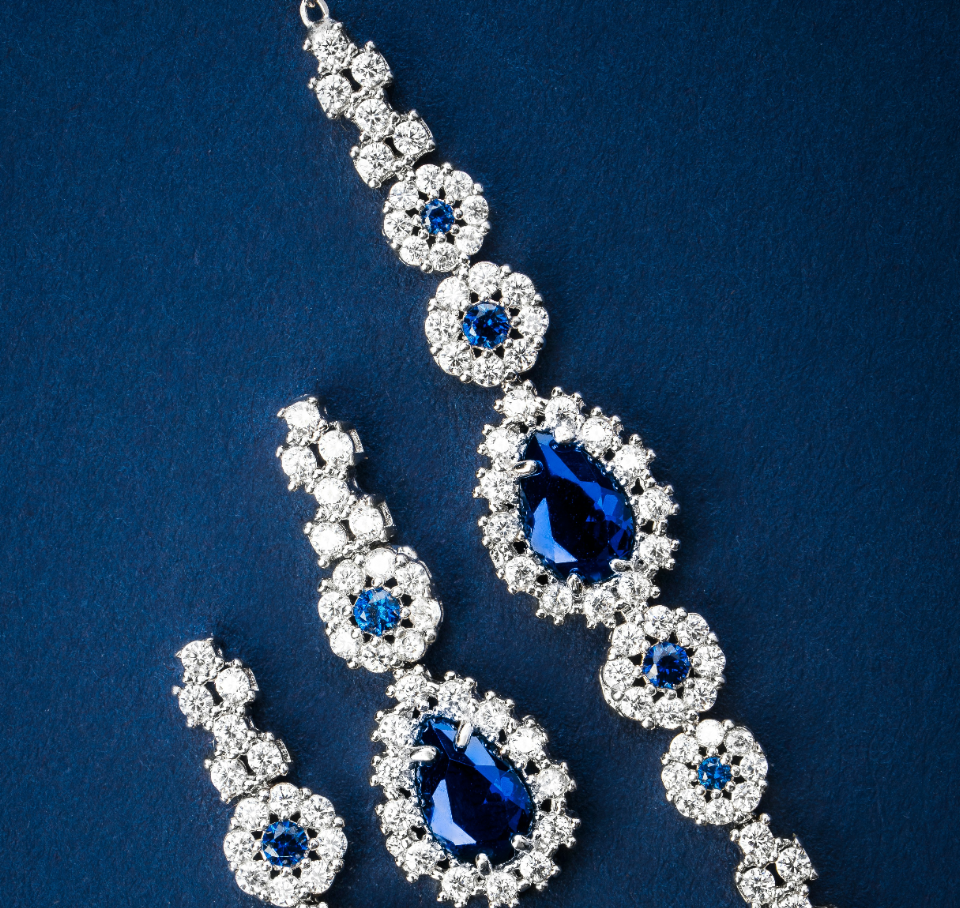
While the 4Cs (Color, Clarity, Cut, and Carat Weight) were originally popularized for diamonds, they apply just as strictly to sapphires—though with a vastly different set of priorities.image.png

by Logan Voss (https://unsplash.com/@loganvoss)

Color: The Ultimate Value Driver

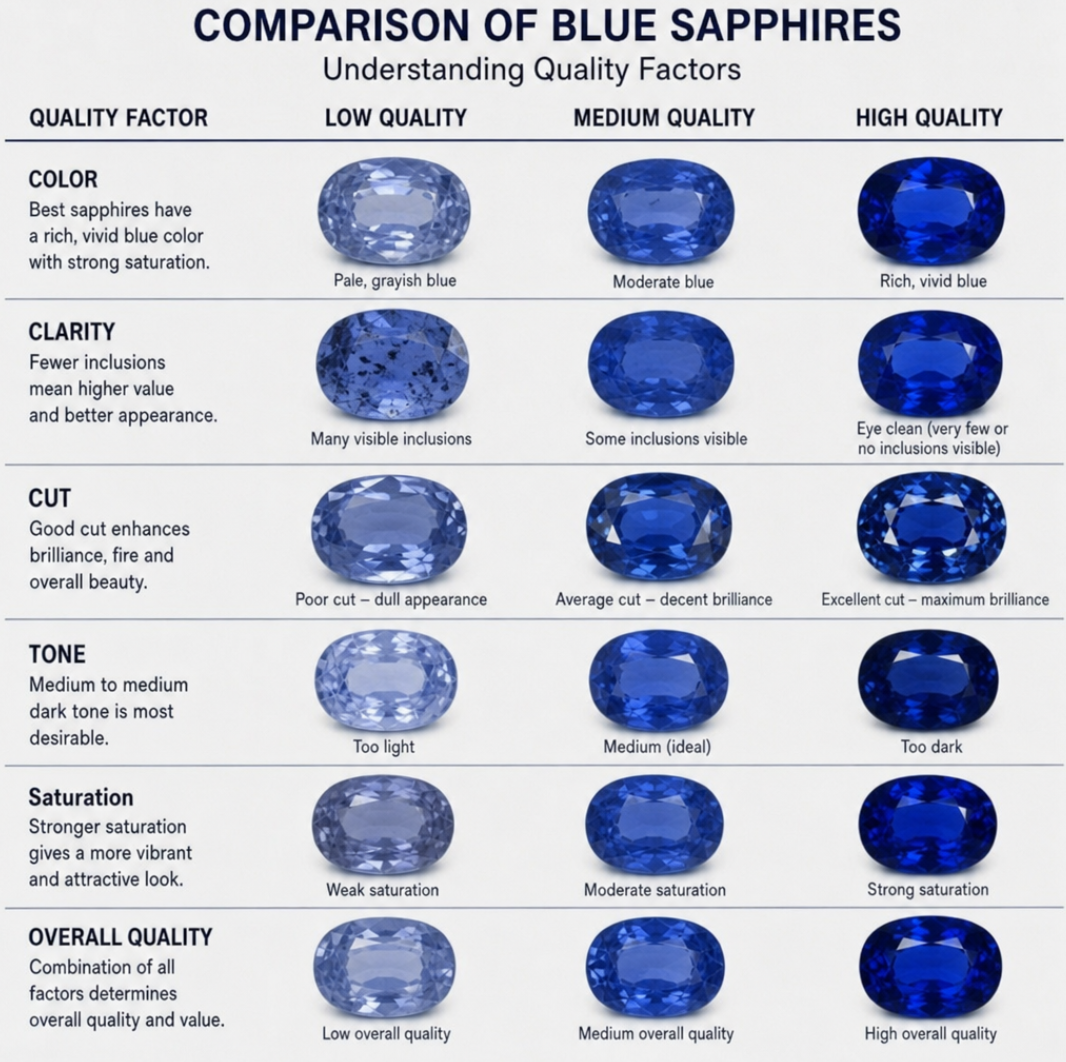
In the colored gemstone world, color is king, accounting for roughly 60% of a stone's total market value. Gemologists break color down into three distinct dimensions:

  • Hue: The primary color of the gemstone, along with any secondary undertones. While a pure, vibrant blue is the most prized, many sapphires display subtle hints of violet or green. A slight violet secondary hue can add a beautiful warmth, whereas a strong green undertone generally depresses the stone's value.

  • Tone: This refers to how light or dark the sapphire is. The most valuable fine sapphires sit comfortably in the medium to medium-dark range. If a stone is too light, it may look washed out; if it is too dark (often resembling navy or midnight blue), it loses its ability to return light and will sell at a lower price point.

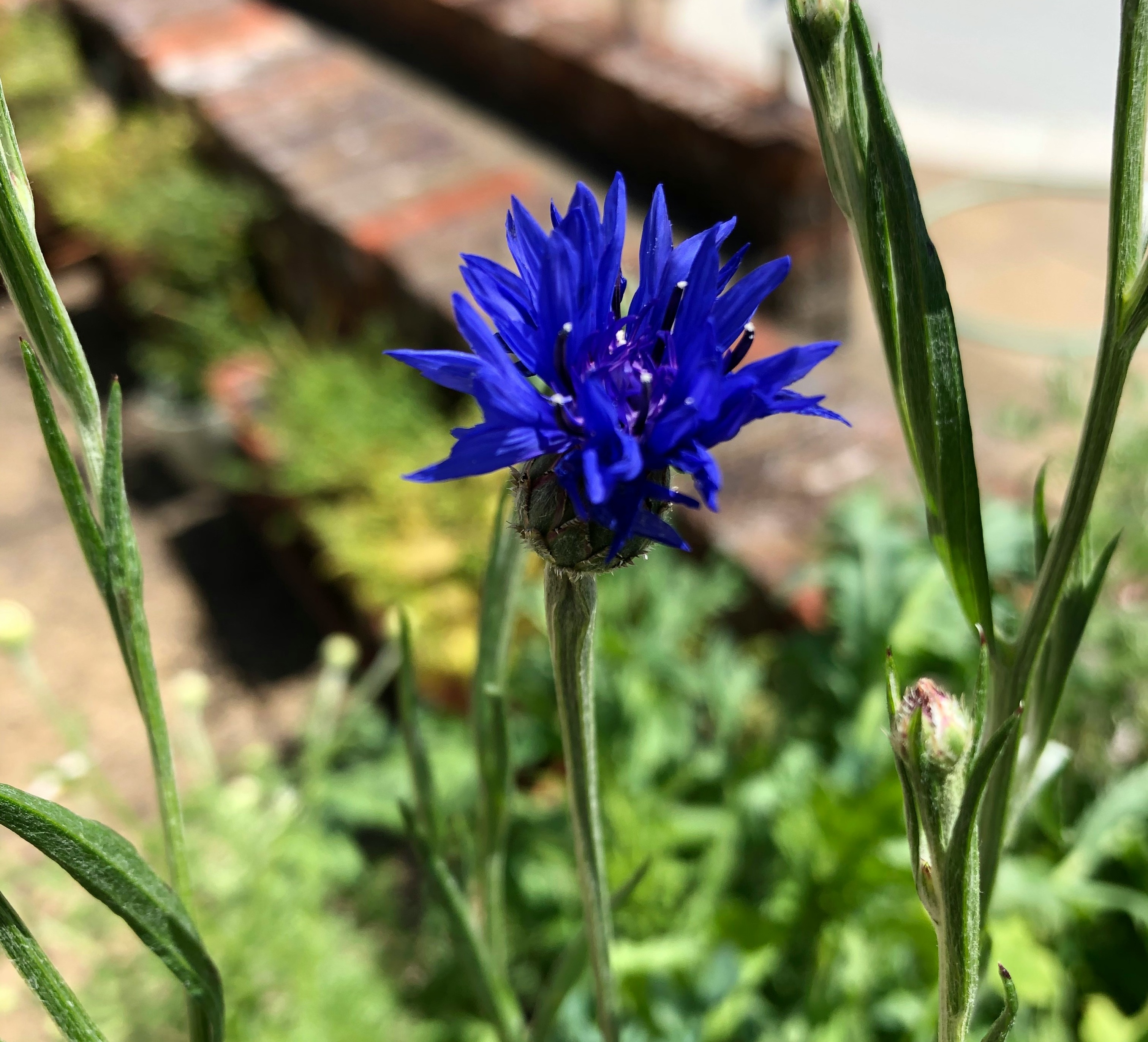
  • Saturation: This measures the intensity and vividness of the color. Top-tier trade terms like "Royal Blue" (a deep, highly saturated, velvety blue) and "Cornflower Blue" (a bright, slightly silky blue with an ethereal inner glow) command massive premiums because their saturation remains blindingly vibrant without ever looking dark or dull.

Clarity: Accepting "Silk"

Unlike diamonds, which are judged under 10x magnification for absolute purity, sapphires are graded on an "eye-clean" baseline. Because corundum (the mineral family that includes sapphire and ruby) grows under immense geological pressure, nearly all natural sapphires feature tiny internal inclusions.

The most common inclusions are microscopic rutile needles, known affectionately in the trade as "silk". Remarkably, while heavy inclusions that disrupt transparency or threaten durability will slash a sapphire's price, a light, evenly dispersed dusting of silk can actually elevate value. This silk scatters light internally, giving legendary stones their signature velvety, glowing texture.

image.png

by Ahmadreza Rezaie (https://unsplash.com/@ahmdrzarzai)

Cut: Maximizing Brilliance and Weight

When a lapidary (gem cutter) sits down with a piece of rough sapphire, their primary goal is to preserve as much weight as possible while optimizing the face-up color. Because sapphire rough is incredibly valuable, you will rarely see perfectly symmetrical "ideal" cuts like those found in diamonds.

Instead, look for a balanced cut that prevents "windowing"—a flaw where the center of the stone is cut too shallow, causing light to leak through like a clear pane of glass rather than bouncing back to your eye. A well-cut sapphire will display even brilliance across its entire surface.

Carat Weight: Exponential Pricing Jumps

Sapphire pricing does not scale linearly; it scales exponentially. A high-quality 3-carat blue sapphire will not simply cost three times more than a 1-carat stone of identical quality—it can easily cost five to eight times more per carat. Large, gem-quality sapphire crystals are extraordinarily rare anomalies of nature, resulting in steep price spikes whenever a stone crosses major psychological milestones like the 2-carat, 5-carat, or 10-carat thresholds.

2. The Power of Geographic Origin

Where a sapphire was mined plays a massive role in its prestige and ultimate pricing. Certain historical mining regions have achieved legendary status due to the specific visual characteristics born from their unique geological conditions:

  • Kashmir: The undisputed pinnacle of luxury sapphire history. Mined high in the Himalayas during a brief window in the late 19th century, Kashmir sapphires are famous for their unmatched, cornflower-blue "velvety" appearance. Because the mines have long been exhausted, these stones are incredibly scarce museum pieces, routinely commanding auction prices from $20,000 to over $100,000 per carat.

  • Burma (Myanmar): Renowned for producing exceptionally rich, highly saturated "Royal Blue" stones. Fine, untreated Burmese sapphires hold an esteemed spot among international collectors and command a significant premium over most other origins.

  • Sri Lanka (Ceylon): Sri Lanka is the historic heart of the global sapphire trade, yielding bright, highly brilliant cornflower and pastel blue gems. "Ceylon sapphires" strike a perfect balance of historic pedigree, vibrant light return, and relative accessibility.

  • Madagascar: A modern powerhouse in the gem world. Discovered in the late 1990s, Madagascar deposits yield stunning sapphires that can visually rival the best of Ceylon and Burma. Because it lacks the century-old historical prestige of Sri Lanka, a fine Madagascar sapphire often offers exceptional value, priced roughly 20-30% lower than an identical counterpart from an older source.

image.png3. Treatment Status: Natural vs. Enhanced

In the modern gemstone market, transparency regarding treatments is non-negotiable. Approximately 90% of all sapphires standardly undergo heat treatment before they ever reach a retail showcase.

[Natural, Completely Untreated]  --> Ultra-Rare Premium (Commands 3x-4x Price)

[Traditional Heat Treatment]     --> Industry Standard (Widely Accepted)

[Lattice/Beryllium Diffusion]   --> Severe Value Discount (50%-80% Less)

[Lead-Glass/Fracture Filling]    --> Low Commercial Grade (Minimal Value)


Traditional heat treatment gently mimics the earth’s natural geothermal processes, dissolving minor inclusions to permanently improve a stone's clarity and color saturation. This is a fully accepted industry standard that produces beautiful, durable jewelry-grade stones.

However, the remaining 10% of sapphires that come out of the ground with breathtaking color and clarity without any human intervention are true geological miracles. An unheated, natural fine sapphire can easily command a 100% to 300% price premium over an identical heated stone.

Warning: Be wary of low-cost stones that have undergone harsh chemical enhancements like beryllium lattice diffusion or fracture glass filling, which drastically lower the gemstone's intrinsic value. Always insist on an independent certificate from an authoritative laboratory like the Gemological Institute of America (GIA) to verify a stone's exact treatment history.

Finding Your Perfect Blue Sapphire

Ultimately, selecting a fine sapphire comes down to balancing your personal aesthetic preferences with your budget. Whether your heart is set on an electric Ceylon cornflower blue or a deep, velvety Burmese royal blue, understanding the technical variables of the trade protects your investment and ensures you find a gemstone that will bring joy for generations to come.

Ready to discover an exceptional gemstone tailored exactly to your vision, or need an expert to analyze an independent laboratory report? We are here to guide you through every step of the selection process. Let's work together to bring your dream piece to life: Connect with our gemologists today at Oria Gems Contact.

References & Authoritative Sources

  1. Gemological Institute of America (GIA): Sapphire Quality Factors & Buyer's Guide

  2. International Gem Society (IGS): Sapphire Value, Price, and Jewelry Information

  3. The Natural Sapphire Company: Comprehensive Sapphire Pricing and Market Trends