Article Content
Gemstone jewelry is a timeless treasure. It adds elegance and charm to any outfit. But keeping it beautiful requires proper care.
Each gemstone is unique, with its own needs. Cleaning and maintaining them can be tricky. Different stones need different methods.
Understanding your gemstones is key. Knowing their hardness and porosity helps in choosing the right cleaning approach. This prevents damage.
At home, you can clean your jewelry safely. With the right tools and techniques, you can maintain their sparkle and shine.
This guide will walk you through the process. Learn how to care for your gemstone jewelry effectively.
Understanding Gemstones: Hardness, Porosity, and Treatments
Gemstones come in all shapes and sizes. Their physical characteristics like hardness and porosity differ. These traits determine the right cleaning methods.
The Mohs scale measures gemstone hardness. It ranges from soft gemstones like talc to hard ones like diamonds. Knowing where your gemstone falls on the scale is crucial.
Porosity affects how gemstones absorb liquids. Porous stones, such as opals and turquoise, need gentle care to avoid damage. They can easily absorb oils and chemicals.
Gemstones can also have various treatments. Treatments enhance color or durability but may affect cleaning methods. Common treatments include heat treatment, dyeing, and stabilization.
1. The Golden Rule: Know Your Gemstone’s Hardness
Before water or soap ever touches your jewelry, you must understand that not all gemstones are created equal. In the world of geology, gems are rated on the Mohs Hardness Scale, which measures a mineral's resistance to scratching.
Hard Gems (Mohs 8–10): Diamonds, sapphires, rubies, and topaz are highly durable. They can withstand routine cleaning relatively well.
Soft or Porous Gems (Mohs 7 and below): Opals, pearls, turquoise, amber, and emeralds are fragile.
Porous stones act like tiny sponges; exposing them to harsh chemicals, or even soaking them in water for too long, can cause permanent discoloration or structural cracking. For an accurate look at where your specific stones fall, you can check the Gemological Institute of America (GIA) Gem Encyclopedia.
2. The Universal, Safe Cleaning Method
If you are unsure of your gemstone’s specific vulnerabilities, always default to the gentlest method possible. Avoid specialized commercial chemical cleaners unless they explicitly state they are safe for your exact stone.
Here is the safest step-by-step routine for standard jewelry maintenance at home:
1. Mix the Solution: Fill a small bowl with lukewarm water. Add a few drops of a mild, fragrance-free dish soap. Never use boiling water, as sudden temperature spikes can cause thermal shock, splitting stones like tanzanite or opal.
2. Soak (With Caution): Let harder gems soak for 10 to 15 minutes to loosen stubborn oils. Skip this soaking step completely for fragile or porous materials like pearls, turquoise, or emeralds.
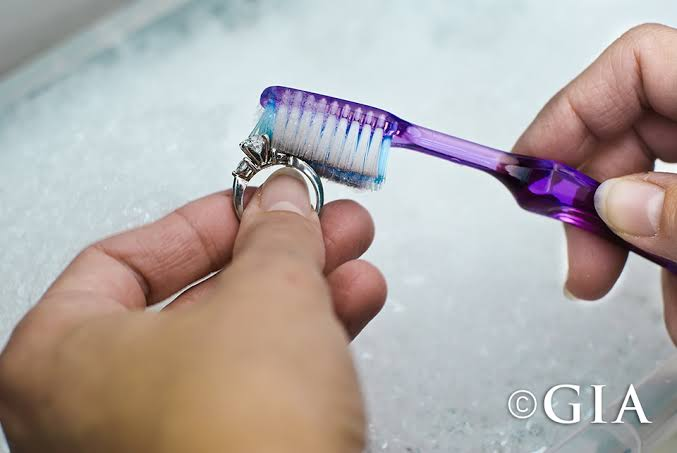
3. Brush Lightly: Use a new, ultra-soft bristled toothbrush. Gently clean behind the stone and around the prongs, where lotion and grime love to hide. Do not scrub hard; let the bristles do the work.
4. Rinse Safely: Rinse the piece thoroughly in a bowl of clean, lukewarm water. Pro-tip: If you choose to rinse under a running tap, ensure the sink drain is securely plugged!
5. Dry and Polish: Blot the jewelry dry with a soft, lint-free microfiber cloth. Avoid paper towels or tissues, as their wood fibers can leave microscopic scratches on softer gemstones and precious metals.
2. The Universal, Safe Cleaning Method
If you are unsure of your gemstone’s specific vulnerabilities, always default to the gentlest method possible. Avoid specialized commercial chemical cleaners unless they explicitly state they are safe for your exact stone.
Here is the safest step-by-step routine for standard jewelry maintenance at home:
6. Mix the Solution: Fill a small bowl with lukewarm water. Add a few drops of a mild, fragrance-free dish soap. Never use boiling water, as sudden temperature spikes can cause thermal shock, splitting stones like tanzanite or opal.
7. Soak (With Caution): Let harder gems soak for 10 to 15 minutes to loosen stubborn oils. Skip this soaking step completely for fragile or porous materials like pearls, turquoise, or emeralds.
8. Brush Lightly: Use a new, ultra-soft bristled toothbrush. Gently clean behind the stone and around the prongs, where lotion and grime love to hide. Do not scrub hard; let the bristles do the work.
9. Rinse Safely: Rinse the piece thoroughly in a bowl of clean, lukewarm water. Pro-tip: If you choose to rinse under a running tap, ensure the sink drain is securely plugged!
10. Dry and Polish: Blot the jewelry dry with a soft, lint-free microfiber cloth. Avoid paper towels or tissues, as their wood fibers can leave microscopic scratches on softer gemstones and precious metals.
 by Lucas Santos (https://unsplash.com/@_staticvoid)
Special Care for Popular Gemstones
Different gemstones require different care routines. Understanding these needs can keep your jewelry radiant. Each gemstone has unique characteristics that dictate its specific care requirements.
It's crucial to recognize whether your gemstones are hard or soft. For example, diamonds are the hardest and quite resilient. In contrast, pearls and opals are much softer and need more gentle handling.
When cleaning, consider the stone's porosity. Porous stones absorb liquids easily, which can lead to discoloration. Always consult specific guidelines for each type of gemstone you own.
Here is a quick reference list for special care:
l Diamonds: Regular cleaning with mild soap and water
l Pearls and Opals: Avoid water, clean with a damp cloth
l Emeralds, Sapphires, Rubies: Use water sparingly, avoid abrasives
l Turquoise, Lapis Lazuli: Avoid chemical exposure, soft cloth cleaning
Rotate your gemstones to prevent overuse. This practice helps minimize wear and tear, preserving their luster.
Do not forget to routinely check for loose settings. This inspection can prevent the loss or damage of valuable gemstones.
Diamonds
Diamonds shine bright with just a bit of care. Use mild soap and water for regular cleaning. This keeps them dazzling effortlessly.
Pearls and Opals
Pearls and opals need special attention. They require gentle cleaning with a damp, soft cloth. Avoid soaking these delicate gems in water.
Emeralds, Sapphires, and Rubies
For emeralds, sapphires, and rubies, use water sparingly. Clean them gently with a soft brush. Avoid using abrasives that can scratch their surfaces.
Turquoise, Lapis Lazuli, and Other Porous Stones
Porous stones like turquoise and lapis lazuli should stay away from chemicals. Clean these with a soft, dry cloth to maintain their vibrant colors.
What to Avoid: Common Mistakes in Gemstone Jewelry Care
Avoiding mistakes is key to preserving your gemstone jewelry. One common error is using abrasive cleaners. These can scratch and dull the surface of your gemstones, leading to damage over time.
Another pitfall is neglecting the specific cleaning requirements of each gemstone. Gemstones like emeralds and pearls have unique needs. Failing to follow these guidelines can result in irreversible harm.
Here's a list of common mistakes to avoid:
l Using harsh chemicals or abrasives
l Ignoring the need for gentle care with soft gems
l Storing all jewelry pieces together, risking scratches
Beware of high heat and sunlight. These can fade or crack certain stones. Always store jewelry properly to prevent exposure to such elements.
Safe Storage and Handling Tips
Proper storage is vital for maintaining gemstone jewelry. Each piece should be stored separately to prevent scratches. Use jewelry boxes with compartments or individual pouches for safety.
Avoid exposure to direct sunlight or high humidity when storing gemstones. These conditions can lead to discoloration or damage. Keep gemstones away from household cleaners and perfumes to maintain their integrity.
When handling your jewelry, be gentle. Use clean, dry hands to prevent oils or moisture from affecting stones. Rotate jewelry pieces worn frequently to minimize wear and tear.
Consider these key storage and handling tips:
l Use a jewelry box with compartments
l Store away from sunlight and humidity
l Handle with clean, dry hands
When to Seek Professional Cleaning and Maintenance
Sometimes, home cleaning methods aren’t enough. Intricate or valuable pieces benefit from professional care. Jewelers have the expertise to clean and inspect settings securely.
Consider professional cleaning if your gemstone is delicate or antique. An expert will know the specific requirements to maintain your jewelry. Regular check-ups can detect early damage.
Think about professional services for these scenarios:
l High-value or sentimental pieces
l Gemstones with unusual or intricate settings
l Visible wear or potential damage markers
Frequently Asked Questions about Gemstone Jewelry Care
Caring for gemstone jewelry raises many questions. Each gemstone type has unique care needs. Below are some commonly asked questions to guide you.
How often should I clean my gemstone jewelry?
Routine cleaning every few weeks helps maintain luster. However, the cleaning frequency depends on wear and exposure. More frequent cleaning may be needed with heavy use.
Can all gemstones be cleaned the same way?
No, each gemstone has specific cleaning needs. For instance, soft stones require gentle methods. Always research or consult experts for guidance on your specific gemstones.
What should I do if my gemstone looks dull?
First, try a gentle cleaning method at home. If the gemstone's appearance doesn't improve, consider professional cleaning. Persistent dullness may indicate structural concerns, so professional advice is beneficial.
Here are a few common concerns:
l How often to clean gemstone jewelry?
l Are all gemstones cleanable the same way?
l What to do with a dull gemstone?
Remember, knowledge about your gemstones is essential for care. Always seek reliable information specific to your gemstone type.
 by Franco Antonio Giovanella (https://unsplash.com/@francogio)
Conclusion: Preserving the Beauty and Longevity of Your Gemstone Jewelry
Caring for your gemstone jewelry requires attention to detail. Regular cleaning and maintenance help preserve its brilliance and value. Investing time in understanding each gemstone's needs is crucial.
Storing your jewelry properly is equally important. Use soft cloths and dedicated compartments to prevent scratches. This simple act extends their longevity and maintains their aesthetic appeal.
When in doubt, seek professional advice. Jeweler consultations ensure your gems receive the care they deserve. A little effort goes a long way in preserving their beauty for years to come.
References
l Gemological Institute of America (GIA): Gem Encyclopedia & Buying Guides. https://www.gia.edu
l American Gem Trade Association (AGTA): Gemstone Information and Care Standards. https://www.agta.org