Article Content
Every few months, a customer sends us a photo of a stone they bought as a "vivid pink Ceylon ruby" and asks us to confirm it. Half the time it's a lovely gem. The other half, it's a pink sapphire wearing a more expensive name. This isn't fraud, usually — it's the oldest disagreement in the colored stone trade, and it happens to center on the two most desirable colors corundum makes.
If you're buying from Sri Lanka, or comparing offers from different dealers, you need to understand this boundary before you look at a single price tag. So let's start with the mineralogy, because the price story only makes sense once the color story is clear.
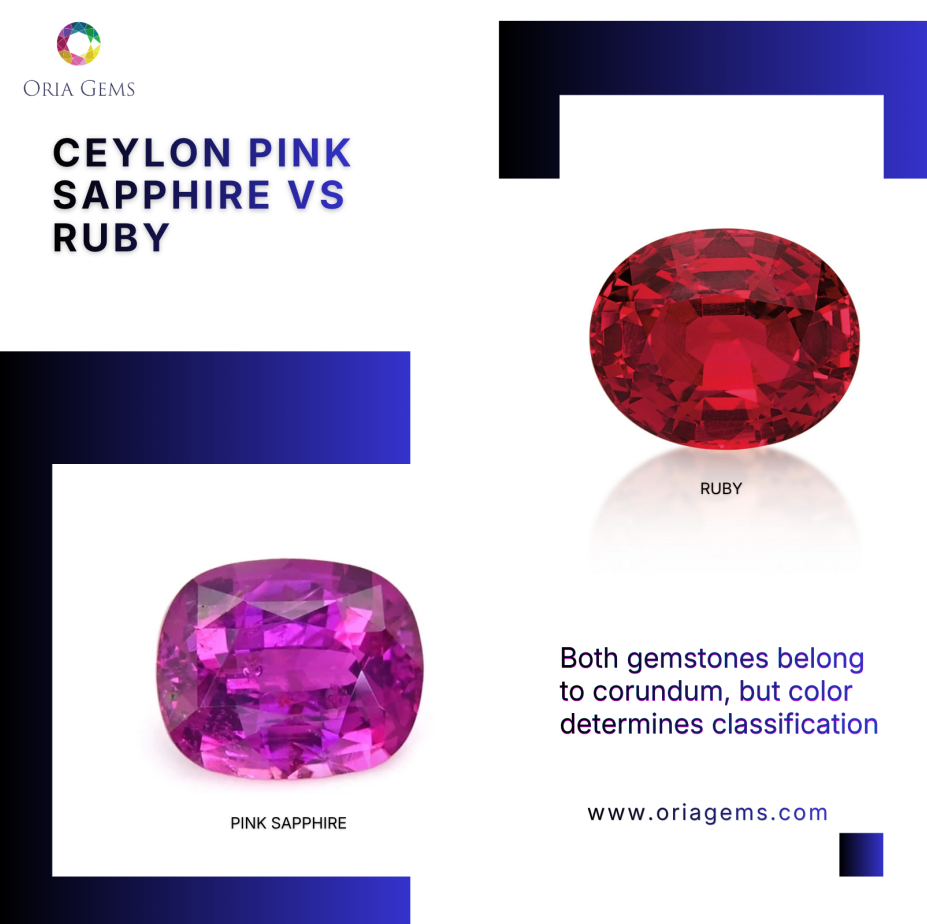
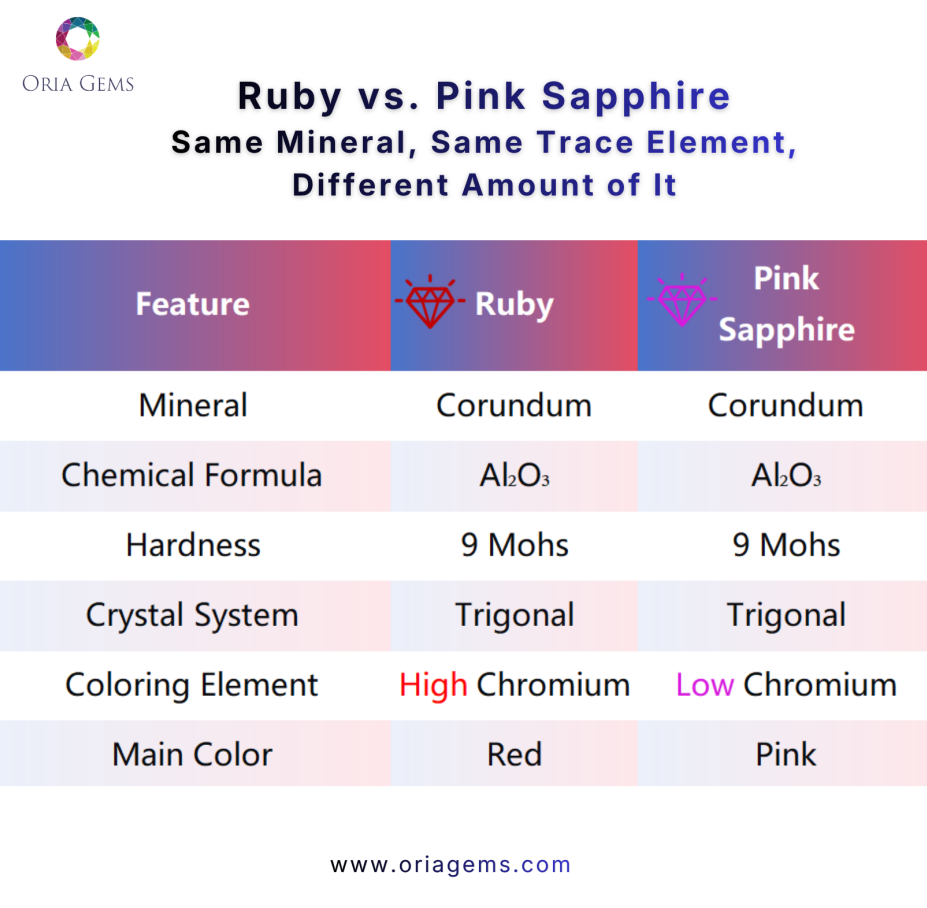
Same Mineral, Same Trace Element, Different Amount of It
Both pink sapphire and ruby belong to the same mineral family: corundum (Al₂O₃). They share identical hardness, crystal structure, and durability. The difference between them comes primarily from one factor: color.
Corundum Family Structure
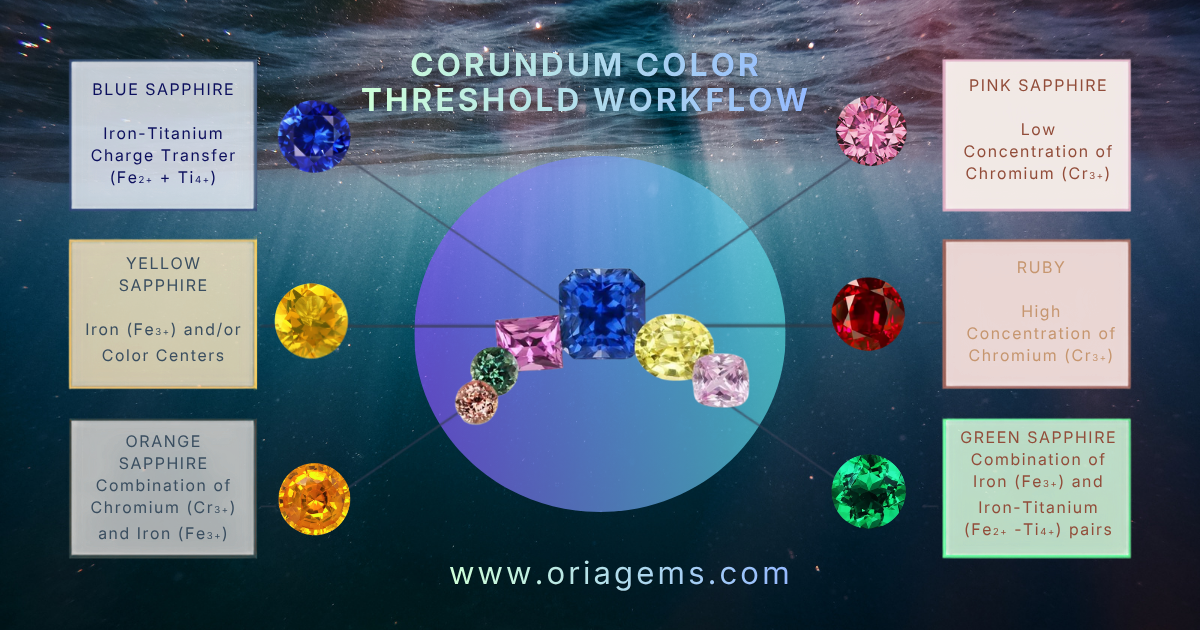
The difference happens because of the amount and interaction of trace elements — especially chromium.
A higher chromium concentration generally creates stronger red coloration, leading toward ruby classification.
Lower chromium concentration often produces pink hues, resulting in pink sapphire.
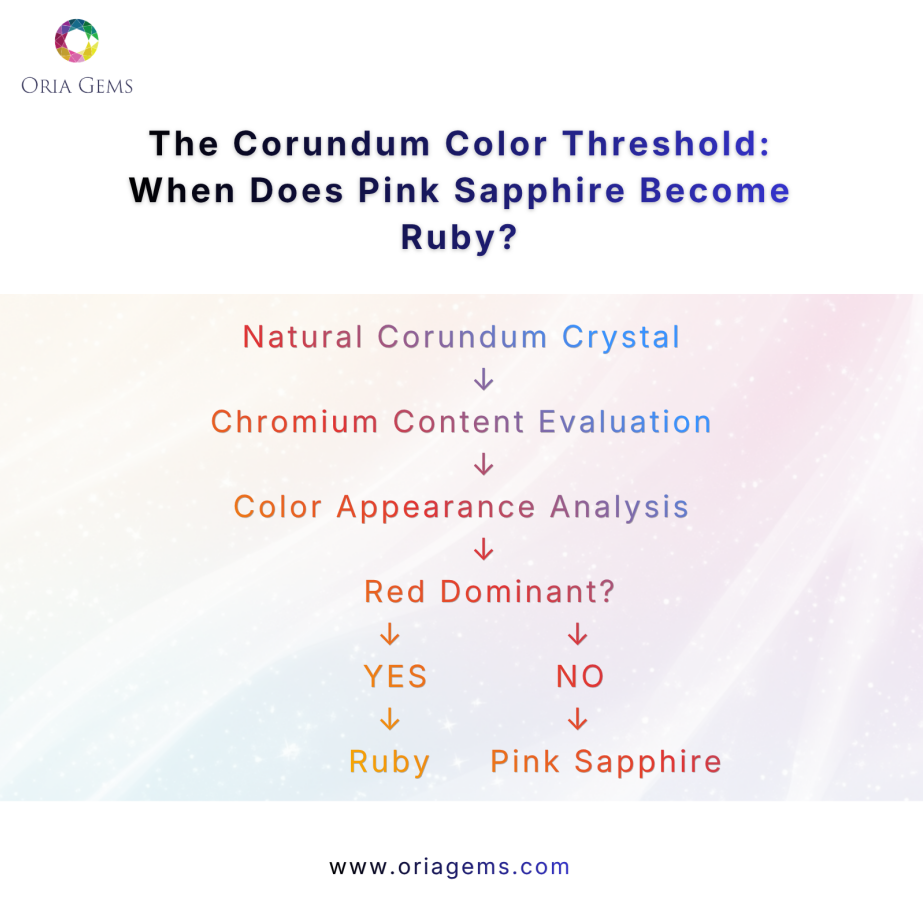
2. The Corundum Color Threshold: When Does Pink Sapphire Become Ruby?
One of the most debated topics in gemology is:
Where exactly does pink sapphire become ruby?
There is no simple numerical formula because gemstone color evaluation involves human observation and laboratory standards.
Generally:
Dominantly red corundum → Ruby
Dominantly pink corundum → Pink Sapphire
Color Classification Workflow
Natural Corundum Crystal
↓
Chromium Content Evaluation
↓
Color Appearance Analysis
↓
Red Dominant?
↓ ↓
YES NO
↓ ↓
Ruby Pink Sapphire
Practical Example:
A gemstone showing:
Strong red body color
Medium-dark tone
High saturation
is likely classified as ruby.
A gemstone showing:
Bright pink
Rose color
Slight purple or magenta tone
is usually classified as pink sapphire.
Ceylon Ruby Price per Carat: A Working Guide
Ruby pricing is driven overwhelmingly by color, then by treatment status, then by clarity and size. As a general Ceylon ruby pricing guide, current wholesale-to-retail ranges look roughly like this for natural, non-glass-filled material:
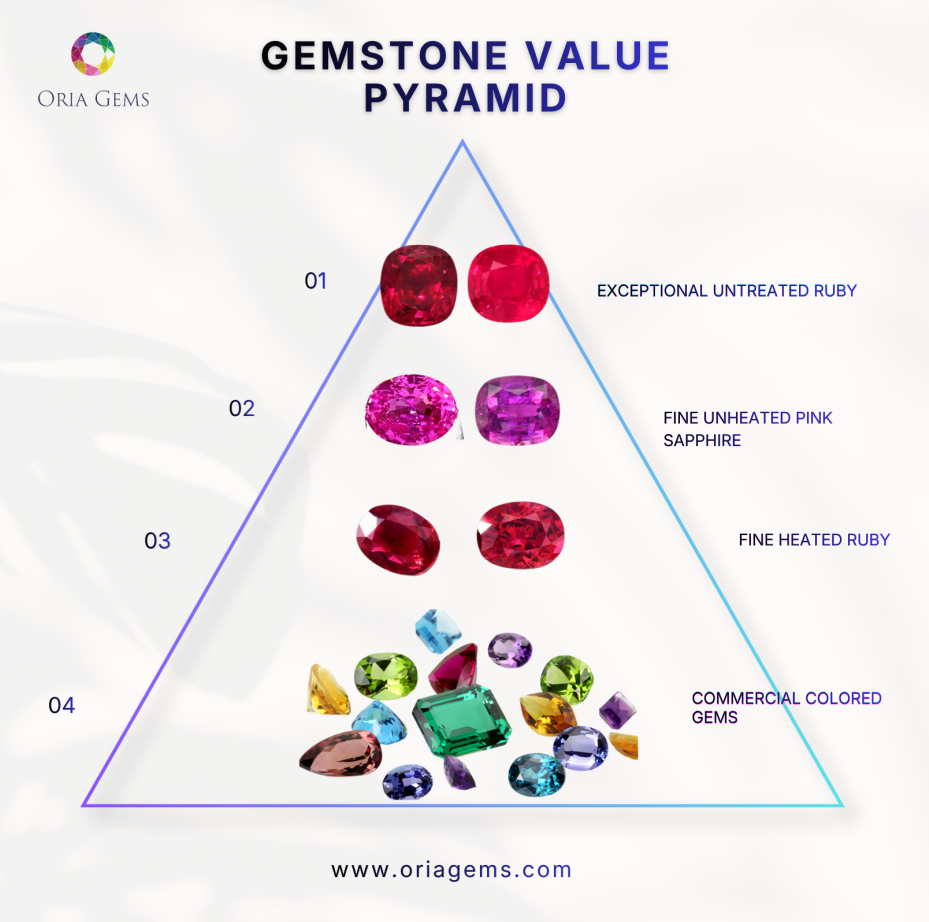
A few things drive these numbers harder than most buyers expect. First, unheated Ceylon ruby cost typically runs 50–200% above an equivalent heated stone, because natural, untreated fine color is genuinely scarce — the overwhelming majority of gem-quality corundum on the market has been heat-treated to improve color and clarity, and disclosed heat treatment is standard, accepted practice. Second, size compounds faster than it adds: a clean 2-carat stone isn't twice the price of a 1-carat stone of the same quality, it's often three to five times the price, because clean material over 2 carats is disproportionately rare.
Sri Lanka Pink Sapphire Value: Why It's a Smarter Buy for Many Collectors
Pink sapphire trades at a meaningful discount to ruby of comparable visual quality, which is exactly why it has a loyal following among collectors who want size and clarity without ruby-level prices. Sri Lanka pink sapphire value by tier looks roughly like this:
Sri Lankan pink sapphire is also, on average, cleaner than Sri Lankan ruby of the same size, since the geological conditions that produce lighter corundum tend to also produce fewer silk inclusions. For buyers who want a large, bright, eye-clean stone at a fraction of ruby pricing, this is often the better move — and it's a legitimate reason to choose pink sapphire on its own merits, not as a discount ruby.
The Corundum Color Threshold, in Practical Terms
If you remember one rule from this article, make it this: the corundum color threshold between ruby and pink sapphire is a judgment call made by comparing your stone to physical masterstones under controlled light — not a fixed wavelength, not a formula, and not something a photo on a listing page can settle. Two dealers can look at the same stone and reasonably disagree. That's not a sign the trade is broken; it's a sign you should always buy on certificate language, not on the word "ruby" or "sapphire" printed on an invoice.
How to Buy With Confidence
Professional Evaluation Process
Mine Origin
↓
Gem Identification
↓
Natural / Synthetic Confirmation
↓
Treatment Detection
↓
Color Classification
↓
Cut & Transparency Evaluation
↓
Certification
↓
Market Valuation
A gemstone's final value is created by the combination of all these elements.
Whether you're drawn to the deep, glowing red of a fine Ceylon ruby or the brighter, more accessible beauty of a Ceylon pink sapphire, the value comes down to the same fundamentals: color, treatment, clarity, and paperwork you can trust.
If you'd like help sourcing a certified Ceylon ruby or pink sapphire matched to your budget and color preference, get in touch with our team — we work directly with Sri Lankan mines and can walk you through certificates stone by stone.
References
Gemological Institute of America (GIA), "Ruby Quality Factors: The Color Range of Ruby" — gia.edu/ruby-quality-factor
Gemological Institute of America (GIA), "Sapphire Quality Factors: Different Types & Colors of Sapphire" — gia.edu/sapphire-quality-factor
International Gem Society, "What's the Difference Between Rubies and Pink Sapphires?" — gemsociety.org
American Gem Trade Association (AGTA), gemstone treatment disclosure guidelines — agta.org