Contenido del artículo
Cada pocos meses, un cliente nos envía una foto de una piedra que compró como un "rubí de Ceilán rosa intenso" y nos pide que lo confirmemos. La mitad de las veces se trata de una gema preciosa. La otra mitad, es un zafiro rosa con un nombre más caro. Normalmente no se trata de fraude; es la discrepancia más antigua en el comercio de piedras preciosas, y casualmente gira en torno a los dos colores más deseados que produce el corindón.
Si va a comprar en Sri Lanka o a comparar ofertas de diferentes vendedores, debe comprender este aspecto antes de fijarse en un solo precio. Así que empecemos por la mineralogía, porque el precio solo tiene sentido una vez que se conoce el color.
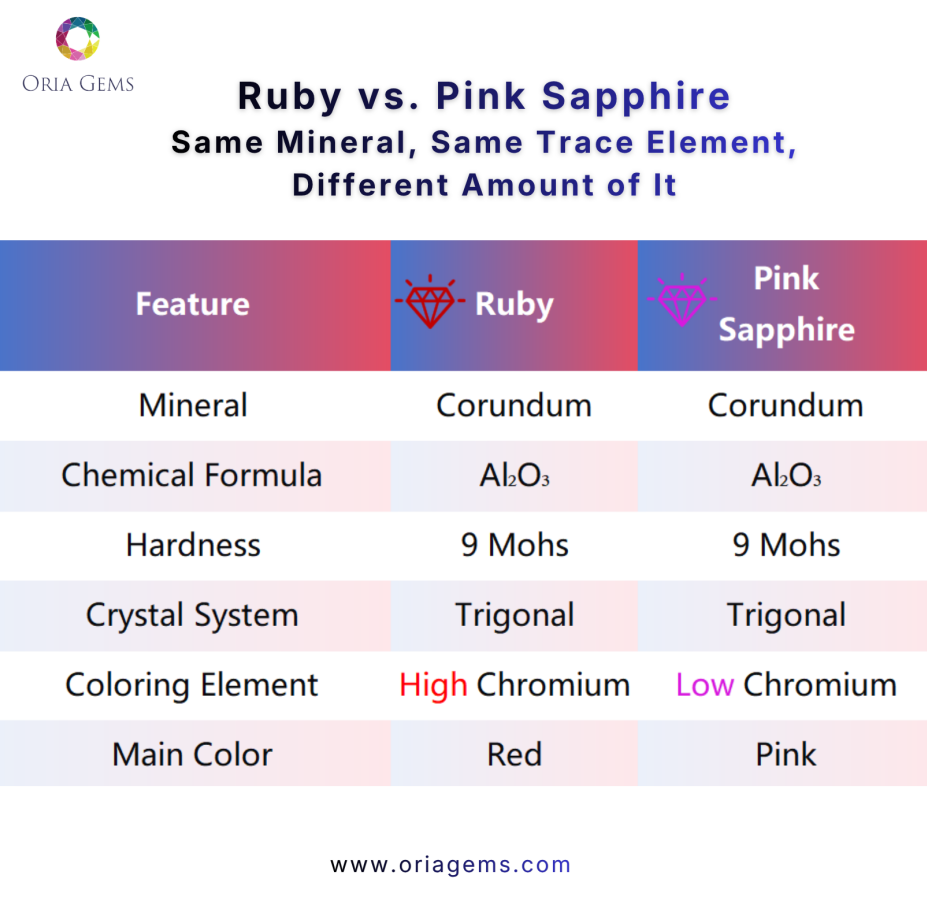
Mismo mineral, mismo oligoelemento, pero en diferente cantidad.
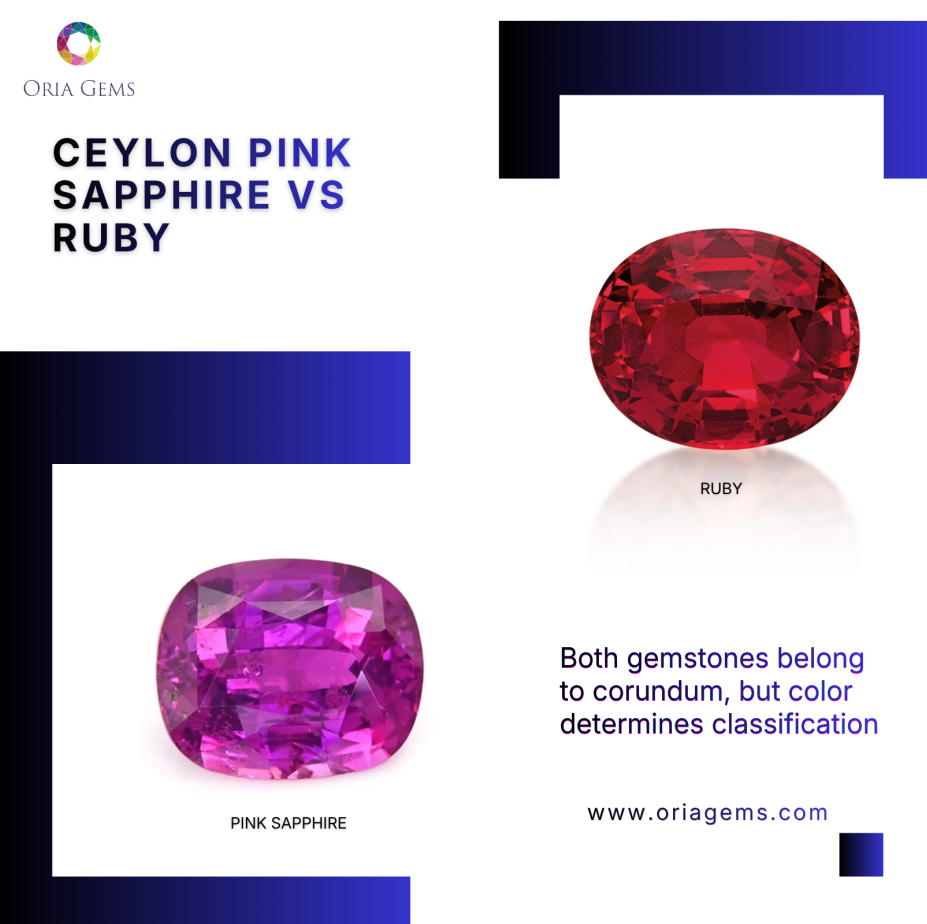
Tanto el zafiro rosa como el rubí pertenecen a la misma familia mineral: el corindón (Al₂O₃). Comparten la misma dureza, estructura cristalina y durabilidad. La diferencia entre ellos radica principalmente en un factor: el color.
Estructura de la familia del corindón
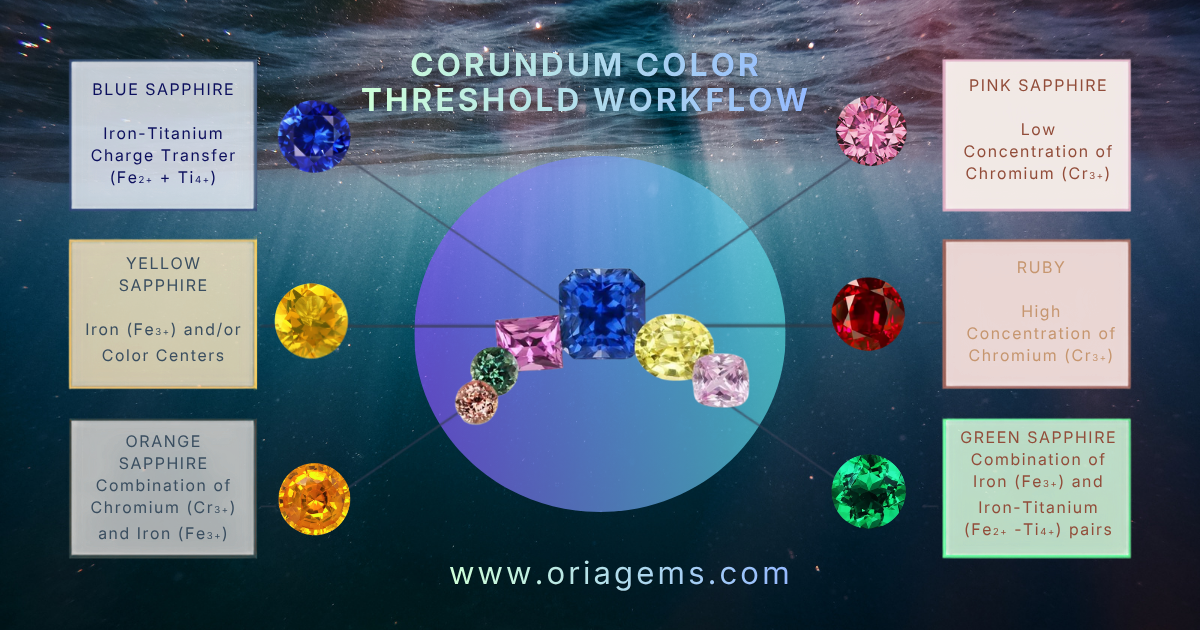
La diferencia se debe a la cantidad y la interacción de los oligoelementos, especialmente el cromo.
Una mayor concentración de cromo generalmente produce una coloración roja más intensa, lo que lleva a su clasificación como rubí.
Una menor concentración de cromo suele producir tonalidades rosadas, dando como resultado un zafiro rosa.
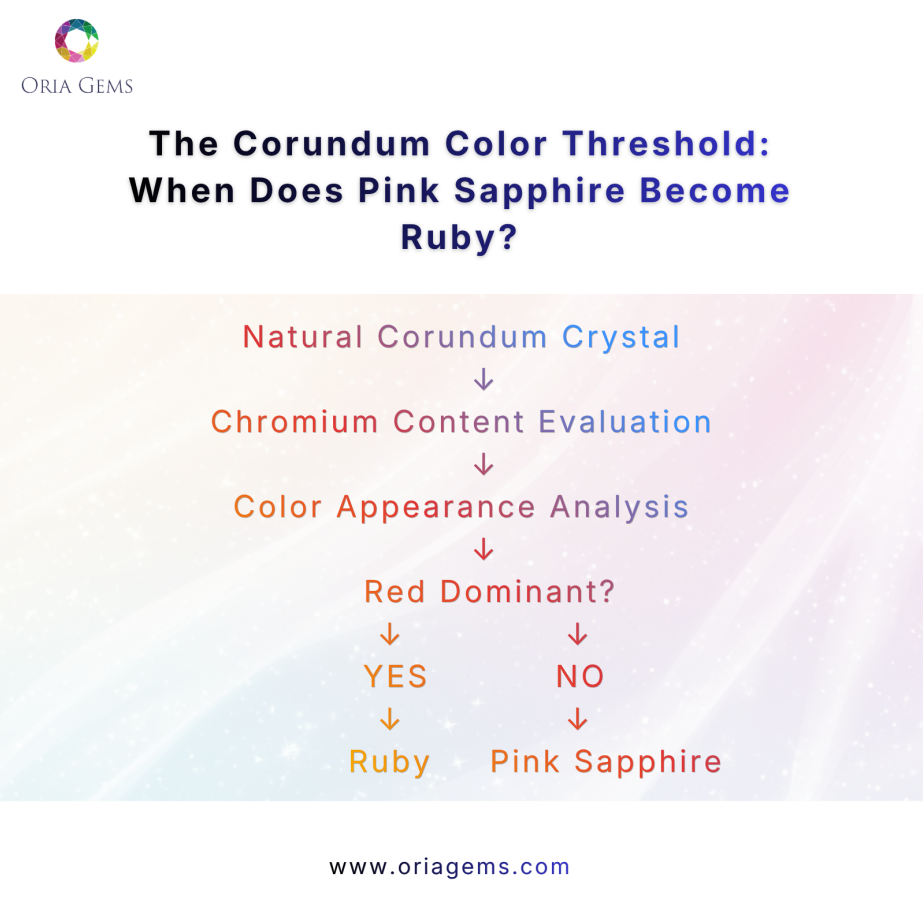
2. El umbral de color del corindón: ¿Cuándo pasa el zafiro rosa de ser un rubí?
Uno de los temas más debatidos en gemología es:
¿En qué punto exacto el zafiro rosa se convierte en rubí?
No existe una fórmula numérica sencilla, ya que la evaluación del color de las piedras preciosas implica la observación humana y los estándares de laboratorio.
Generalmente:
Corindón predominantemente rojo → Rubí
Corindón predominantemente rosa → Zafiro rosa
Flujo de trabajo de clasificación de colores
Cristal de corindón natural
↓
Evaluación del contenido de cromo
↓
Análisis de apariencia del color
↓
¿Predominio del rojo?
↓ ↓
SÍ NO
↓ ↓
Rubí Zafiro rosa
Ejemplo práctico:
Una gema que muestra:
Color rojo intenso en el cuerpo
Tono medio oscuro
Alta saturación
Es probable que se clasifique como rubí.
Una gema que muestra:
rosa brillante
color rosa
Ligero tono púrpura o magenta
Generalmente se clasifica como zafiro rosa.
Precio del rubí de Ceilán por quilate: una guía práctica
El precio del rubí depende principalmente del color, luego del tratamiento, y finalmente de la claridad y el tamaño. Como guía general de precios del rubí de Ceilán , los rangos actuales de venta al por mayor a minorista para material natural sin relleno de vidrio son aproximadamente los siguientes:
Hay varios factores que influyen más en estas cifras de lo que la mayoría de los compradores esperan. Primero, el precio del rubí de Ceilán sin tratar suele ser entre un 50 % y un 200 % superior al de una piedra equivalente tratada térmicamente, porque el color natural y sin tratar es realmente escaso: la gran mayoría del corindón de calidad gema en el mercado ha sido tratado térmicamente para mejorar su color y claridad, y la divulgación de este tratamiento térmico es una práctica estándar y aceptada. Segundo, el tamaño aumenta más rápido de lo que se suma: una piedra limpia de 2 quilates no cuesta el doble que una de 1 quilate de la misma calidad, sino que a menudo cuesta entre tres y cinco veces más, porque el material limpio de más de 2 quilates es desproporcionadamente raro.
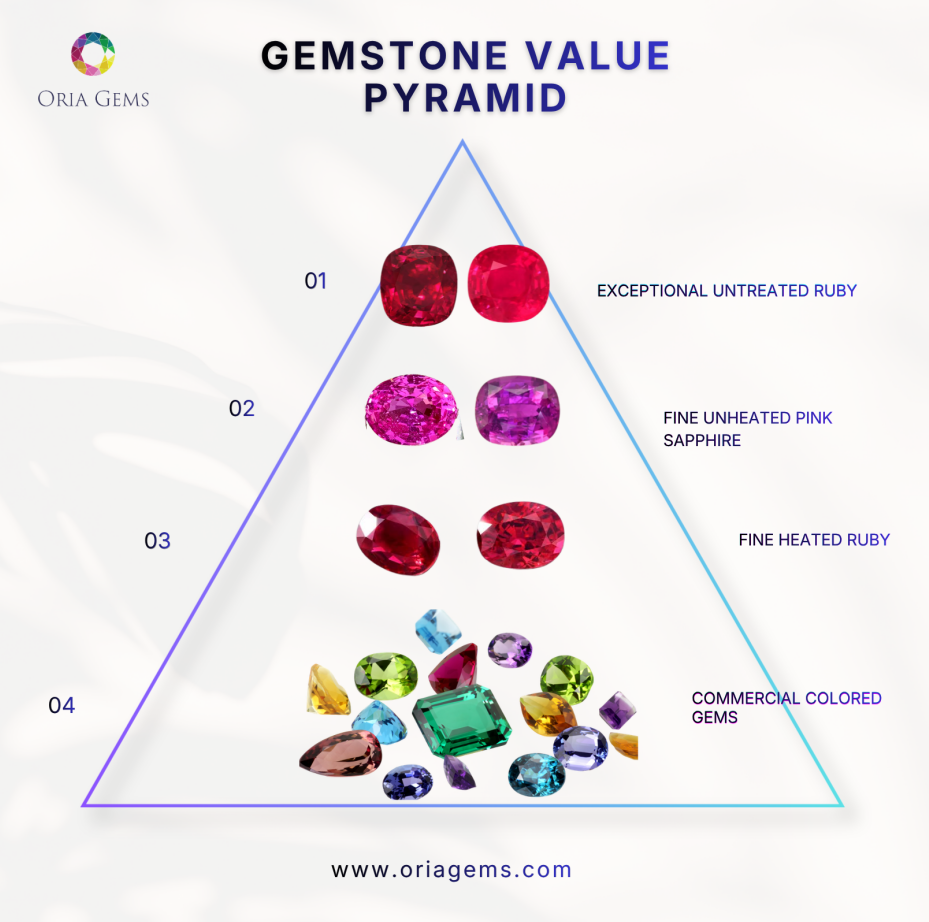
Valor del zafiro rosa de Sri Lanka: por qué es una compra más inteligente para muchos coleccionistas.
El zafiro rosa se comercializa con un descuento significativo respecto al rubí de calidad visual comparable, razón por la cual goza de gran popularidad entre los coleccionistas que buscan tamaño y claridad sin los precios del rubí. El valor del zafiro rosa de Sri Lanka, según su categoría, se distribuye aproximadamente de la siguiente manera:
El zafiro rosa de Sri Lanka es, en promedio, más limpio que el rubí de Sri Lanka del mismo tamaño, ya que las condiciones geológicas que producen corindón más claro tienden a producir también menos inclusiones de seda. Para los compradores que desean una piedra grande, brillante y sin inclusiones visibles a simple vista a una fracción del precio del rubí, esta suele ser la mejor opción, y es una razón legítima para elegir el zafiro rosa por sus propios méritos, no como un rubí de descuento.
El umbral de color del corindón, en términos prácticos.
Si recuerdas una sola regla de este artículo, que sea esta: el umbral de color del corindón entre el rubí y el zafiro rosa es una cuestión de criterio que se determina comparando la piedra con ejemplares de referencia bajo luz controlada; no se trata de una longitud de onda fija, ni de una fórmula, ni de algo que una foto en la página del anuncio pueda resolver. Dos comerciantes pueden examinar la misma piedra y discrepar razonablemente. Eso no significa que el sector esté fallando; significa que siempre debes confiar en la información del certificado, no en la palabra "rubí" o "zafiro" impresa en la factura.
Cómo comprar con confianza
Proceso de evaluación profesional
Origen de la mina
↓
Identificación de gemas
↓
Confirmación natural/sintética
↓
Detección de tratamiento
↓
Clasificación por colores
↓
Evaluación de recortes y transparencia
↓
Proceso de dar un título
↓
Valoración de mercado
El valor final de una gema se crea por la combinación de todos estos elementos.
Tanto si te atrae el rojo intenso y brillante de un fino rubí de Ceilán como la belleza más luminosa y accesible de un zafiro rosa de Ceilán, el valor se reduce a los mismos fundamentos: color, tratamiento, claridad y documentación fiable.
Si desea ayuda para encontrar un rubí de Ceilán o un zafiro rosa certificado que se ajuste a su presupuesto y preferencias de color, póngase en contacto con nuestro equipo . Trabajamos directamente con minas de Sri Lanka y podemos guiarle a través de los certificados piedra por piedra.
Referencias
Instituto Gemológico de América (GIA), "Factores de calidad del rubí: la gama de colores del rubí" — gia.edu/ruby-quality-factor
Instituto Gemológico de América (GIA), "Factores de calidad del zafiro: diferentes tipos y colores de zafiro" — gia.edu/sapphire-quality-factor
Sociedad Internacional de Gemas, "¿Cuál es la diferencia entre los rubíes y los zafiros rosas?" — gemsociety.org
Asociación Estadounidense de Comercio de Gemas (AGTA), directrices para la divulgación del tratamiento de las piedras preciosas — agta.org