Article Content
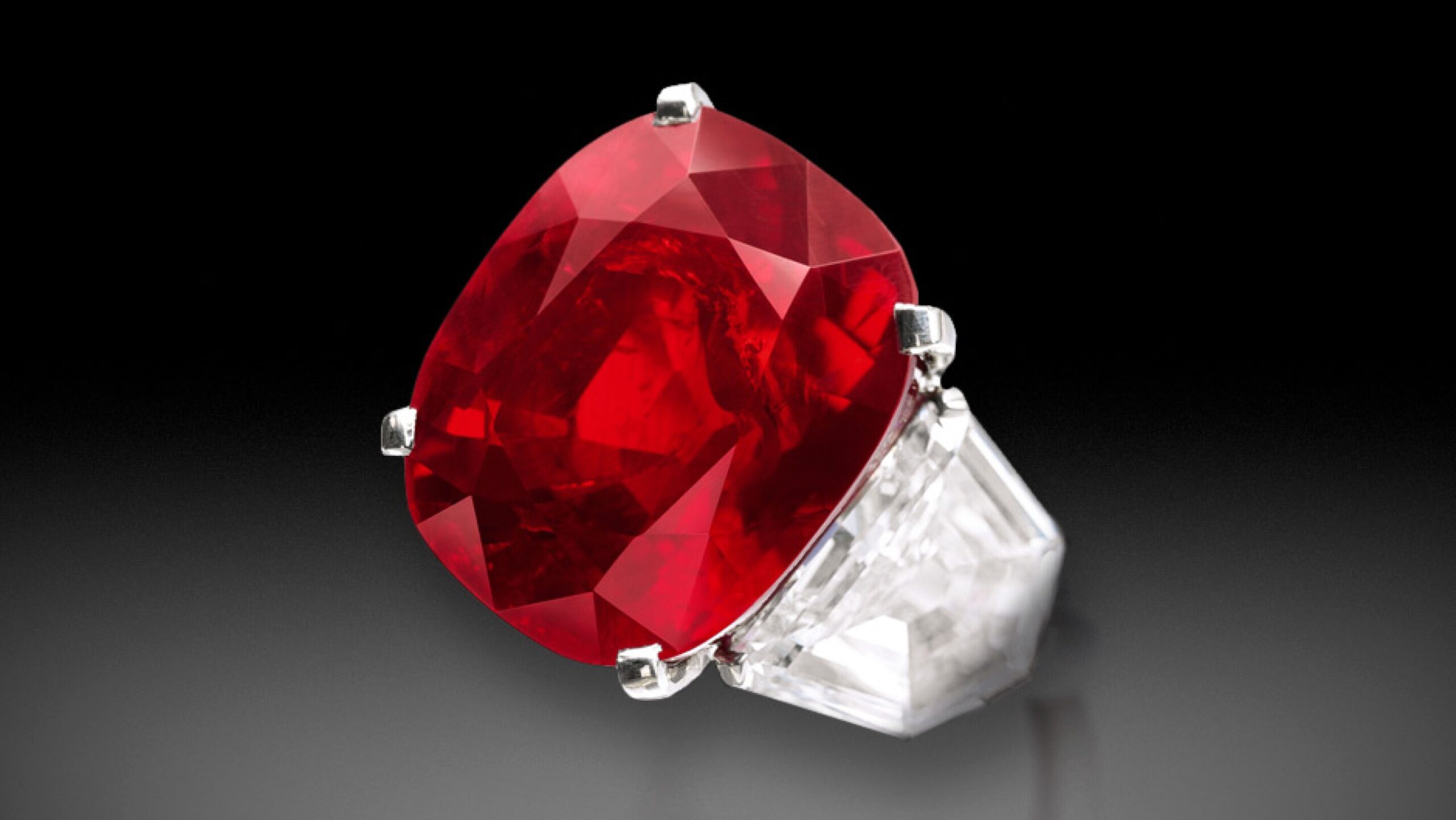
Known as the "King of Gemstones", ruby has symbolized passion, power, protection, and prosperity for thousands of years. Ancient civilizations believed rubies contained an inner fire that could protect their owners from danger.
Today, exceptional rubies remain among the rarest and most valuable gemstones on earth.
Unlike diamonds, ruby value depends heavily on origin, color, rarity, and treatment history. A one-carat ruby from a legendary mine can be worth many times more than a similar-looking stone from another location.
But where exactly are the world's greatest rubies born?
The Famous Ruby Producing Countries
Myanmar (Burma). The Mogok Valley has produced the trade's benchmark rubies for over 500 years, and "Burmese ruby" is still the phrase every other origin gets measured against. Mogok stones are prized for a rare combination: low iron content in the host marble lets chromium's red glow come through almost unfiltered under UV and daylight, producing the famous "pigeon's blood" color — a vivid, slightly purplish red with a visible internal fluorescence that makes the stone look lit from within.
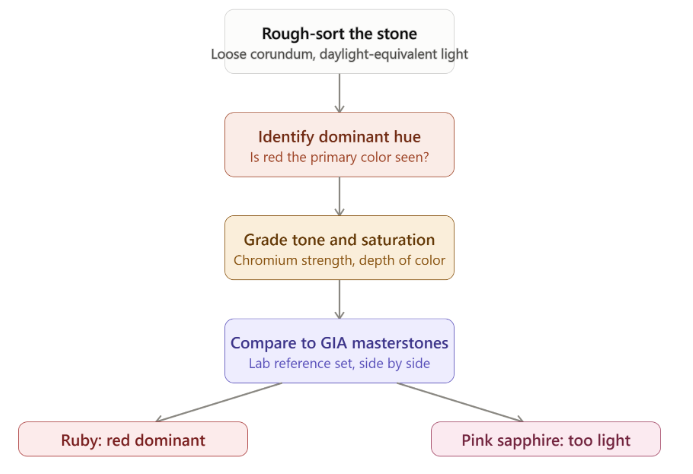
Sri Lanka (Ceylon). Sri Lankan corundum deposits are older and more geologically varied than Myanmar's, producing everything from padparadscha sapphire to fine ruby. Ceylon rubies tend to sit at the brighter, pinker end of the accepted ruby range — still red-dominant by lab standards, but with a lighter, more luminous character than Mogok material. Sri Lanka is also, gram for gram, the source of some of the world's finest pink sapphire, which sits just across the color line from ruby.
Mozambique. The newest major player, and now arguably the most important one by volume. Commercial ruby mining at Montepuez only began in the early 2010s, but the deposit turned out to be enormous, and quality has climbed fast. Early Mozambique material was often compared to Thai ruby — darker, more brownish, less fluorescent, because of higher iron content. But certain pockets of the Montepuez deposit produce low-iron rough with the same vivid fluorescent glow historically associated with Burma, and the 2023 record sale below is the clearest proof the market has taken notice.
Other notable sources. Thailand and Cambodia's Pailin mines were historically important but are now largely depleted, producing darker, garnet-like red material. Vietnam's Luc Yen deposit occasionally yields fine, Burmese-quality stones. Tanzania (Winza) and Madagascar contribute smaller volumes of good commercial-to-fine material. Afghanistan and Tajikistan have historic deposits that rarely reach international markets in volume.
Ruby Origin Value Comparison Table
However, three origins dominate today's high-end ruby market:
Burmese Ruby
Ceylon Ruby
Mozambique Ruby

Burmese Ruby vs Ceylon Ruby: A Side-by-Side Comparison
The honest answer to "Burmese ruby vs Ceylon ruby" is that origin alone doesn't settle quality — a mediocre Burmese stone can lose to an exceptional Ceylon stone in a side-by-side comparison. But at the top end, where two stones are otherwise equal in color and clarity, Burmese origin still carries the strongest premium in the international market, purely on reputation and historical scarcity. That premium is earned partly by chemistry and partly by three centuries of dealers, royalty, and auction houses treating Mogok as the reference standard.
Mozambique Ruby Comparison: The Market's Fastest-Rising Origin
In the early 2000s, Mozambique transformed the ruby market.
The discovery of major deposits introduced large quantities of high-quality rubies with impressive color.
Today, Mozambique has become one of the most important ruby sources in the world.
World's Most Expensive Ruby: The Record-Breakers
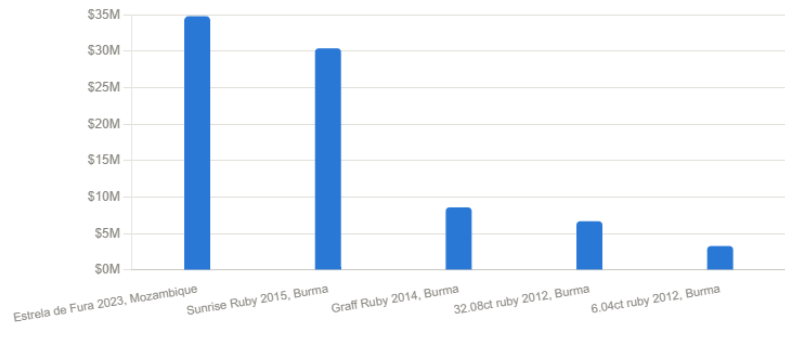
The chart above tells the story in one glance. For nearly a decade, the record for world's most expensive ruby belonged to a Burmese stone. Then, in 2023, a Mozambique ruby took the crown — and the two stones make an interesting study in contrasts.
The Sunrise Ruby.
The Sunrise Ruby is a spectacular:
25.59-carat Burmese ruby
Pigeon blood red color
Exceptional clarity
Mounted by Cartier
It was sold at auction in Geneva in 2015.
Record Price:
Approximately US$30.42 million
This made it one of the most expensive colored gemstones ever sold.
The final price demonstrated how exceptional Burmese rubies continue to dominate the collector market.
The Estrela de FURA.
The Estrela de FURA ruby represents the rising importance of Mozambique.
Discovered in Mozambique, this ruby became famous because of its extraordinary size and quality.
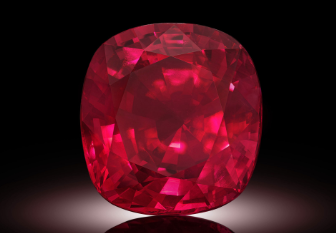
Estrela de FURA Ruby Facts
The gemstone achieved one of the highest prices ever recorded for a ruby.
It proved that exceptional rubies are no longer limited to traditional Burmese origins.
The Graff Ruby. Before either of those, an 8.62-carat Burmese ruby sold in 2014 for roughly $8.6 million, or about $997,000 per carat — at the time, the highest price per carat ever recorded for a ruby, and still third on the all-time list.
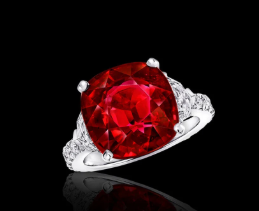
What these sales share is more instructive than what separates them: every record-breaking ruby has been natural, unheated, and Burmese or Mozambican, with a documented lab report confirming both origin and treatment status. No heated stone, and no stone without independent certification, has ever come close to these prices — which tells you almost everything about what actually drives value at the top of this market.
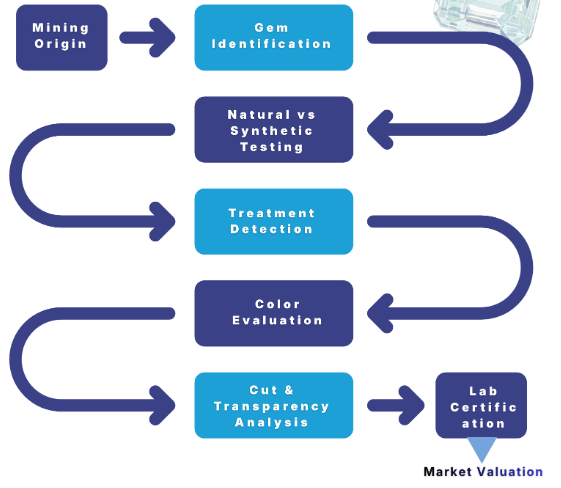
Ruby Evaluation Workflow
Professional gemstone buyers follow a detailed evaluation process.
Mining Origin
↓
Gem Identification
↓
Natural vs Synthetic Testing
↓
Treatment Detection
↓
Color Evaluation
↓
Cut & Transparency Analysis
↓
Laboratory Certification
↓
Market Valuation
Every step affects the final price.
Why Origin Matters in Ruby Buying
A ruby's origin is more than geography.
It represents:
Geological history
Mining tradition
Supply rarity
Collector confidence
This is why two rubies with similar appearance may have completely different prices.
For example:
A 3-carat untreated Burmese ruby may command a much higher premium than a similar-looking ruby from another origin because of historical rarity.
What This Means If You're Buying, Not Just Watching Auctions
Most buyers will never touch a $30 million ruby, but the same forces that set those prices scale all the way down to a one-carat stone. Origin matters, but it's not destiny — a well-cut, richly colored, unheated Ceylon or Mozambique ruby can outperform a mediocre Burmese stone in both beauty and long-term value. What actually separates a good purchase from an overpriced one is the same short list every time: documented origin from a major lab, honest disclosure of heat treatment, and a color call you've verified yourself rather than taken on faith from a listing description.
If you're comparing origins for a specific piece — Burmese, Ceylon, or Mozambique — and want help sourcing a certified stone that matches your budget and color preference, get in touch with our team. We source directly from Sri Lankan and East African supply chains and can walk you through the certificate before you commit.
References
Sotheby's, "Magnificent Jewels and Noble Jewels" auction results, Geneva, May 2015 (Sunrise Ruby) — sothebys.com
Sotheby's, "Magnificent Jewels" auction results, New York, June 2023 (Estrela de FURA) — sothebys.com
Rapaport News, "55ct. Ruby Fetches World-Record $35M" — rapaport.com
Guinness World Records, "Most expensive ruby per carat sold at auction" — guinnessworldrecords.com
Gemological Institute of America (GIA), "Ruby Quality Factors" — gia.edu/ruby-quality-factor
American Gem Trade Association (AGTA), commentary on Mozambique ruby market impact — agta.org