Contenido del artículo
Cuando buscas una joya deslumbrante, pocas piedras preciosas cautivan tanto como un zafiro azul profundo y aterciopelado. Sin embargo, estar frente al mostrador de una joyería o navegar en línea plantea un dilema moderno al que los compradores de hace una generación rara vez se enfrentaban: zafiro natural frente a zafiro sintético .
Gracias a los avances en gemología, las alternativas creadas en laboratorio lucen idénticas a simple vista. Pero, ¿en qué se diferencian realmente? ¿Qué factores influyen en el precio de un zafiro azul y cómo elegir el que mejor se ajuste a tu presupuesto, valores y estilo?
Analicemos la verdad sobre estas dos piedras, comparando sus orígenes, valor, durabilidad y ética para que puedas tomar una decisión con confianza.
La diferencia fundamental: cómo se fabrican.
Para comprender ambas opciones, debemos analizar cómo surgen.
Zafiros naturales
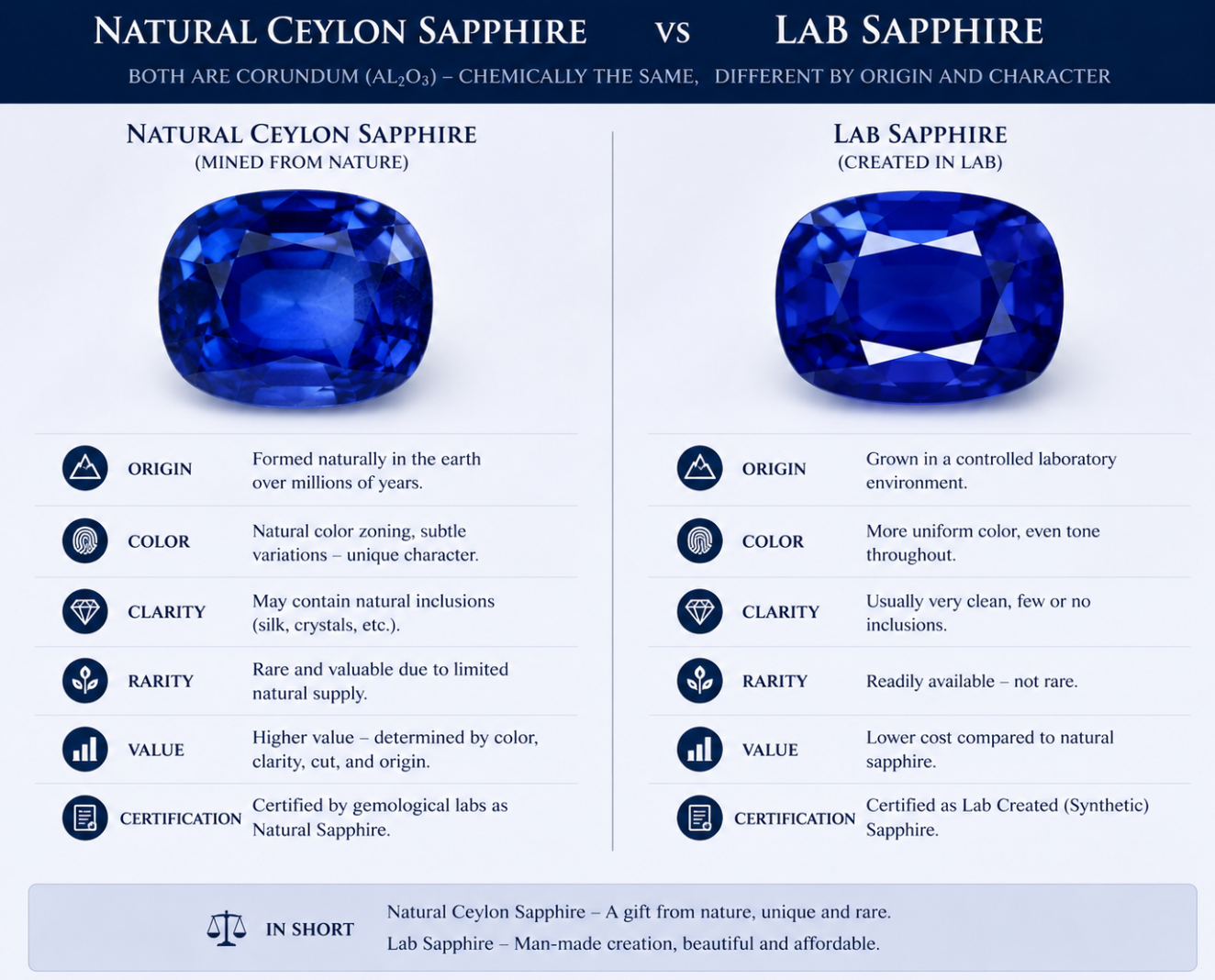
Los zafiros naturales se forman en las profundidades de la corteza terrestre a lo largo de millones de años. Están compuestos de corindón (óxido de aluminio) y su característico color azul se debe a pequeñas cantidades de hierro y titanio. Al ser forjados por la naturaleza bajo un intenso calor y presión, están sujetos a irregularidades ambientales. Esto significa que casi todos los zafiros naturales presentan pequeñas inclusiones internas (fibras, filamentos o diminutos cristales minerales). Según el Instituto Gemológico de América (GIA) , los zafiros naturales impecables son extremadamente raros.
Zafiros cultivados en laboratorio
Los zafiros creados en laboratorio no son piedras falsas ni simuladas como la circonita cúbica o el vidrio. Química, física y ópticamente, son idénticos a los zafiros naturales. Se cultivan en entornos de laboratorio controlados mediante métodos como la fusión por llama (proceso Verneuil) o el crecimiento por fundente. Los científicos replican las condiciones térmicas y químicas exactas que se encuentran en la Tierra, pero aceleran el proceso a cuestión de semanas. Gracias a la estricta monitorización del entorno, los zafiros cultivados en laboratorio suelen presentar una claridad impecable y una coloración perfecta y saturada.
Comparación lado a lado
Antes de analizar las ventajas y desventajas, aquí les presentamos un breve resumen de cómo se comparan en función de sus principales características técnicas:
Economía: Entendiendo el precio del zafiro azul
La diferencia más notable para los compradores habituales es el precio. La estructura de precios del zafiro azul difiere drásticamente entre las gemas naturales y las creadas en laboratorio.
¿Qué factores influyen en el precio del zafiro natural?
El precio de los zafiros naturales se basa en la ley económica de la escasez.
Color: Cuanto más vivo y puro sea el azul (a menudo llamado "azul real" o "azul aciano"), mayor será el precio.
Origen: Los zafiros procedentes de minas históricas agotadas, como las de Cachemira, alcanzan precios astronómicos, seguidos de las piedras preciosas de Ceilán (Sri Lanka) y Madagascar.
Tamaño: A medida que aumenta el peso en quilates, el precio por quilate sube exponencialmente, ya que encontrar piedras en bruto grandes y de alta calidad en la naturaleza es extremadamente raro. Un zafiro natural de 3 quilates no solo cuesta tres veces más que una piedra de 1 quilate, sino que puede costar diez veces más.
Tratamientos: Los zafiros naturales sin tratar térmicamente tienen un precio mucho más elevado que aquellos que han sido sometidos a tratamiento térmico para mejorar su color y claridad (una práctica habitual en la industria).
¿Qué factores influyen en el precio de las tarjetas Lab Sapphire?
El precio de los zafiros de laboratorio se basa en el costo de la mano de obra, la energía y la tecnología. Dado que la producción puede ajustarse a la demanda, no existe escasez inherente. Un zafiro de laboratorio impecable de 3 quilates costará solo una fracción de su equivalente natural, y el precio por quilate se mantiene relativamente constante a medida que aumenta el tamaño de la gema.
Sopesando las ventajas y las desventajas
La elección entre estas dos preciosas gemas depende de lo que más valores en tus joyas.
Zafiros naturales
Ventajas:
Valor intrínseco: Conservan un valor financiero con el tiempo y pueden convertirse en preciadas reliquias familiares que se revalorizan.
Singularidad: No existen dos zafiros naturales idénticos. Sus inclusiones únicas actúan como una huella dactilar natural.
El romanticismo de la naturaleza: Existe un misticismo innegable al llevar puesto un pedazo de la Tierra forjado hace millones de años.
Desventajas:
Alto coste: Requieren una inversión financiera importante, especialmente para los colores intensos y las piedras transparentes.
Imperfecciones: Encontrar una piedra visualmente perfecta con un presupuesto modesto es casi imposible.
Zafiros cultivados en laboratorio
Ventajas:
Económico: Puedes comprar una piedra grande y visualmente impresionante por hasta un 80-90% menos que una piedra natural de apariencia similar.
Imágenes impecables: Ofrecen colores vivos y de primera calidad, así como una claridad excepcional, sin tener que pagar un precio excesivo.
Transparencia ética: Garantizamos que no habrá conflictos y que la alteración del territorio será mínima en comparación con las prácticas mineras tradicionales.
Desventajas:
Sin valor de reventa: No tienen valor en el mercado secundario. No pueden considerarse un activo financiero.
Característica común: Debido a que son fabricados en serie, carecen de la "esencia" interna y de los pequeños defectos que se remontan a su historia geológica.
¿Cuál deberías elegir?
No hay una respuesta incorrecta al decidir entre un zafiro natural y un zafiro sintético . Tu elección final debe estar en consonancia con tu estilo de vida y tus expectativas.
Elige un zafiro natural si: buscas un anillo de compromiso o una pieza de inversión con valor de herencia. Si aprecias el romanticismo de la rareza y consideras tus joyas finas como un activo que preserva la historia, la opción natural bien vale la inversión.
Elige un zafiro cultivado en laboratorio si: Buscas el máximo impacto visual sin salirte del presupuesto. Si deseas una joya llamativa y vibrante para el día a día, o un anillo de compromiso que priorice el tamaño y la claridad perfecta sin gastar una fortuna, las piedras cultivadas en laboratorio ofrecen una alternativa visualmente idéntica, muy duradera y económica.
Independientemente de la opción que elija, compre siempre en joyerías de confianza que ofrezcan información transparente. Si opta por una piedra natural, asegúrese de que venga con un certificado de laboratorio independiente emitido por una autoridad reconocida, como la American Gem Trade Association (AGTA) o el GIA, para verificar su origen y tratamiento.
Referencias
Instituto Gemológico de América (GIA). Factores de calidad del zafiro. Recuperado de https://www.gia.edu/sapphire-quality-factor
Asociación Estadounidense de Comercio de Gemas (AGTA). Seguridad y certificación de gemas. Obtenido de https://gembureau.org/