محتوى المقال
Here is a fact that surprises many of our customers: a ruby and a sapphire are the same mineral.
So why is one red and the other blue? The answer sits inside the crystal. Tiny amounts of other elements, sometimes just a few parts per million, decide the color. Today we want to walk you through how one mineral turns blue, yellow, pink, green, purple or even orange, and why that matters when you buy a sapphire.
1. One Mineral, Many Colors
Let's start with the basics.
The mineral is called corundum. Chemically it is just aluminium and oxygen (Al₂O₃). In its purest form, corundum is colorless. It is also very hard, 9 on the Mohs scale, which is why sapphire holds up so well in everyday jewelry.
Color appears when small amounts of other elements slip into the crystal structure. The naming is simple:
Red corundum is called ruby.
Every other color of gem-quality corundum is called sapphire.
So ruby and sapphire are not cousins. They are two varieties of the same gemstone, and the line between them is just a color call.
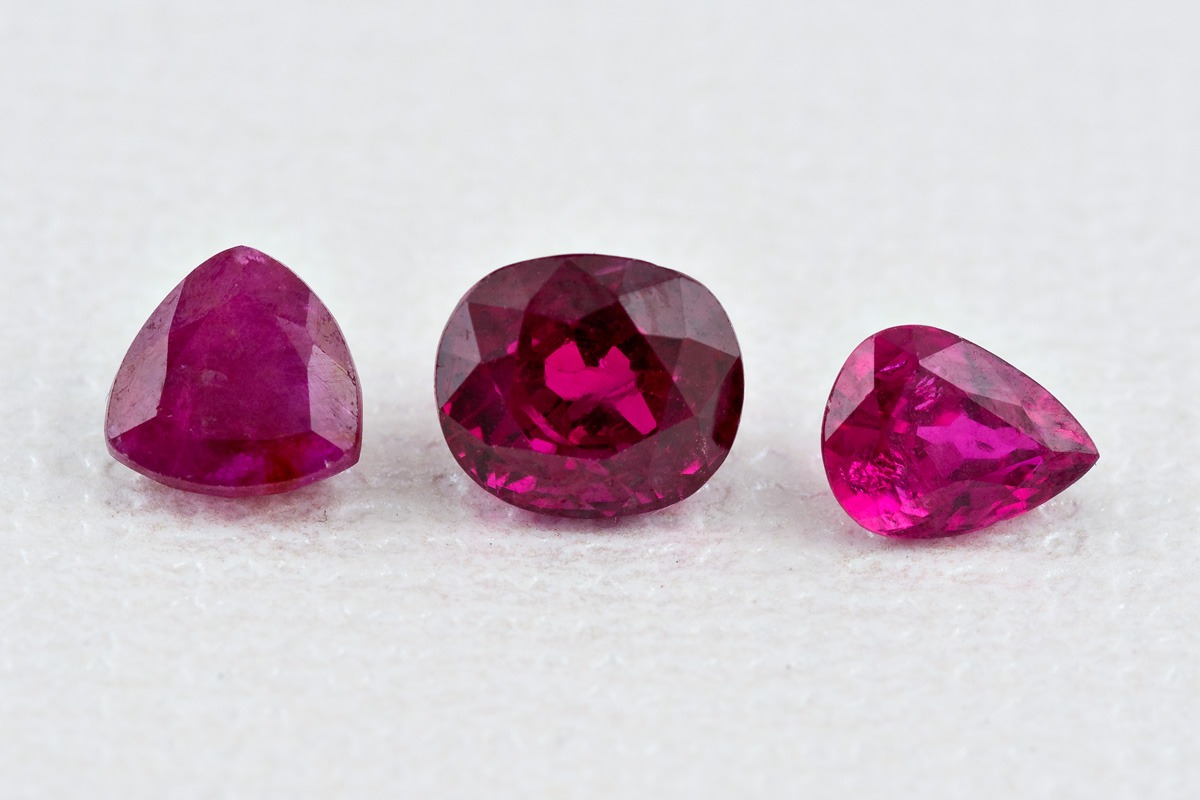
Red corundum is called ruby
2. What Creates Each Color?
The short answer is trace elements. Here is the cheat sheet we use at the bench.
A few notes to make the table easier to read:
Blue needs a pair. Iron and titanium have to work together. Neither one makes blue on its own.
Red and pink are close relatives. Both come from chromium. More chromium gives a deeper red. Less gives pink. In practice, the point where a pink sapphire becomes a ruby is a matter of judgment, and labs can differ.
Padparadscha is the special one. This rare pink-orange sapphire is named after the color of a lotus flower. Its soft, delicate tone comes from a specific balance of trace elements, mainly chromium and iron. If the balance tips a little, the stone turns into a plain pink or orange sapphire. That is why true padparadscha is so hard to find, and why buyers value a good one so highly.
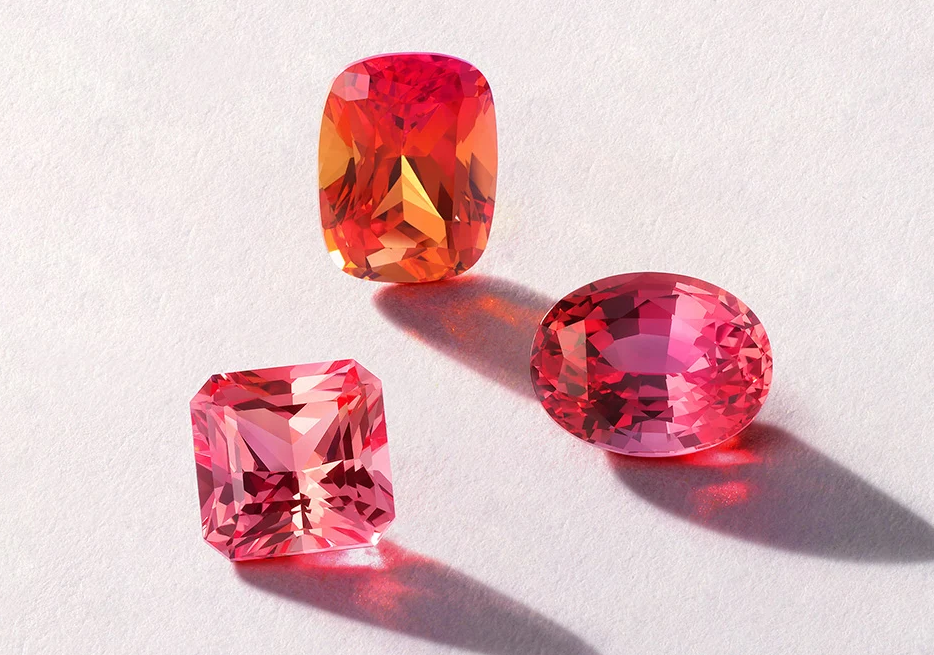
The Padparadscha sapphires
The key takeaway: even a tiny change in these elements can shift a sapphire's color a lot.
3. Why Origin and Heat Treatment Matter
Color is not only chemistry. Where a sapphire forms matters too.
Origin
Different geological environments produce very different stones. Sri Lanka is a good example. The famous Ceylon deposits around Ratnapura are known for metamorphic sapphires. These stones can show lovely colors, good transparency and strong potential for fine gemstones. When we source Ceylon material, this is usually what we look for: clean, lively color rather than a heavy, dark tone.
Origin does not make a stone good or bad on its own. A fine sapphire from one place can beat an average one from another. But origin is one clue to how the stone formed, and it can affect price.
Heat treatment
Now, what about heating?
Many sapphires on the market have been heated. Heating can improve color and clarity by changing certain internal features, such as tiny rutile inclusions (often called "silk").
Here is the part people worry about, so we will be direct: heat treatment is a widely accepted industry practice. It does not mean a sapphire is fake. A heated sapphire is still a real, natural sapphire.
What matters is honest disclosure. Unheated sapphires are generally rarer, and they may command higher prices when all other quality factors are comparable.
How to Read a Sapphire Step by Step
When a stone lands on our table, we follow roughly the same path every time. You can use it too.
And as a simple flow:
Corundum crystal → trace elements enter → color forms → origin shapes the stone → heating may refine it → lab report confirms → you choose with confidence
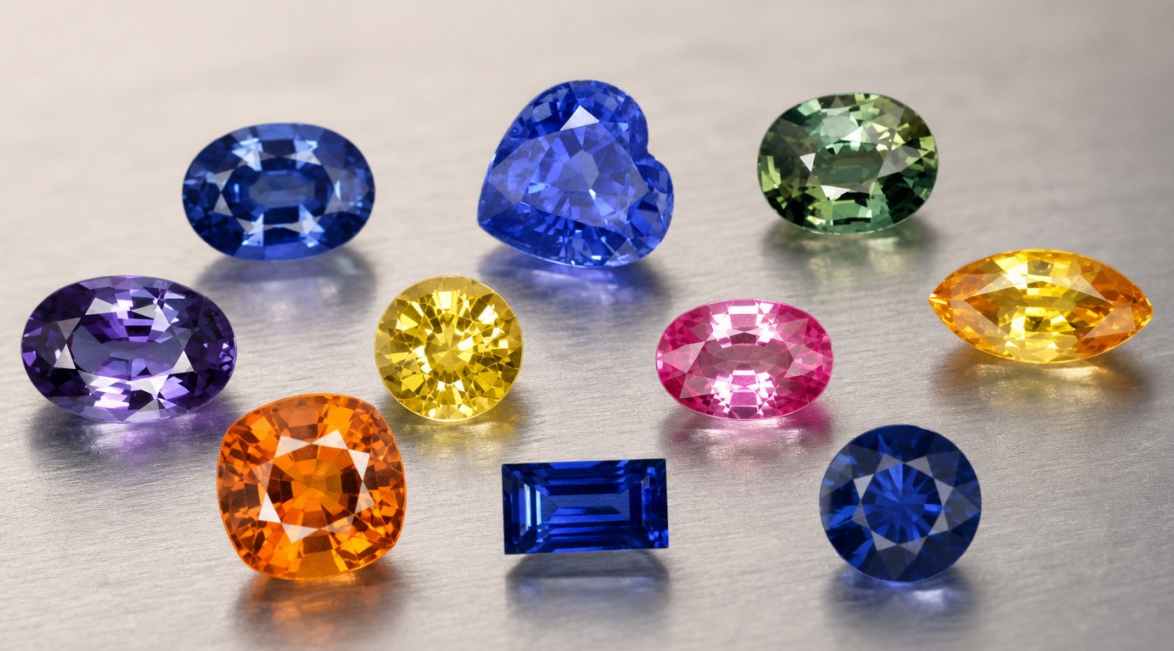
Sapphires come in different colors
A Quick Buying Checklist
Choose the color first. Pick the shade you actually love, not just the one that is popular.
Ask about treatment. A good seller answers plainly: heated or unheated.
Ask about origin. If a seller claims one, ask whether a lab report supports it.
Compare like with like. Two sapphires only compare fairly when color, clarity, size and treatment are similar.
Look at the stone in different light. Daylight, warm indoor light and a phone flashlight can each show something different.
Final Thoughts
Ruby and sapphire share one mineral, and a few trace elements do the rest. Chromium gives red and pink, iron and titanium give blue, iron alone gives yellow and green, and vanadium brings purple. Add the influence of origin and heating, and you can see why no two sapphires are quite alike. Understanding these basics makes it much easier to judge a stone and to ask the right questions. If you would like help choosing a sapphire or have questions about color, origin or treatment, contact our gemologists for personal advice, or browse our sapphire collection and find the color that speaks to you.
References
Gemological Institute of America (GIA). Sapphire Description and Sapphire Quality Factors. https://www.gia.edu/sapphire-description
Gemological Institute of America (GIA). Ruby Description. https://www.gia.edu/ruby-description
Hughes, R. W., Manorotkul, W., & Hughes, E. B. (2017). Ruby & Sapphire: A Gemologist's Guide. RWH Publishing.
Emmett, J. L., Scarratt, K., McClure, S. F., et al. (2003). Beryllium diffusion of ruby and sapphire. Gems & Gemology, 39(2), 84–135. Gemological Institute of America.
Mindat.org. Corundum. https://www.mindat.org/min-1130.html
Laboratory Manual Harmonisation Committee (LMHC). Information Sheets (including padparadscha and heat treatment nomenclature). https://www.lmhc-gemmology.org