Article Content
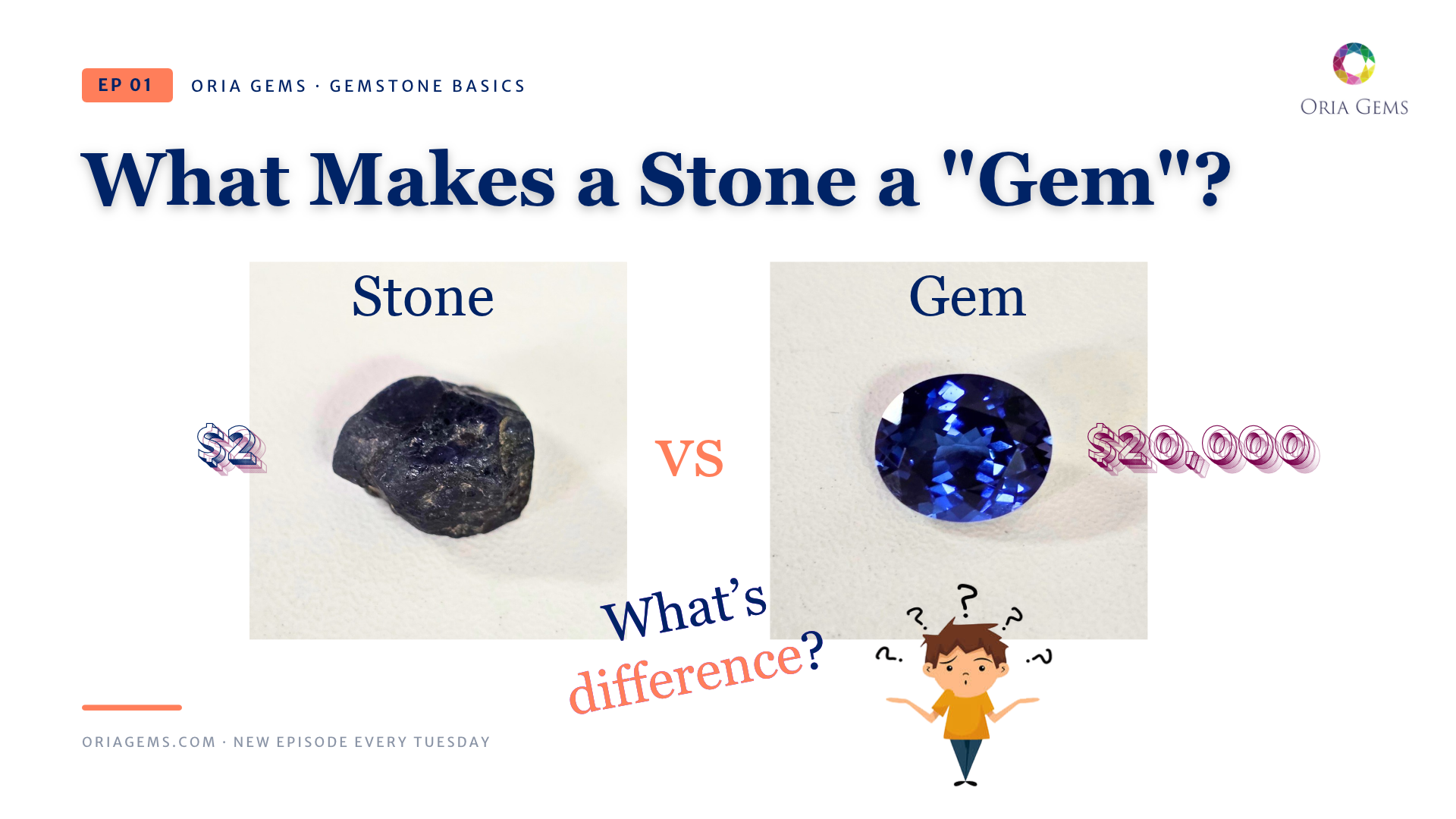
Hold a piece of grey corundum rough in one hand and a faceted blue sapphire in the other. They may look like completely different materials, but both can be made of the same mineral: corundum, or aluminium oxide (Al₂O₃).
One looks like an ordinary rock. The other can become the centrepiece of a fine piece of jewellery.
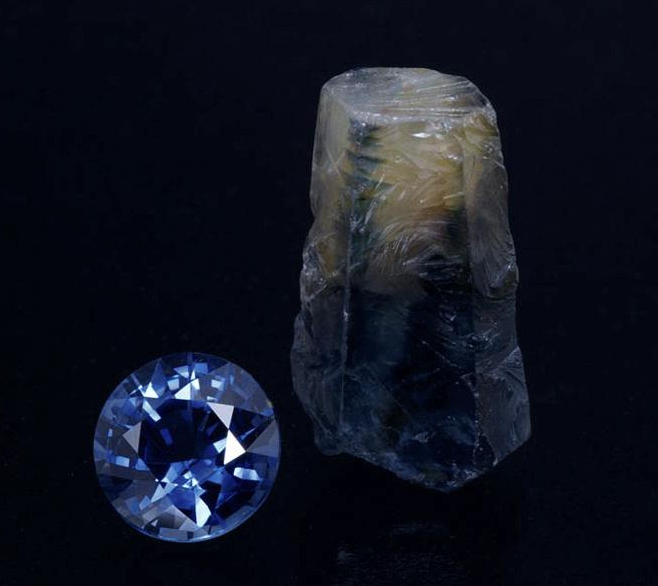
Rough corundum and faceted blue sapphire illustrating gemstone cutting
What makes the difference?
It is not simply beauty, hardness, or rarity on its own. A gemstone combines desirable appearance, useful physical properties, and a level of rarity or demand that makes people want to own it.
Understanding these factors helps explain why some stones command extraordinary prices while others, despite looking beautiful, remain relatively affordable.
1. What Makes a Gemstone a Gem?
A mineral does not automatically become a gemstone just because it is attractive.
Gem materials are generally valued for their beauty, durability, and rarity. They may be minerals, rocks, organic materials, or other naturally occurring substances used for decorative or jewellery purposes.
For example, sapphire and ruby are mineral varieties of corundum. Lapis lazuli is a rock composed of several minerals, while amber is fossilized resin.
Rough gemstones may look unremarkable before cutting and polishing. Their natural crystal shapes, surface textures, and inclusions can hide the colour and brilliance that become visible after skilled craftsmanship.
A well-cut stone can reveal the beauty already present in the material. However, cutting cannot turn every piece of rough into a valuable gem. The quality of the original material still matters.
The important distinction: a gemstone is not defined by appearance alone. Its material, physical properties, rarity, craftsmanship, and intended use all contribute to its appeal.
2. Beauty Is More Than a Feeling
Beauty may be personal, but many of the features that influence a gemstone’s appearance can be observed and evaluated.
For coloured gemstones, three important considerations are colour, clarity, and cut quality.
Colour: The first thing you notice
Colour is often the most influential quality factor in coloured gemstones.
Gemologists evaluate colour through three main dimensions:
Hue: The basic colour, such as blue, red, green, or yellow.
Saturation: The strength or intensity of the colour.
Tone: How light or dark the colour appears.
The ideal combination differs from one gemstone variety to another. A vivid blue sapphire, a rich red ruby, and a bright green emerald are judged according to different colour expectations.
Even two sapphires with similar hues may have very different values because one has a more attractive saturation, tone, or colour distribution.
Clarity: What can you see inside?
Clarity describes the presence and visibility of internal features, such as inclusions, and surface characteristics.
A stone with high transparency may allow light to pass through more cleanly. However, clarity must be judged in the context of the gemstone variety.
Some gems commonly contain inclusions. In certain stones, these features are accepted as part of their natural character, and particular inclusions can even contribute to a desirable visual effect.
The goal is not necessarily to find a stone with absolutely no inclusions. It is to understand how its clarity affects its appearance, durability, and value.
Cut: Where craftsmanship makes the difference
Cutting is much more than choosing a round, oval, pear, or cushion shape.
Cut quality involves the arrangement of facets, proportions, symmetry, and polish. These elements influence how light travels through the stone and how its colour appears when viewed from the top.
A poorly proportioned gemstone may show a pale or see-through area called a window, where light passes through rather than returning effectively to the observer. Another stone may appear too dark because of the way it handles light.
A well-cut gemstone balances light return, colour, brilliance, and the shape of the original rough.
The cutter must also consider weight retention. Removing more material may improve appearance but reduce the final carat weight. Keeping too much material can preserve weight while compromising the finished stone’s beauty.
This is why good cutting requires both technical skill and artistic judgment.
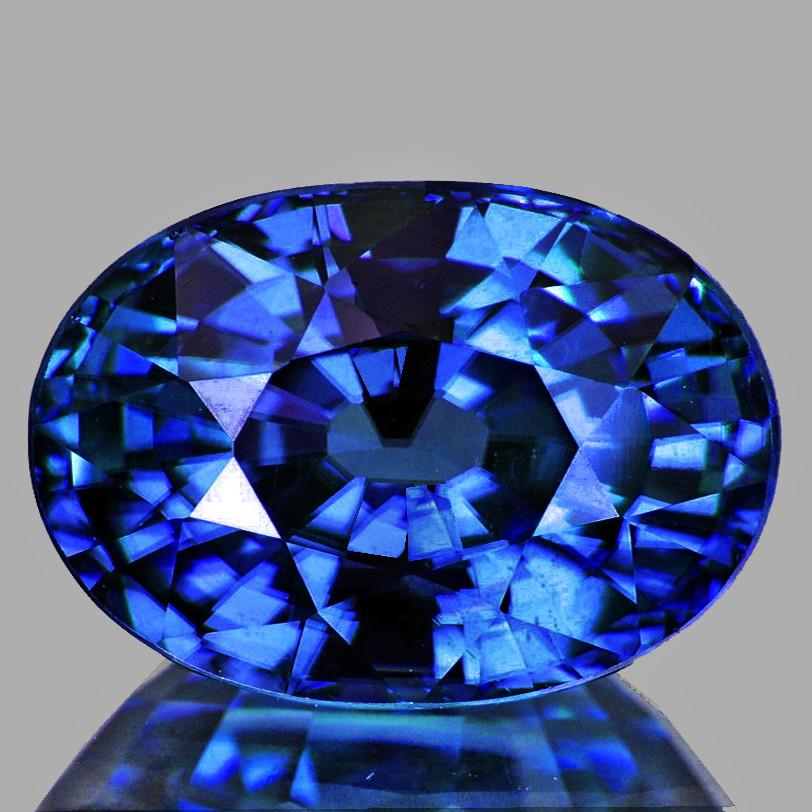
Faceted blue sapphire showing colour and facet reflections
3. Mohs Hardness Scale Explained: Hardness Is Not Toughness
One of the most common misunderstandings in gemology is the idea that the hardest gemstone must also be the strongest.
That is not true.
Gemstone durability involves three important properties: hardness, toughness, and stability.
Hardness: Resistance to scratching
The Mohs hardness scale ranks minerals according to their relative resistance to scratching. It runs from 1, the softest reference mineral, to 10, diamond.
These values are useful reference points, but the scale is not linear. Diamond is significantly harder than corundum even though it is only one step higher on the scale.
Hardness helps explain why sapphire and ruby are suitable for many types of jewellery, including rings that receive regular wear.
Toughness: Resistance to breaking and chipping
Toughness describes how well a material resists fracture, chipping, or breaking.
Diamond is the hardest natural mineral, but it can still chip or cleave when struck in vulnerable directions. Its hardness does not make it immune to damage.
Jade provides a useful contrast. Jadeite typically measures about 6.5–7 on the Mohs scale, while nephrite is approximately 6–6.5. Both can have exceptional toughness, making them relatively resistant to breaking and chipping.
In simple terms:
Hardness protects against scratches. Toughness protects against breakage.
Stability: Resistance to environmental changes
Stability describes how a gemstone responds to factors such as heat, light, chemicals, and changes in its environment.
Some gemstones can be sensitive to prolonged light exposure or sudden temperature changes. Treatments may also affect how a stone should be cared for.
This is why no single hardness number tells you everything about a gemstone’s durability.
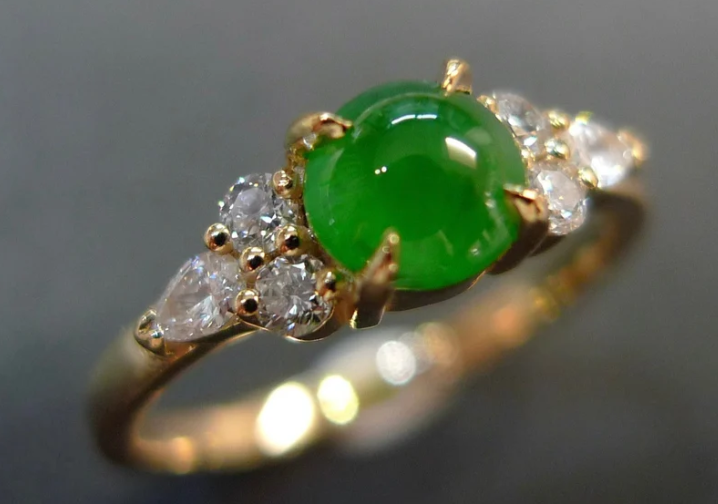
Diamond and jade illustrating differences in gemstone durability
4. Rarity and Demand: Why Do Some Gemstones Cost So Much?
Rarity matters, but it does not work alone.
The price of a gemstone reflects the relationship between its available supply, its quality, and the demand from buyers. Origin, treatment status, size, and craftsmanship can further influence what people are willing to pay.
Consider amethyst and ruby.
Both can be beautiful. Both can be cut into jewellery stones. Both can be suitable for appropriate jewellery designs.
However, fine rubies with exceptional colour, transparency, size, and desirable origin or treatment characteristics can be much rarer than comparable-quality amethyst. As a result, they may command dramatically higher prices.
But a rare stone is not automatically expensive. If few buyers want it, its market price may remain modest.
Likewise, a gemstone that is relatively available can still become highly desirable because of its colour, quality, or popularity.
The main factors that influence coloured gemstone value
These factors do not carry equal weight in every case. For coloured gemstones, colour is often especially important, while origin and treatment can have a substantial impact on particular varieties.
A gemstone’s value is therefore not a simple formula. It is an assessment of several characteristics within a particular market.
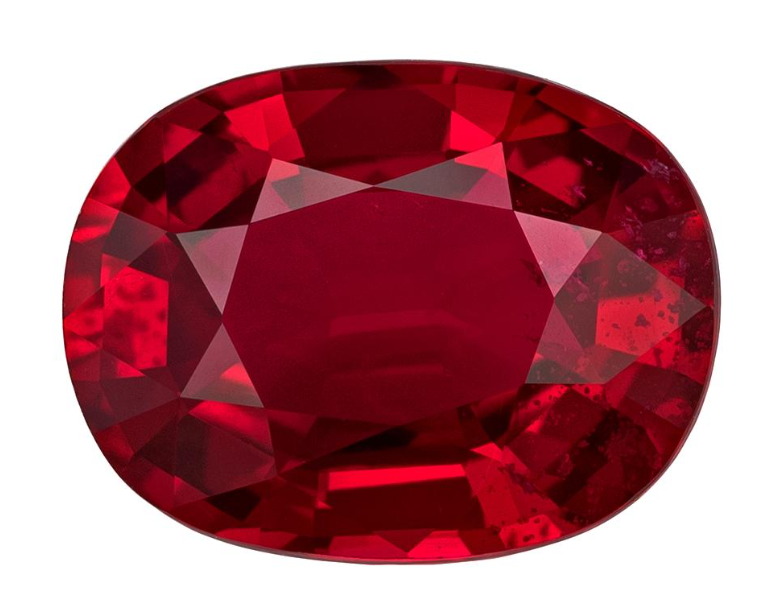
Fine red ruby illustrating the rarity and quality factors of coloured gemstones
5. The Fourth Factor: Culture and Tradition
Here is the part that is easy to overlook: gemstone value is also shaped by what people believe a stone represents.
Diamonds are a familiar example.
Their physical properties make them highly useful in jewellery, but their cultural association with engagement and marriage also contributes to their commercial importance.
Historical advertising played a role in strengthening that association. The Smithsonian's National Museum of American History preserves diamond advertisements from the 1940s, including material associated with De Beers and its engagement-ring marketing.
This does not mean diamonds have no intrinsic qualities, or that their prices are purely invented. It means cultural expectations can influence demand alongside physical characteristics and supply.
The same principle applies to coloured gemstones. A sapphire associated with royalty, a ruby treasured across generations, or a jade carving valued for its cultural meaning may carry significance beyond its material properties.
Tradition can influence what people choose to buy, what they collect, and what they are willing to pay.
6. A Simple Workflow for Evaluating a Gemstone
When comparing gemstones, work through the following sequence:
Step 1: Identify the material
Establish whether the stone is sapphire, ruby, another mineral, or a different gem material.
↓
Step 2: Assess its appearance
Examine colour, transparency, inclusions, and overall visual appeal.
↓
Step 3: Evaluate durability
Consider hardness, toughness, stability, and suitability for the intended jewellery design.
↓
Step 4: Examine craftsmanship
Look at cut proportions, symmetry, polish, light return, and weight retention.
↓
Step 5: Verify important claims
Review available treatment disclosures, origin information, and independent laboratory reports when appropriate.
↓
Step 6: Consider market value
Compare stones of similar quality, taking account of size, rarity, supply, demand, and buyer preferences.
This process does not replace a professional appraisal or laboratory examination. It provides a practical starting point for making more informed purchasing decisions.
Frequently Asked Questions
What makes a gemstone different from an ordinary rock?
A gemstone is selected for its desirable appearance, physical properties, rarity, and suitability for decorative use. Some gemstones are minerals, while others, such as lapis lazuli, are rocks or, in the case of amber, organic materials.
Is a harder gemstone always more valuable?
No. Hardness is only one property. Colour, clarity, rarity, size, origin, treatment, cut quality, and market demand can all affect value.
Why can a small ruby cost more than a large amethyst?
Fine ruby may be much rarer than comparable-quality amethyst, particularly when colour, size, origin, and treatment status are taken into account. Price depends on the complete quality profile, not carat weight alone.
Does a good cut always make a gemstone more valuable?
Good cutting can improve a gemstone’s appearance and desirability. However, the final value also depends on the rough material, the weight retained, the gemstone variety, and what buyers want.
Conclusion: What Really Makes a Gem Valuable?
A gemstone is more than a beautiful object. Its appeal comes from a combination of measurable physical properties, natural characteristics, and human preferences.
Beauty can be assessed through colour, clarity, and cut. Durability requires an understanding of hardness, toughness, and stability. Rarity matters, but its influence on price depends on quality and market demand.
And then there is culture: the meaning people attach to particular stones, sometimes across centuries.
At Oria Gems, we believe that understanding these factors helps buyers make better decisions. Whether you are sourcing sapphire, ruby, or other natural coloured gemstones for jewellery production, collecting, or resale, looking beyond appearance can help you assess a stone more confidently.
Explore available gemstones at shop.oriagems.com, or contact Oria Gems to discuss wholesale enquiries, available inventory, and your gemstone sourcing requirements.
References and Further Reading
Gemological Institute of America (GIA), Gems: What Are Gems? — An introduction to beauty, rarity, durability, and gem materials.
GIA, Colored Gemstone Value Factors — How colour, clarity, origin, size, and cut influence value.
GIA, Colored Stone Cut Quality: What to Look For — The role of craftsmanship and cutting quality.
GIA, More Than the Mohs Scale: Understanding Gem Durability — Hardness, toughness, and gemstone stability.
GIA, Jade Care and Cleaning Guide — Jadeite and nephrite hardness, toughness, and care.
Smithsonian National Museum of American History, Love in Bloom: De Beers Advertisement — A historical record of diamond and engagement-ring advertising.