Contenido del artículo
If you've spent any time around fine colored gemstones, you've probably heard the phrase "Ceylon sapphire" used almost like a stamp of quality. But what does that label actually mean, and why does it move prices so dramatically? A recent auction gave us an unusually clean case study to answer that question.
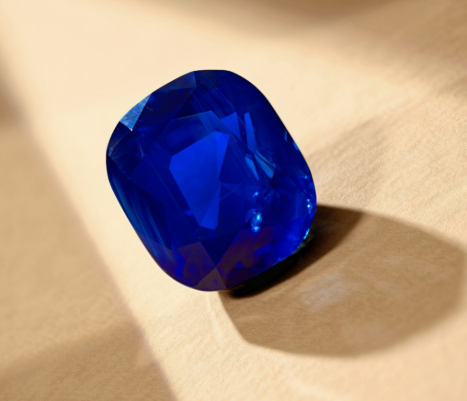
In 2026, Sotheby's Geneva offered an unmounted 102.40-carat cushion-shaped sapphire nicknamed the "Peacock of Ceylon." It sold for CHF 1.55 million — close to USD 2 million — affirming the strength of the market for unheated colored stones. That single sale tells us almost everything we need to know about how the trade prices a great sapphire. Let's unpack it.
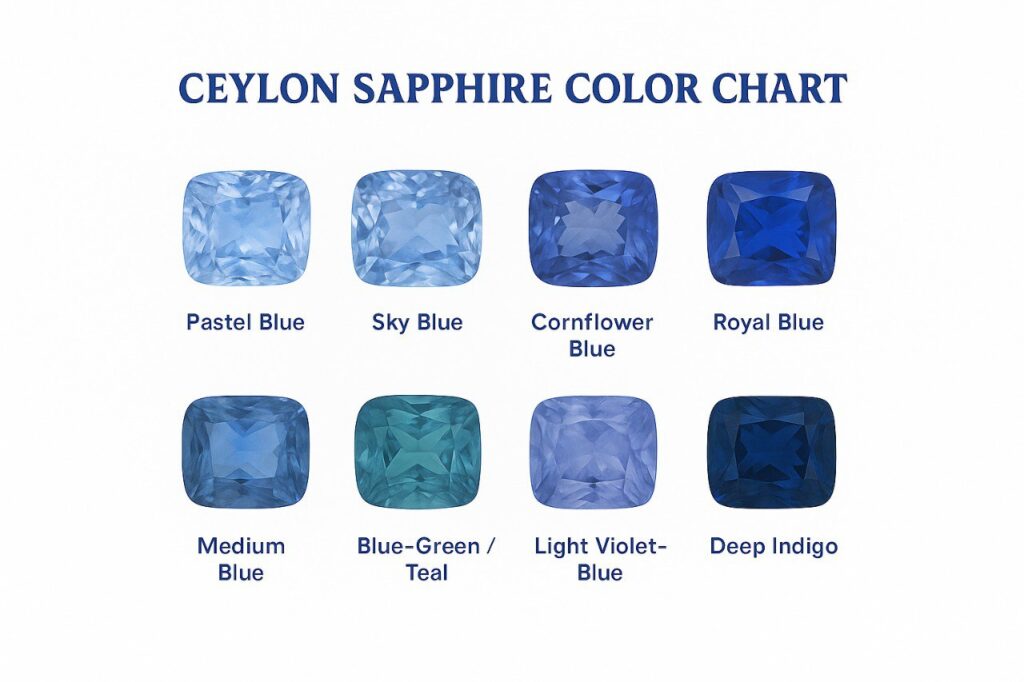
Ceylon Sapphire Blue Color Chart
First, What Does "Ceylon Sapphire" Actually Mean?
"Ceylon" refers to Sri Lanka, the island nation formerly known by that name. Sapphires have been mined there for more than 2,000 years, and historically, many good, evenly colored blue sapphires from Ceylon came in unusually large sizes, with some fine examples surpassing 100 to 300 carats. That mining history matters because it's part of why large, high-quality Ceylon sapphires — like the Peacock — aren't complete anomalies. Sri Lanka's gem gravels are simply known for producing them.
Ceylon sapphires aren't only blue, either. The island also produces a wide range of "fancy" sapphires — any color other than blue — including yellow, purple, pink, and orange, caused by different trace elements in the crystal. The rarest of these is the padparadscha, a delicate pink-orange hybrid found almost nowhere else in comparable quality.
Quick Reference: Ceylon Sapphire at a Glance
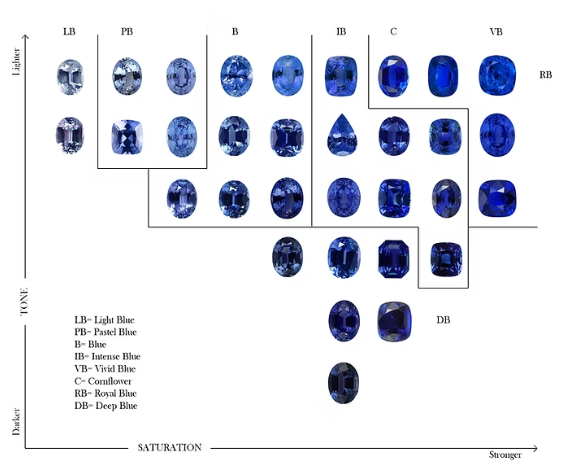
Sapphire colors grading
The Peacock of Ceylon: A Real-World Value Case Study
Here's why this particular stone became such a talking point in the trade.
Two independent, world-respected gem labs — the Swiss lab SSEF and Switzerland's Gübelin Gem Lab confirmed the stone's Ceylon origin with no indications of heating — before it ever reached the auction block. That double-verification is standard practice for any sapphire competing at this level, and it's the single biggest reason the Peacock commanded the price it did.
It's also worth noting this wasn't a one-off. Since 2024, the top-performing sapphire jewelry pieces at auction have collectively sold for around $12 million — roughly 169% above their combined high estimates — and many of the strongest performers were high-quality Ceylon sapphires. The market isn't just paying attention to Ceylon stones; it's actively bidding them past expectations.
The Four Pillars That Actually Drive Sapphire Value
Strip away the marketing language, and every sapphire's price comes down to four overlapping factors. The Peacock happens to score high on all four at once — which is rare, and why it made headlines.
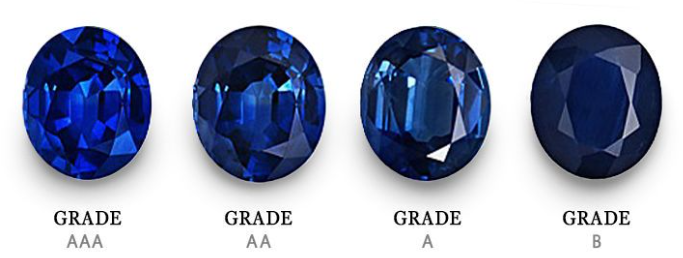
Natural sapphire grading certification
Why "Unheated" Is Worth So Much More
Heat treatment is common, accepted, and disclosed throughout the sapphire trade — it improves color and clarity in the majority of commercial stones. But it also means the gem has been altered from its natural state, and collectors pay a real premium to avoid that.
Unheated Ceylon sapphires with certification from institutions like GIA often sell for prices double those of comparable heated stones. Here's a simplified comparison of how the two categories typically stack up in the trade:
From Rough Crystal to Auction Catalogue: How a Sapphire Gets Verified
A stone doesn't earn "museum-grade" status just because it's big or pretty. It goes through a fairly consistent verification process before it's trusted at high prices. Here's the general workflow the trade follows, using the Peacock's own documented path as the model:
Mining & Recovery — Rough sapphire crystal is recovered from Sri Lankan gem gravels, often through traditional pit mining methods that have barely changed in generations.
Preliminary Sorting — Cutters and dealers assess the rough for color zoning, visible inclusions, and potential finished carat weight.
Cutting & Polishing — A skilled lapidary shapes the stone (in the Peacock's case, a cushion cut) to balance color saturation, brilliance, and yield.
Independent Lab Testing — The finished gem is sent to internationally recognized laboratories for origin determination and treatment analysis.
Dual Certification — For top-tier stones, two labs (rather than one) confirm findings independently, reducing any doubt about origin or heat treatment.
Market Entry — With paperwork in hand, the stone is offered through auction houses, specialist dealers, or private sale, where its story and certification — not just its size — set the price.
This is the same due-diligence path any reputable dealer should be able to walk you through for a fine Ceylon sapphire, whether it's 1 carat or 100.
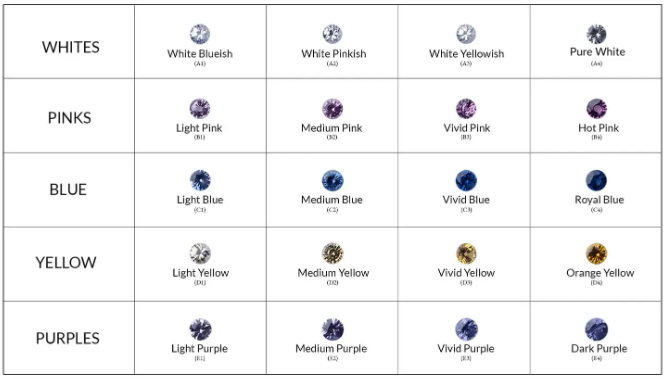
Sapphires and its Variety of Colours
What This Means If You're Buying a Ceylon Sapphire
You're very unlikely to be shopping for a 100-carat sapphire. But the Peacock's story scales down neatly into practical buying advice:
Ask for the lab report before you ask about the price. Origin and treatment should be documented, not assumed.
Judge color in daylight-equivalent lighting. Cornflower and royal blue Ceylon tones can look different under warm store lighting.
Understand that "unheated" isn't just a buzzword. It's a specific, verifiable claim that should come with paperwork from a recognized lab.
Bigger isn't automatically better. A smaller stone with excellent color, clean clarity, and confirmed no-heat status will usually outperform a larger, lower-quality one over time.
Buy from someone who sources at origin. Dealers with direct ties to Sri Lanka typically have better visibility into a stone's full history.
The Takeaway
The Peacock of Ceylon didn't sell for nearly $2 million because it was simply large. It sold for that price because it combined size, saturated color, clean character, and — critically — independently confirmed natural origin with no heat treatment. Those same four factors are exactly what determine value at every level of the Ceylon sapphire market, from museum-grade auction lots down to a single carat set in an engagement ring.
At Oria Gems, we work directly with Sri Lankan sources to offer natural, ethically sourced Ceylon sapphires — heated and unheated — each with the documentation to back up what you're actually buying. If you're building a collection, sourcing for a jewelry line, or simply want to understand what a specific stone is really worth, get in touch with our team and we'll walk you through it, stone by stone.
References
Sotheby's — "Ceylon Sapphires: A Detailed Guide for Collectors and Enthusiasts" — sothebys.com
Sotheby's — "Take a Closer Look at the Top Performing Ceylon Sapphires" — sothebys.com
IDEX Online — "102-ct Blue Sapphire Sells for Almost $2m" — idexonline.com
Berganza — "Exploring Ceylon Sapphires: History, Unique Qualities, Color Change Phenomena, Notable Gems, and FAQs" — berganza.com
GIA (Gemological Institute of America) — Colored Stone Grading & Origin Reports — gia.edu