Article Content
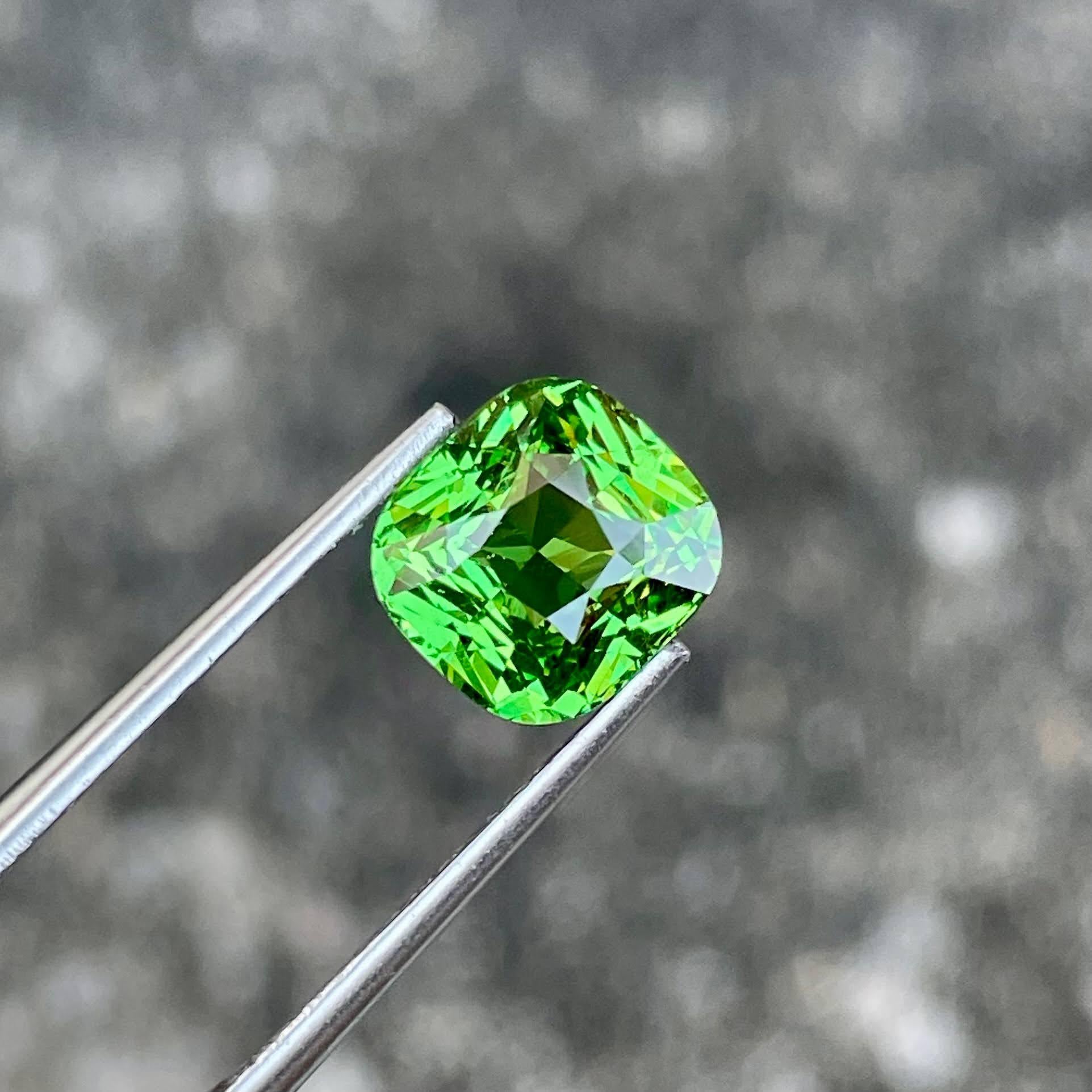
If you've ever held a deep red garnet up to the light, you've probably wondered where it actually came from before it reached a jewelry counter. Unlike a lot of gemstones that are tied to one or two famous deposits, garnet is a whole family of minerals, and its members turn up in mines scattered across almost every continent. That's part of what makes it such an interesting stone to source — and, honestly, part of what makes it confusing for buyers who just want a straight answer to "where is garnet found?"
We put this guide together because it's a question we get constantly at Oria Gems, usually from customers who want to know why one garnet costs three times as much as another that looks almost identical. The short answer is: origin matters. Not because one country's garnet is inherently "better," but because geology decides what colors and varieties come out of the ground in each place. Let's go region by region.
Why Garnet Origin Isn't Just Trivia
Garnet isn't a single mineral — it's a group of closely related silicates (pyrope, almandine, spessartine, grossular, andradite, and uvarovite are the six main species), and they blend into varieties like rhodolite, tsavorite, demantoid, and hessonite. Which combination forms in a given deposit depends on the surrounding rock chemistry, the temperature and pressure during metamorphism, and how the crystals were later transported and concentrated by rivers or weathering. That's why a garnet from East Africa can look completely different from one mined in India, even though both are technically "garnet."
Africa: The Modern Center of Gem-Quality Garnet
Over the last three decades, East and Southern Africa have become the engine room of the global colored garnet trade. A geological formation called the Mozambique Belt — a mountain-building event that stitched together ancient continental fragments hundreds of millions of years ago — runs through several countries and left behind some of the richest garnet-bearing rock on Earth.
Mozambique is probably the name most jewelry shoppers hear most often. Its garnet-bearing terrains sit within the Mozambique Belt, a Pan-African mountain-building belt that runs through the country from north to south and continues into Tanzania and Kenya, with deposits forming in both metamorphic gneisses and pegmatites capable of yielding large, clean crystals. The northern provinces of Niassa and Cabo Delgado supply most of the country's fine raspberry-pink rhodolite, now the most commercially important Mozambican garnet variety. Mozambique also produces rich pyrope-almandine material and, more recently, a rare color-shifting purple garnet that made waves at the Tucson gem shows.
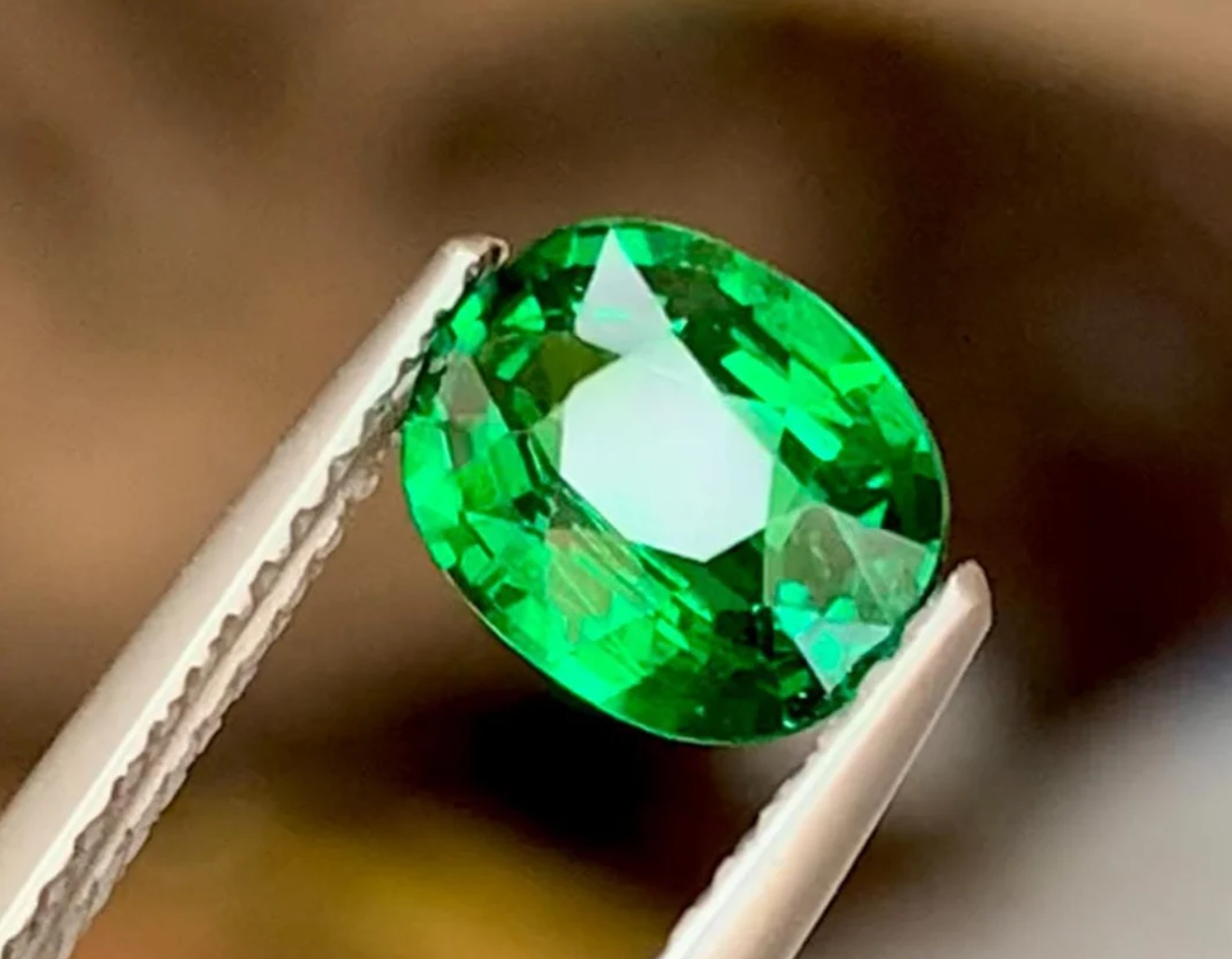
Tanzania wears more than one crown in the gem world. It's the leading global producer of six different gemstones, including garnet, tanzanite, and tourmaline, and it's the original source of tsavorite — the vivid green grossular garnet named after Tsavo National Park, straddling the Kenya-Tanzania border. Tanzania is also famous for the unusual orange-brown "grape garnet" from the Umba Valley and for fine rhodolite.
Kenya, right next door, shares the same tsavorite deposits and is a significant source of both gem and industrial garnet from its metamorphic belts.
Madagascar is a reliable, high-volume supplier of colorful, affordable garnet, contributing everything from rhodolite to spessartine to the world market.
Namibia deserves a special mention for its "Mandarin" spessartine — a fiery orange variety that put the country on the map for collectors — along with rare demantoid material prized for its clarity and green fire.
South Africa produces classic deep-red pyrope, often recovered alongside diamond mining operations.
India: Garnet's Ancient Heartland
India has been mining garnet for centuries, and it remains one of the most important names in the industry today — for two very different reasons.
On the gemstone side, India is historically associated with rich red almandine, mined for generations primarily out of Rajasthan, and the country still produces attractive rhodolite material.
On the industrial side, the numbers are staggering. Rajasthan and Tamil Nadu together host the world's largest industrial garnet operations, combining beach and inland placer deposits that feed the global abrasives and water-jet-cutting industries. According to industry production estimates, India mined roughly 500,000 metric tons of garnet in 2024, trailing only Australia among the world's top producers. That's a useful reminder that most of the world's garnet by weight isn't destined for a jeweler's bench at all — it's destined for sandblasting equipment and water-jet cutters.
Sri Lanka: The "Island of Gems"
Sri Lanka's gem gravels, worked for over a thousand years, have never stopped producing. The Ratnapura district — literally "Gem City" — is the heart of the country's garnet mining, alongside sapphire, spinel, and a long list of other stones. Sri Lankan almandine has historically been marketed as "Ceylon ruby" because of its deep, ruby-like red, and the island also produces attractive rhodolite and unusual color-changing garnets that shift hue between different light sources.
Other Notable Producers Worth Knowing
A few more origins round out the picture:
Russia — famous for vivid green demantoid garnet from the Ural Mountains, one of the most collectible garnet varieties in the world.
United States — Idaho and Montana produce star garnet and industrial material; Arizona, New Mexico, and California yield gem-quality pyrope and almandine.
Brazil — a steady source of almandine and spessartine.
Australia — the world's single largest producer of garnet by volume, dominated almost entirely by industrial-grade beach placer material rather than gem rough.
Czech Republic (Bohemia) — the historic source of "Bohemian garnet," mined since the 17th century and still culturally significant even though production today is modest.
Garnet-Producing Countries at a Glance
From Rock to Ring: How Garnet Travels From Mine to Market
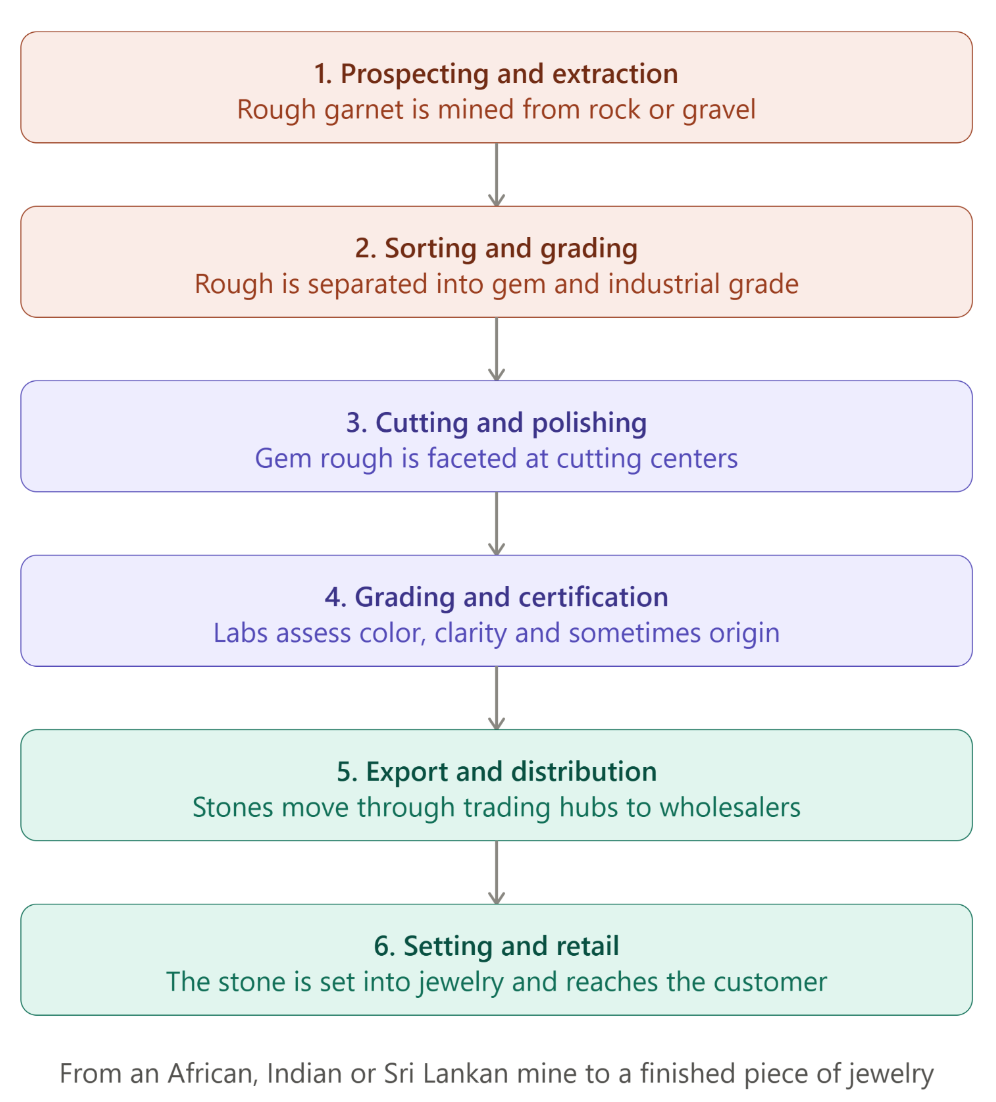
Knowing where garnet is found is only half the story — the journey from a mountainside in Niassa Province or a gem pit in Ratnapura to a finished piece of jewelry follows a fairly consistent path, wherever it starts:
Prospecting & extraction — Miners locate garnet-bearing gneiss, pegmatite, or alluvial gravel and extract the rough, often by hand in small-scale African and Sri Lankan operations, or by mechanized dredging in larger industrial deposits.
Sorting & grading — Rough crystals are sorted by color, clarity, and size. In a typical Mozambican parcel, only a fraction of the rough — often around a fifth — meets gem-quality standards, and the rest goes to the industrial market.
Cutting & polishing — Gem-grade rough is sent to cutting centers, frequently in Thailand, India, or Sri Lanka, where it's faceted or cabochoned to bring out color and brilliance.
Grading & certification — Finished stones can be assessed by independent gemological labs for color, clarity, and, in some cases, geographic origin.
Export & distribution — Cut stones move through gem trading hubs like Bangkok and Jaipur to wholesalers, designers, and retailers worldwide.
Setting & retail — The stone is finally set into jewelry and reaches the customer — sometimes traveling through four or five countries before it does.
Does Origin Affect What You Should Pay?
Not always — but it can. Tsavorite is essentially only found in East Africa, so origin and rarity are directly linked there. Demantoid from Russia's Ural Mountains carries a premium tied to its history and scarcity. For classic red garnet, though, origin is often more about character than value: a Mozambique almandine and a Sri Lankan almandine can be priced similarly if cut and clarity are comparable, with the real differences coming down to subtle tone and saturation rather than which country the rough came from.
The Bottom Line
Garnet's story is really a story about geology repeating itself in different corners of the world. Wherever ancient continental collisions cooked aluminum-rich rock under enough heat and pressure, garnet crystals formed — from the Mozambique Belt in East and Southern Africa, to the metamorphic terrains of Rajasthan, to the gem gravels of Ratnapura, to the Ural Mountains of Russia. Each origin leaves its own fingerprint on color, clarity, and character, which is exactly why gemstone lovers pay attention to where a garnet was mined, not just what species it belongs to.
If you're building a collection or sourcing garnet for a jewelry line and want stones with verified, traceable origin, get in touch with our team — we'd love to help you find the right stone.
References
GIA (Gemological Institute of America) — Purple Pyrope-Almandine Garnet From Mozambique, Gems & Gemology, Fall 2016. gia.edu/gems-gemology
U.S. Geological Survey — Mineral Commodity Summaries 2026: Garnet (Industrial), National Minerals Information Center. pubs.usgs.gov/periodicals/mcs2026
U.S. Geological Survey — Mineral Commodity Summaries 2025. DOI: 10.3133/mcs2025. usgs.gov/publications/mineral-commodity-summaries-2025
BriteCo — The Countries That Produce the Most of Each Type of Gemstone. brite.co/education