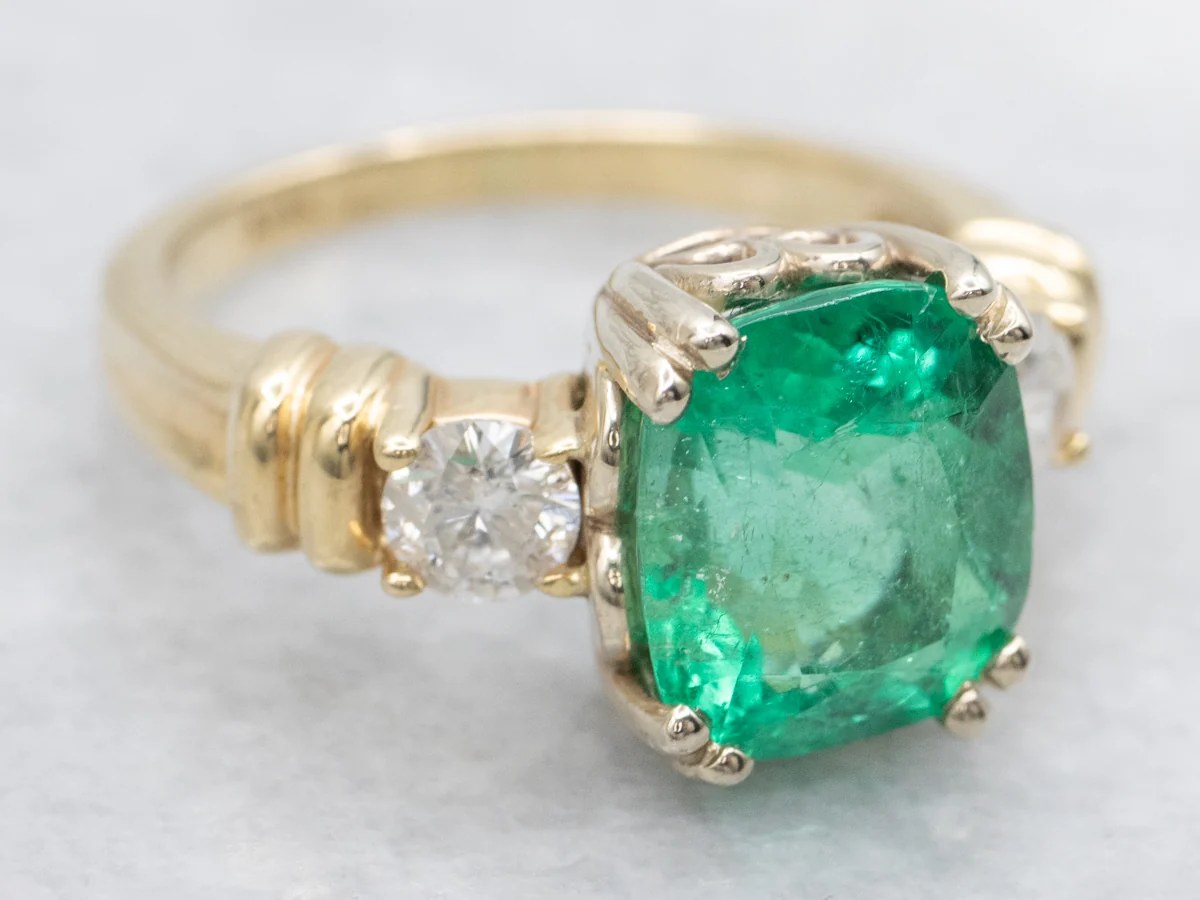
Contenido del artículo
If you’ve shopped for a fine emerald lately, you’ve probably noticed that good stones are scarcer and prices are higher. As a gemologist, I hear the same question from jewelers and collectors almost every week: “Where did all the good emeralds go?”
The honest answer is that there was never a big supply to begin with. Emerald is one of the hardest gems to mine, and today’s shortage is a long-standing scarcity meeting rising demand. Here is what’s behind it.
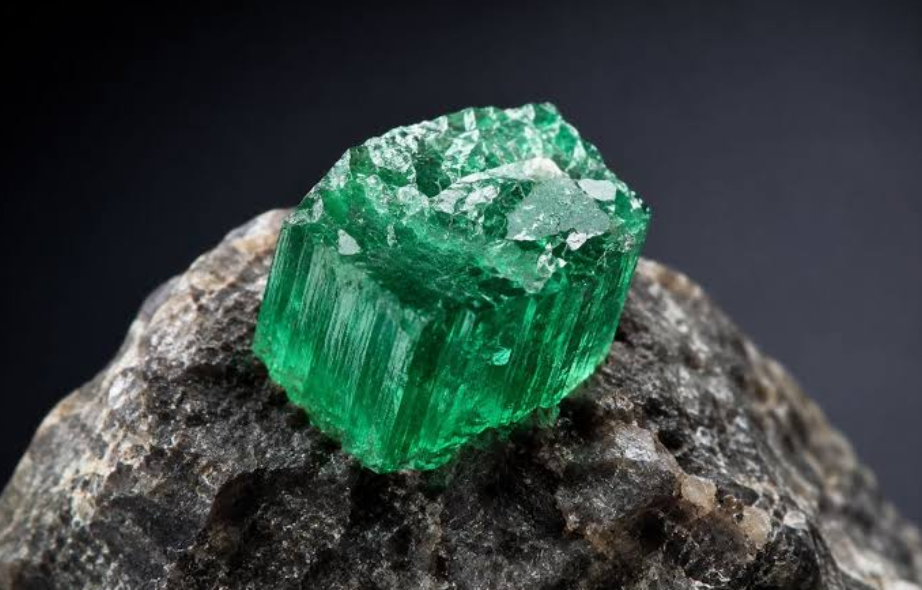
1. Emerald Is Geologically Unlikely
Emerald is the green variety of beryl. Its color comes from traces of chromium and sometimes vanadium. The catch is that beryllium and chromium rarely occur together. Beryllium usually sits in granite-type rocks, while chromium comes from mafic and ultramafic rocks. For an emerald to form, fluids and tectonic activity have to bring the two together.
Colombian emeralds formed when hot, salty fluids moved through black shale and carbonate rocks (Ottaway et al., 1994). Zambian emeralds formed where pegmatites intruded chromium-bearing rocks in the Kafubu area (Zwaan et al., 2005).
Even when conditions are right, emerald crystals tend to grow with fractures and inclusions. Clean, richly colored crystals that can be cut into a fine stone are a small fraction of what comes out of the ground.
2. Where Emeralds Come From: The Main Origins
Origin matters in the emerald market because each source produces stones with a recognizable look, and origin affects price. Here are the sources a buyer is most likely to meet.
Two points are worth remembering:
Origin is not the same as quality. A top Zambian stone often beats a mediocre Colombian one. Color, clarity and cut come first.
Origin is an opinion from the lab. Gemological labs estimate origin by comparing a stone’s inclusions and trace-element chemistry against known deposits. It’s usually reliable, but some stones overlap between sources and can’t be pinned down.
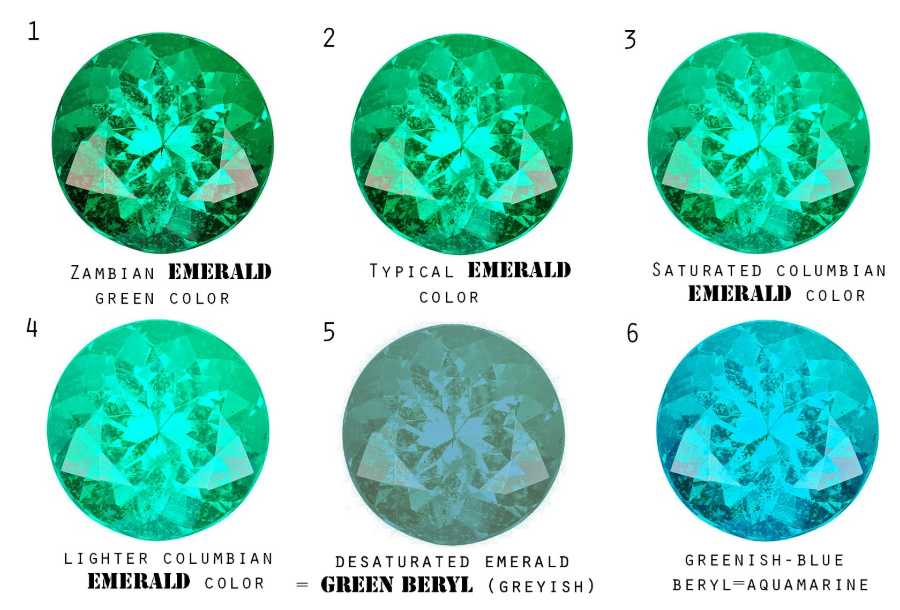
What is difference between Emerald and green Bery
3. Two Countries Carry Most of the Supply
Colombia and Zambia together supply the large majority of the world’s emeralds. When two sources dominate, a disruption at either one is felt everywhere.
Colombian vs. Zambian Emerald at a Glance
Neither is “better” in an absolute sense. Colombian stones are prized for their warm, vivid green, while Zambian stones often win on clarity and a cooler, deeper tone. The right choice depends on the design, the budget and personal taste.
4. Why Supply Is Tightening
No single event explains the shortage. It’s a mix of slow, structural pressures.
Depth and cost of mining. Easy surface deposits are largely depleted. Underground mining costs more, and the amount of rock moved per quality stone keeps rising.
Low yield. Much of what is mined is low-grade or opaque beryl. Only a small share becomes facet-grade, and a much smaller share becomes fine quality.
Irregular production. Emerald mining isn’t steady like industrial mining. Output swings from year to year depending on what miners hit, and big finds are unpredictable.
Regulation and responsible sourcing. Buyers increasingly want traceable, ethically mined stones. That’s a good development, but it raises compliance costs and pushes more trade into documented channels. Unlike diamonds, emeralds aren’t covered by the Kimberley Process, so traceability relies on company programs and independent verification.
Rising demand. More buyers want natural, untreated or minimally treated stones, partly because they’re seen as long-term value holders. More demand against a supply that can’t easily expand pushes prices up, especially above a few carats.
Supply Pressure Summary
5. Treatment Makes Quality Harder to Judge
Almost all emeralds have surface-reaching fractures, so the trade traditionally fills them with oil or resin to improve apparent clarity. This is accepted practice when disclosed, and GIA reports the level of clarity enhancement as none, minor, moderate or significant.
In practice, a stone with no or minor enhancement is far rarer than one with moderate or significant treatment, and it commands a large premium. This is where the supply problem bites hardest: fine, untreated, well-colored emeralds are the scarcest segment of the market.
For any significant stone, ask for an independent lab report that states origin (when determinable) and the enhancement level. Respected labs include GIA, Gübelin Gem Lab and SSEF.
Show Image
6. A Practical Sourcing Workflow
This is the process I recommend to jewelers and serious buyers. It saves time and avoids expensive mistakes.
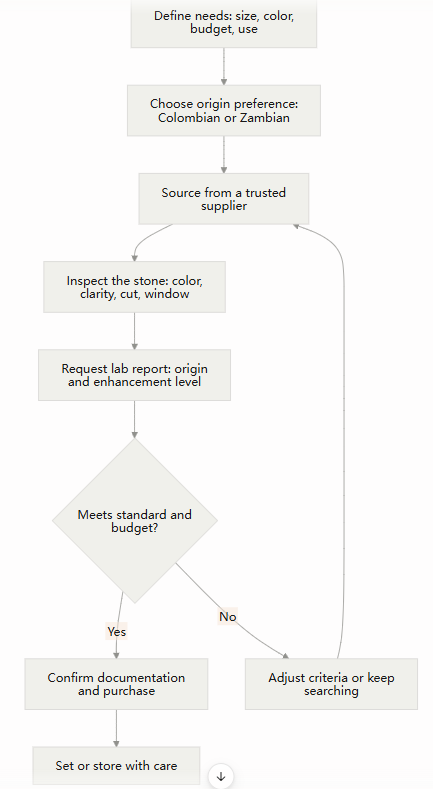
A few tips at each stage:
Define your needs. Color usually drives price more than size.
Choose an origin preference, but stay flexible. Chase the look you want, not the label.
Check the cut. Emerald is brittle, and a thin girdle or poor cut can lead to chipping.
Look past the first impression. Move the stone under different lights. Some look great under one source and flat under another.
Get the paperwork. For stones of meaningful value, a lab report is non-negotiable.
7. What to Expect Going Forward
I don’t expect this to reverse soon. New discoveries do happen (Ethiopia is a recent example), but they’re unpredictable, and a single new mine doesn’t change a market built on rare geology. Buyers who understand the market tend to do best: they buy what they love, insist on documentation, and treat fine emeralds as scarce rather than as a commodity.
Care matters too. Because of fractures and fillings, avoid ultrasonic cleaners and sudden heat. Clean gently with a soft brush and lukewarm soapy water.
Final Thoughts
Fine emeralds are harder to source because of rare geology, limited and unpredictable mining, tighter responsible-sourcing expectations and rising demand for untreated stones. Knowing the main emerald origins, and what each one realistically offers, helps you set expectations and avoid overpaying for a label.
If you’re looking for natural emeralds from Colombia, Zambia or other origins, or you want help judging quality and documentation, our team is happy to help. Contact Oria Gems for personal sourcing advice, or browse our current selection of natural gemstones in our shop.
References
GIA. Emerald Description and Buying Guide. Gemological Institute of America. https://www.gia.edu/emerald
Zwaan, J.C., Seifert, A.V., Vrána, S., Laurs, B.M., Anckar, B., Simmons, W.B., Falster, A.U., Lustenhouwer, W.J., Muhlmeister, S., Koivula, J.I., & Garcia-Guillerminet, H. (2005). “Emeralds from the Kafubu Area, Zambia.” Gems & Gemology, 41(2), 116–148.
Ottaway, T.L., Wicks, F.J., Bryndzia, L.T., Kyser, T.K., & Spooner, E.T.C. (1994). “Formation of the Muzo hydrothermal emerald deposit in Colombia.” Nature, 369, 552–554.
Groat, L.A., Giuliani, G., Marshall, D.D., & Turner, D. (2008). “Emerald deposits and occurrences: A review.” Ore Geology Reviews, 34(1–2), 87–112.
Bowersox, G.W., Snee, L.W., Foord, E.E., & Seal, R.R. (1991). “Emeralds of the Panjshir Valley, Afghanistan.” Gems & Gemology, 27(1), 26–39.
Gübelin Gem Lab. Emerald: Origin and Treatment Research. https://www.gubelingemlab.com
Gemfields. Emerald and Ruby Mining and Responsible Sourcing. https://www.gemfields.com