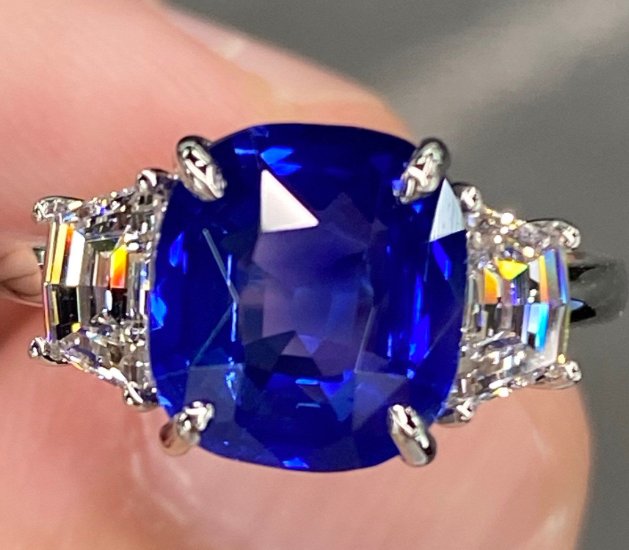
Contenido del artículo
If you've priced a fine blue sapphire recently and felt a bit of sticker shock, you're not imagining things. Dealers who've been in the trade for twenty years are saying the same thing: the goods simply aren't there like they used to be. Parcels that once held seventy or eighty clean stones now hold fifteen, and the quality has dropped along with the count.
This isn't a marketing story. It's a supply chain story — and once you understand it, you'll never look at a sapphire the same way again.
1. The Mines Are Running Dry
Sapphire comes from a short list of places: Sri Lanka, Myanmar (Burma), Madagascar, Kashmir, Tanzania, Kenya, and a few smaller sources like Montana and Australia. For most of the last century, that list barely changed — and it still hasn't.
Trade analysts have pointed out that sapphire production has declined in recent years with no discoveries of major new sources since 2016. That's nearly a decade without a fresh deposit large enough to move the needle globally.
Here's how the major sources are actually trending right now:
The pattern across every major source is the same: older deposits are getting harder to work economically, and nothing new has come along to replace them.
2. Untreated Sapphires: A Shrinking Slice of a Shrinking Pie
Most sapphire on the market — around 90% by trade estimates — is heat-treated to improve color and clarity. That's a normal, disclosed, and widely accepted practice. But the stones that need no treatment at all, because nature already got the color and clarity right, are a different category entirely.
Industry estimates suggest that only about 1 in 100 sapphires reaching cutting centers has the natural quality to remain untreated, which creates a steep value gap between heated and unheated material. Heated sapphire has a fairly predictable price based on available supply. Untreated sapphire doesn't — because it's a finite resource that no amount of new technology can increase. Every unheated stone that gets sold into a collection or a permanent piece of jewelry is one fewer available to the next buyer.
This is why serious buyers now ask for lab reports confirming "no heat" status before anything else. The word "sapphire" on a receipt tells you almost nothing about rarity — the treatment disclosure does.
3. Where the New Demand Is Coming From
Supply tightening only pushes prices up when demand is holding steady or growing — and right now, it's growing fast.
A. Diamond buyers are migrating into color. With the diamond market going through a difficult stretch, both retail buyers and gem investors have started looking at colored stones as an alternative. Trade insiders describe intensified competition at the source, noting that the entry of buyers from the diamond trade into the sapphire space has made sourcing noticeably more difficult.
B. Gemstones are being treated as an inflation hedge. As gold prices surged roughly 39% year-on-year in 2025, some buyers shifted part of that appetite toward rare natural gemstones as an inflation-resistant asset class. Unlike gold, a fine sapphire is also finite in a way that can never be mined into abundance again.
C. Auction results are setting new benchmarks. The numbers from recent Christie's and other major auctions are hard to ignore. A 22.28-carat unheated Kashmir sapphire sold for CHF 2.744 million, and a 9.82-carat Kashmir sapphire crossed CHF 1.36 million in a single season. Every headline sale like this resets buyer expectations further up the ladder.
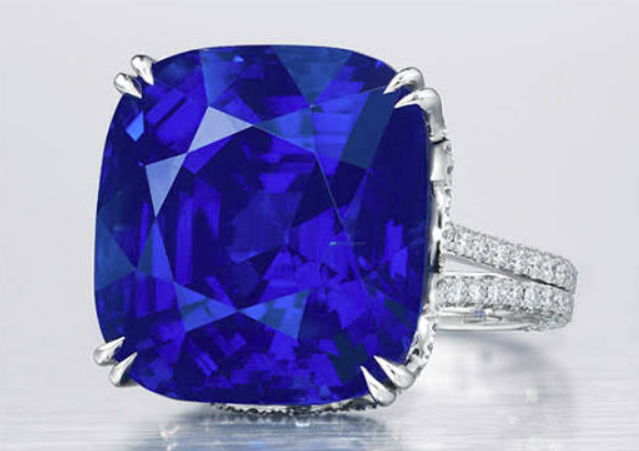
The Regent Kashmir' Breaks Sapphire Price Record at Christie's Hong Kong
4. What This Looks Like in Real Prices
To put numbers around it, here's a general 2026 price range by category (per carat, fine quality, before factoring in exceptional size or provenance premiums):
Prices vary significantly by clarity, cut, and certifying lab — this table is a general guide, not an appraisal.
5. How a Natural Sapphire Actually Reaches You
It helps to see the whole chain, because every step is where scarcity gets compounded:
6. What This Means If You're Buying
None of this is a reason to panic-buy — but it is a reason to buy carefully:
Ask for the lab report first, the story second. Reputable labs (GIA, AGL, Gübelin, SSEF) will state clearly whether a stone is heated and, where possible, its geographic origin.
Understand that "natural" and "untreated" are not the same claim. Natural just means it's not synthetic or lab-grown. Untreated means it received no heat or other enhancement at all — a much smaller, much more valuable category.
Origin matters, but condition matters more. A well-cut, clean Ceylon sapphire will often outperform a mediocre stone with a famous origin on the label.
Buy from someone who can explain the report to you, not just hand it over. The gap between a good sapphire and a great one is usually invisible to an untrained eye.
The Bottom Line
Sapphire isn't getting more expensive because of hype. It's getting more expensive because the mines that have supplied the world for over a century are aging out, no comparable new source has emerged, and a growing pool of buyers — jewelers, collectors, and investors alike — is competing for a genuinely shrinking supply of fine, natural material. That combination doesn't reverse quickly, and most people in the trade don't expect it to reverse at all.
If you're considering adding a natural or untreated sapphire to your collection, it helps to talk it through with someone who sources and certifies stones for a living rather than guessing from a price chart. Feel free to get in touch with our team — we're happy to walk you through current sourcing, treatment reports, and what a fair price actually looks like for the stone you have in mind.
Authoritative References
Rapaport Magazine — Sapphire on Fire and Shifting Sapphire Market, industry analysis on sapphire production decline
GemsWorld 2025 (JewelleryNet) — trade reporting on Sri Lankan mining conditions and market competition
AfricaGems — Unheated Blue Sapphire Price: The 2026 Collector's Guide to Value and Rarity
CaratX — Colored Gemstone Prices Are Rising Fast in 2026: A Detailed Market Analysis
MadisonDia — Lab-Grown Sapphire vs Natural Sapphire Price Comparison, 2026
The Natural Sapphire Company — Pricing Chart of Sapphire
GIA (Gemological Institute of America) — research notes on Madagascar sapphire mining