Article Content
Sapphires have captivated humanity for millennia with their breathtaking beauty and diverse palette. While the term "sapphire" often conjures images of a deep, celestial blue, these magnificent gemstones actually occur in nearly every color of the rainbow. This comprehensive sapphire color guide delves into the nuances of sapphire hues, from the iconic royal blue sapphire to the vibrant spectrum of fancy colors, helping you appreciate the intricate factors that determine their allure and value.
The Science Behind Sapphire Colors
Sapphires are a variety of the mineral corundum, which is naturally colorless in its pure form. The stunning array of colors seen in sapphires is due to the presence of trace elements within the crystal structure. For instance, blue sapphires owe their color primarily to iron and titanium, while chromium is responsible for pink hues, and a combination of iron and vanadium can create yellow and green [1]. The specific concentration and interaction of these elements, along with the stone's crystal structure, dictate the final color, tone, and saturation.
The Spectrum of Blue Sapphires
Blue remains the most classic and sought-after sapphire color. Within the blue spectrum, connoisseurs recognize several distinct and highly prized shades:
Royal Blue: The Epitome of Elegance
The royal blue sapphireis perhaps the most famous and coveted of all sapphire colors. Characterized by a deep, vivid, and intense blue with a slight violet undertone, royal blue sapphires exhibit a strong saturation and medium to medium-dark tone. This regal hue is often associated with sapphires from Myanmar (Burma) and Sri Lanka, though exceptional examples can be found from other origins. The GIA (Gemological Institute of America) describes the most valued blue sapphires as
velvety blue to violetish blue, in medium to medium-dark tones, with strong to vivid color saturation [1].
Cornflower Blue: A Softer, Luminous Charm
Another highly esteemed blue is Cornflower Blue. This shade is typically lighter than royal blue, characterized by a soft, luminous, and often velvety appearance, reminiscent of the cornflower petal. Cornflower blue sapphires tend to have fewer dark areas and a more uniform color distribution. Historically, Kashmir sapphires were the benchmark for this color, though the term now describes a specific hue and saturation regardless of origin [2]. While distinct from royal blue, cornflower blue sapphires are equally prized for their unique beauty and brilliance.
Other Blue Hues
Beyond royal and cornflower, blue sapphires encompass a range of other captivating shades, including:
Teal Sapphires: A beautiful blend of blue and green, often found in Montana, USA.
Navy Blue Sapphires: Darker, often with a hint of black, offering a sophisticated and intense look.
Light Blue Sapphires: Delicate and ethereal, these stones can exhibit a charming sparkle.
The Allure of Fancy Sapphires
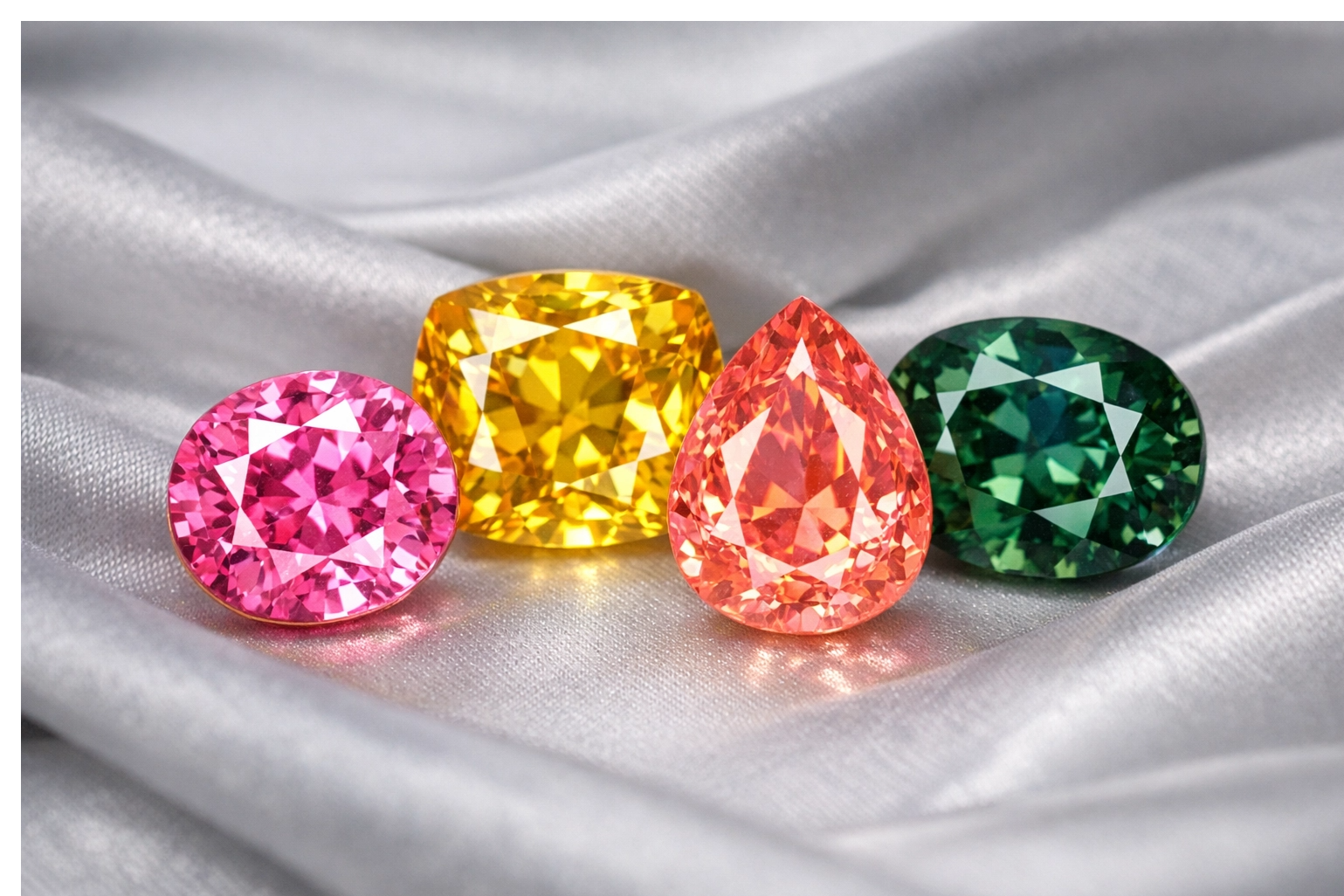
While blue sapphires are classic, the world of fancy sapphires offers an astonishing array of colors, each with its own unique appeal. These are sapphires that are not blue, and they come in virtually every color except red, which is classified as a ruby [1].
Pink and Purple Sapphires
Pink sapphires range from delicate pastel pinks to vibrant, intense magentas. Their color is primarily due to trace amounts of chromium. Purple sapphires, with their rich and regal tones, are also highly sought after, often displaying a captivating blend of red and blue hues.
Yellow and Orange Sapphires
From soft lemon yellows to fiery oranges, these sapphires bring warmth and brilliance. The presence of iron and vanadium often contributes to their sunny disposition. Intense orange sapphires are particularly rare and striking.
Green Sapphires
Green sapphires can range from subtle mint greens to deep forest greens. Their color is typically a result of iron impurities, and they offer a unique alternative to more traditional green gemstones.
Padparadscha Sapphires: The Lotus Blossom Gem
Among the rarest and most prized of all fancy sapphires is the Padparadscha sapphire. This exquisite gem displays a delicate blend of pink and orange, often described as a
salmon or sunset color. The name "Padparadscha" is derived from the Sanskrit word for "lotus blossom," reflecting its unique and beautiful hue [1]. True Padparadscha sapphires are incredibly rare and command premium prices.
Phenomenal Sapphires: Beyond Color
Some sapphires exhibit fascinating optical phenomena that add to their mystique and value:
Color Change Sapphires
These remarkable sapphires display a different color depending on the light source. For example, a color-change sapphire might appear blue in daylight and shift to a violetish-purple under incandescent light [1]. The strength and distinctness of this color change significantly impact its value.
Star Sapphires
Star sapphires exhibit a phenomenon called asterism, where a six-rayed star appears to float across the surface of the gem when viewed under a single light source. This effect is caused by reflections from tiny, needle-like inclusions within the sapphire. The most prized star sapphires have a well-defined, sharp star against a richly colored background [1].
Understanding Sapphire Color: A Buyer's Guide
When evaluating sapphire color, gemologists use three primary criteria: hue, tone, and saturation [1].
Hue: The pure spectral color (e.g., blue, pink, yellow).
Tone: The lightness or darkness of the color, ranging from very light to very dark.
Saturation: The intensity or purity of the color, from dull to vivid.
The most desirable sapphires possess a strong to vivid saturation and a medium to medium-dark tone. While personal preference plays a significant role, understanding these factors can help you make an informed decision when choosing a sapphire.
Conclusion
From the timeless elegance of the royal blue sapphire to the captivating diversity of fancy hues, sapphires offer a world of color to explore. Whether you are drawn to the classic deep blues, the soft pastels, or the vibrant spectrum of other colors, each sapphire tells a unique story. Understanding the nuances of their colors, as outlined in this sapphire color guide, allows you to appreciate the true artistry of nature and the enduring appeal of these extraordinary gemstones.
References
[1] Gemological Institute of America (GIA). "Sapphire Quality Factors." GIA.edu, https://www.gia.edu/sapphire-quality-factor.
[2] The Natural Sapphire Company. "A Guide On Judging Quality In Blue Sapphires."TheNaturalSapphireCompany.com, https://www.thenaturalsapphirecompany.com/education/sapphire-colors-varieties/blue-sapphires/.