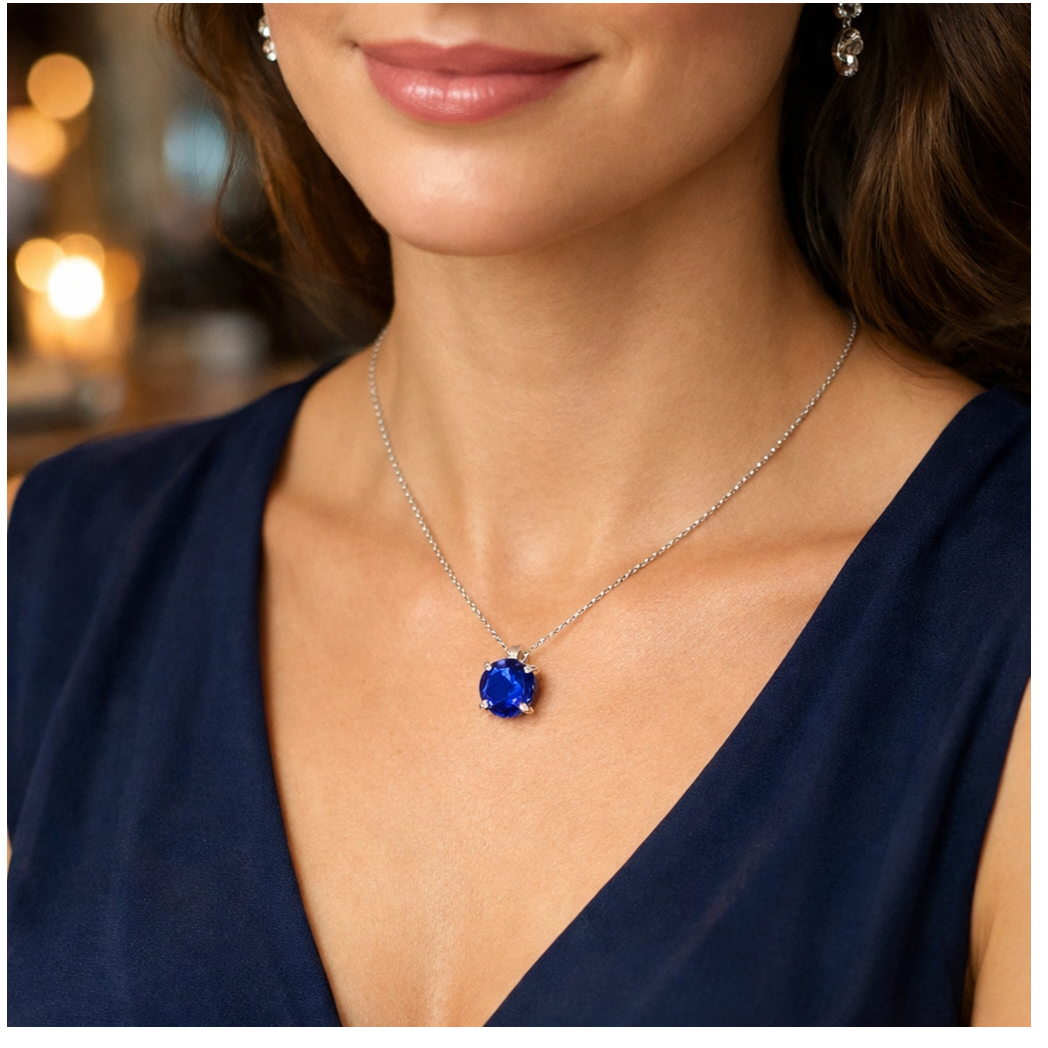
Elegant Blue Sapphire Pendant Necklaces for Special Occasions

Blue sapphire pendant necklaces are more than just exquisite pieces of jewelry; they are timeless symbols of elegance, wisdom, and enduring beauty. For centuries, these captivating gemstones have adorned royalty and captivated hearts, making them an impeccable choice for special occasions. The allure of a blue sapphire pendant lies not only in its striking color but also in its rich history and profound symbolism.


A Legacy of Royalty and Romance

The history of the sapphire is deeply intertwined with tales of royalty and romance. Derived from the Greek word sappheiros, which likely referred to lapis lazuli, the term sapphire has long been associated with nobility, truth, sincerity, and faithfulness [1]. Ancient civilizations, such as the Greeks and Romans, believed blue sapphires offered protection from envy and harm. During the Middle Ages, clergy members wore these gems to symbolize Heaven, and it was thought they attracted divine blessings [1].


Perhaps the most iconic modern association of sapphire with romance is the engagement ring given by Britain’s Prince Charles to Lady Diana Spencer in 1981. This stunning blue sapphire, surrounded by diamonds, cemented the gem's place in contemporary lore, linking it with fairy tales and enduring love [1]. This rich heritage makes a blue sapphire pendant an exceptional gift, carrying with it centuries of meaning and prestige.


The Allure of Blue: Understanding Sapphire Quality

When selecting a sapphire pendant necklace, understanding the factors that contribute to its beauty and value is crucial. Like diamonds, sapphires are evaluated based on the "4 Cs": Color, Clarity, Cut, and Carat Weight. Among these, color is paramount for blue sapphires. The most prized blue sapphires exhibit a vivid, intense royal blue hue, often described as cornflower blue, with good saturation and tone [2]. Less saturated or very dark colors tend to be less valuable.


Clarity refers to the presence of inclusions within the gemstone. While some inclusions are natural and expected, those that significantly impact the sapphire's transparency or brilliance will reduce its value. A sapphire that is eye-clean (meaning no inclusions are visible to the naked eye) is highly desirable.


The cut of a sapphire pendant is vital for maximizing its brilliance and fire. A well-cut sapphire will reflect light evenly across its surface, appearing bright and lively. Sapphires can be cut into various shapes, including oval, round, cushion, and pear, each offering a unique aesthetic. The choice of cut often comes down to personal preference and how it complements the overall design of the sapphire pendant necklace.


Carat weight measures the sapphire's size. It's important to remember that sapphires are denser than diamonds, so a sapphire of the same carat weight as a diamond will appear smaller. The value of a sapphire increases significantly with its carat weight, especially for high-quality stones [2].


Choosing the Perfect Blue Sapphire Pendant

Selecting the ideal blue sapphire pendant involves considering not only the 4 Cs but also the metal setting and overall design. White gold, platinum, and sometimes yellow gold are popular choices for settings, each offering a distinct look. White metals like platinum and white gold tend to enhance the cool tones of a blue sapphire, creating a classic and sophisticated appearance. Yellow gold can provide a warmer contrast, making the blue pop with a vintage charm.


Consider the occasion for which the pendant is intended. For everyday elegance, a simpler design with a single, well-cut sapphire might be perfect. For special occasions, a more elaborate design, perhaps with diamond accents or a unique halo setting, can make a breathtaking statement. The versatility of the sapphire pendant necklace makes it suitable for a wide range of styles and events.

  image.png

A pear-shaped blue sapphire pendant necklace with diamond halo setting.


Care and Maintenance for Lasting Beauty

To ensure your blue sapphire pendant retains its brilliance for years to come, proper care is essential. Sapphires are durable gemstones, ranking 9 on the Mohs scale of hardness, second only to diamonds. However, they are not indestructible and can still be chipped or scratched with rough handling. It is advisable to remove your sapphire pendant necklace before engaging in strenuous activities, cleaning with harsh chemicals, or applying cosmetics.


Regular cleaning with warm, soapy water and a soft brush is usually sufficient to maintain its sparkle. For a deeper clean, professional jewelers can use ultrasonic cleaners, but it's crucial to consult with an expert, especially if your sapphire has inclusions or has undergone treatments [3]. Storing your sapphire pendant separately from other jewelry can prevent scratches.


The Enduring Appeal of Sapphire Pendant Necklaces

Whether as a symbol of love, a birthstone for September, or a cherished anniversary gift (traditionally for the 5th and 45th anniversaries), the sapphire pendant necklace holds a special place in the world of fine jewelry [4]. Its deep blue hue evokes feelings of tranquility, wisdom, and nobility, making it a meaningful and beautiful addition to any collection. An elegant blue sapphire pendant necklace is not just an accessory; it is a testament to timeless beauty and personal significance, perfect for commemorating life's most cherished moments.


References

  1.  GIA. "Sapphire History and Lore." Gemological Institute of America, https://www.gia.edu/sapphire-history-lore.

  2. The Natural Sapphire Company. "Sapphire 4Cs | Determining Value in Sapphires." The Natural Sapphire Company, https://www.thenaturalsapphirecompany.com/education/sapphires-101/sapphire-carat-weight/.

  3. All Sapphires. "The 4C and one important H for sapphires." All Sapphires, https://allsapphires.com/the-4c-and-one-important-h-on-sapphires/.

  4. Roman Jewelers. "Why The Royals Choose Sapphires." Roman Jewelers, https://www.romanjewelers.com/blog/why-the-royals-choose-sapphires/.