Article Content
In the enchanting world of gemstones, where vibrant hues and sparkling brilliance captivate hearts, two gems often stand out for their delicate beauty and romantic appeal: morganite and pink sapphire. While both offer stunning pink tones, they possess distinct characteristics that make each a unique treasure. This article delves into the allure of morganite, often referred to as pink beryl, and explores its role as a soft, elegant companion to the more traditional loose sapphires.
The Allure of Morganite: Pink Beryl's Gentle Radiance
Morganite, a captivating member of the beryl family, is celebrated for its delicate color palette, ranging from soft pinks to subtle peach and violet-pink hues. Discovered in Madagascar in the early 20th century and named after the prominent financier and gem enthusiast J.P. Morgan, this gemstone has steadily risen in popularity, particularly for engagement rings and fine jewelry. Its gentle radiance and remarkable clarity make it a favored choice for those seeking an elegant yet distinctive alternative to more conventional stones.
Chemically, morganite is an aluminum beryllium silicate, sharing its mineral family with other renowned gems like emerald and aquamarine [1]. Its color is attributed to traces of manganese within its crystal structure. While morganite can form large crystals, making substantial cut stones readily available, its relative rarity compared to aquamarine means it hasn't been as widely promoted, contributing to its unique charm and appeal among connoisseurs [1].
Morganite vs. Pink Sapphire: A Comparative Glance
When considering pink gemstones, the comparison between morganite gem and pink sapphire is inevitable. Both offer beautiful shades of pink, but their differences in hardness, brilliance, and price point often guide a buyer's decision.
| Feature | Morganite | Pink Sapphire |
| Mineral Family | Beryl | Corundum |
| Color Range | Soft pink, peach, violet-pink | Pure pink, purplish-pink, orangy-pink |
| Hardness (Mohs) | 7.5-8 | 9 |
| Brilliance | Good, often with a softer, more subtle glow | Excellent, known for intense sparkle |
| Durability | Very good for everyday wear | Excellent, highly durable |
| Rarity | Less common than aquamarine, but large stones available | Can be rare, especially in vivid colors and larger sizes |
| Price Point | Generally more affordable | Typically higher, especially for fine quality |
Pink sapphires, like all sapphires, belong to the corundum mineral species [2]. Their vibrant pinks are often due to traces of chromium. With a Mohs hardness of 9, pink sapphires are exceptionally durable, second only to diamonds, making them an excellent choice for daily wear and heirloom pieces [2]. Their intense brilliance and wide range of pinks, from delicate pastels to vivid fuchsias, offer a different aesthetic compared to morganite's softer appeal.
The Growing Popularity of Morganite in Jewelry
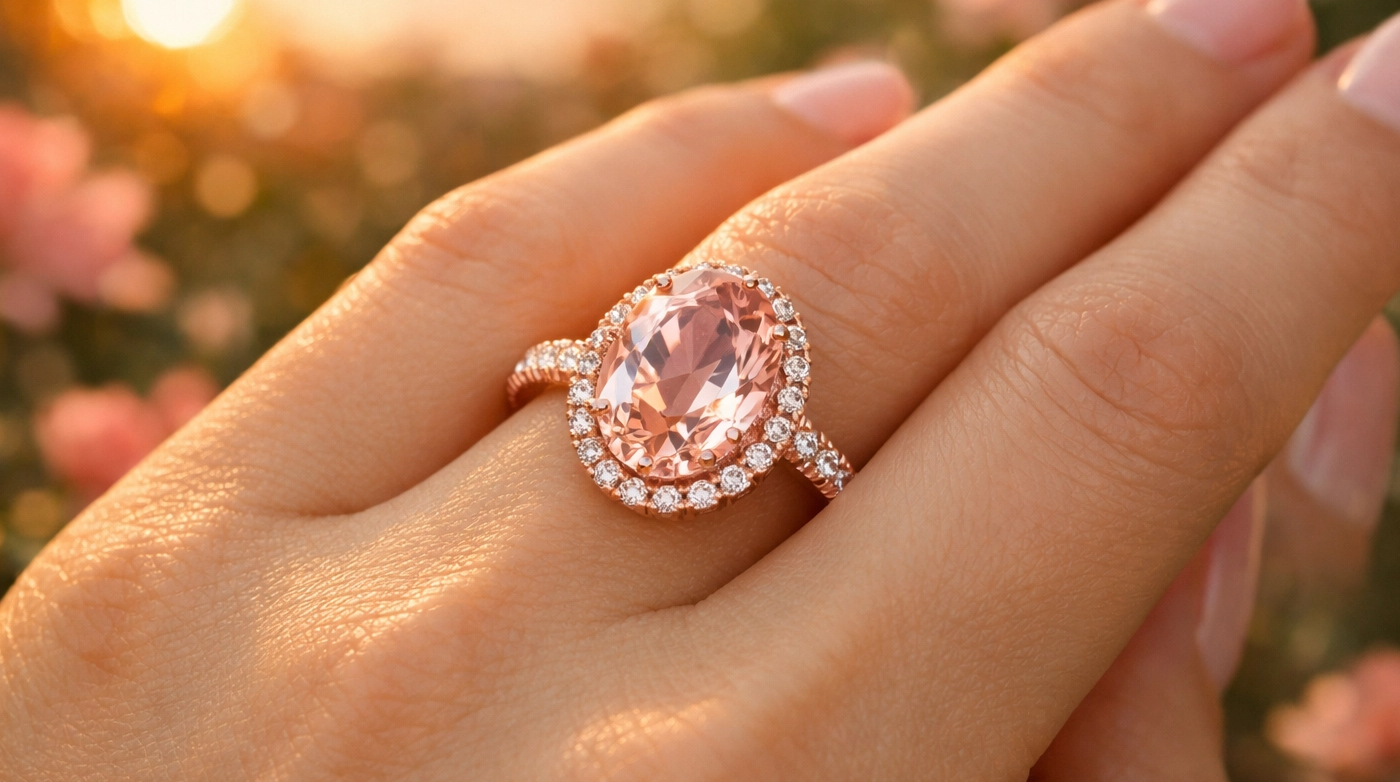
The increasing demand for morganite reflects a shift towards unique, personalized jewelry. Its subtle color complements various metal settings, particularly rose gold, which enhances its warm, romantic tones. Morganite's affordability compared to pink sapphire also makes it an attractive option for those seeking a significant, beautiful gemstone without the premium price tag.
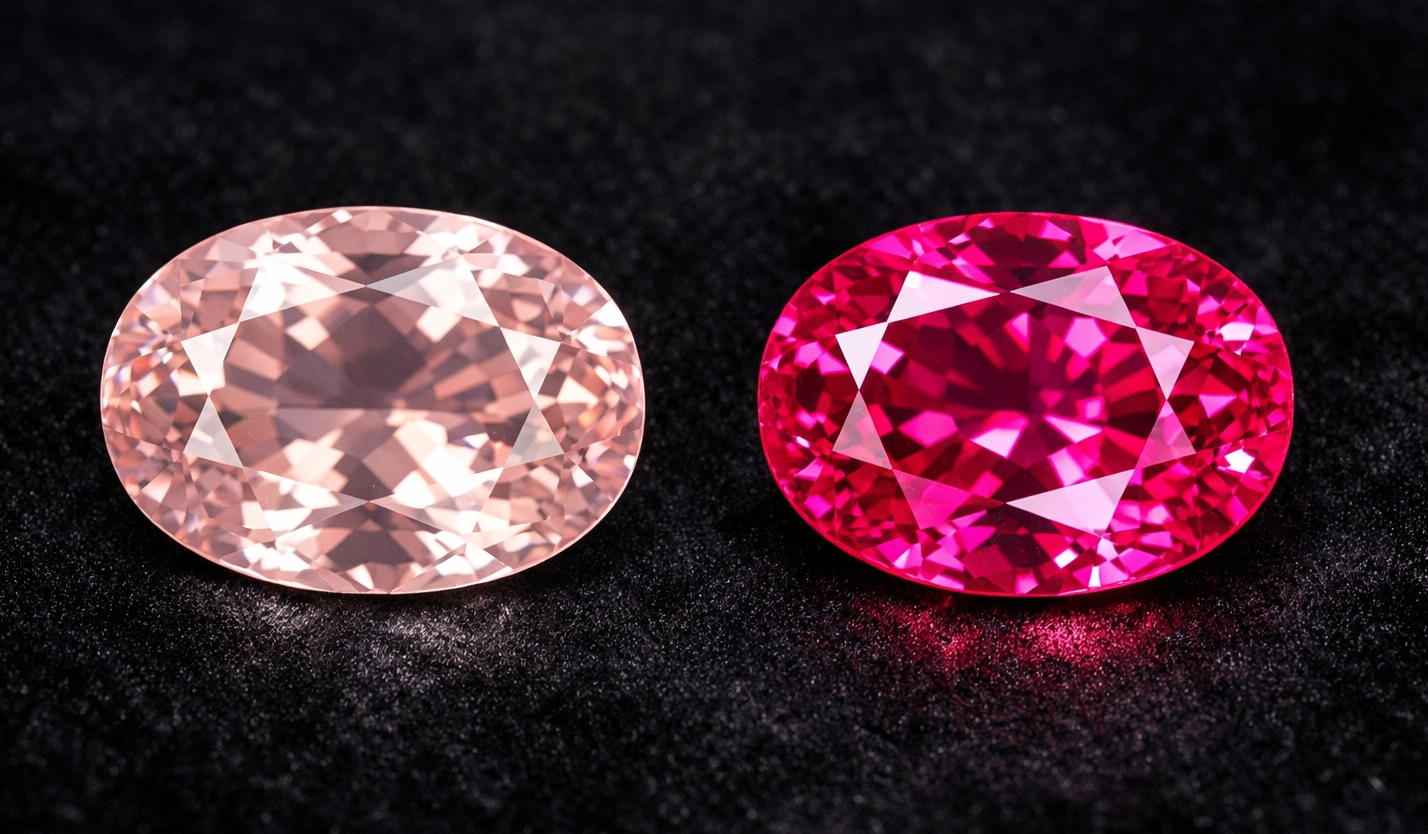
A comparative view of morganite and pink sapphire
This image showcases the delicate peach-pink hue and exceptional clarity that define a high-quality morganite. Its intricate facets capture and reflect light, creating a gentle, internal glow.
Here, the distinct differences in color saturation and brilliance between morganite and pink sapphire are evident. The morganite displays its characteristic soft, warm pink, while the pink sapphire exhibits a more intense and vibrant hue.
This lifestyle shot highlights morganite's suitability for engagement rings, particularly when set in rose gold. The gemstone's romantic appeal is enhanced by the warm, natural light, making it a perfect symbol of love and commitment.
Caring for Your Morganite and Loose Sapphires
Both morganite and loose sapphires are durable gemstones suitable for everyday wear, but proper care is essential to maintain their beauty. Regular cleaning with mild soap and warm water, along with a soft brush, is recommended. It's advisable to avoid harsh chemicals and ultrasonic cleaners, especially for morganite, which can be more susceptible to thermal shock than sapphire. Storing gemstones separately prevents scratching from harder stones.
Conclusion
Morganite, with its gentle pink hues and remarkable clarity, offers a sophisticated and romantic alternative or companion to the vibrant world of loose sapphires. Whether you are drawn to the intense sparkle and durability of a pink sapphire or the soft, understated elegance of a morganite gem, both stones promise to add a touch of timeless beauty to any jewelry collection. The choice ultimately depends on personal preference, desired aesthetic, and budget, but the unique charm of morganite as a pink beryl ensures its place as a cherished gemstone for generations to come.
References
[1] Gemological Institute of America (GIA). "Morganite Description." GIA.edu. https://www.gia.edu/morganite-description [2] Gemological Institute of America (GIA). "Sapphire Description." GIA.edu. https://www.gia.edu/sapphire-description