正文内容
Purchasing a gemstone is a significant investment, and when it comes to sapphires, the stakes are particularly high. Known for their breathtaking beauty and remarkable durability, sapphires have captivated buyers for centuries. However, navigating the market requires more than just an appreciation for their allure. Whether you are a collector, a jeweler, or someone looking for the perfect center stone for an engagement ring, understanding how to evaluate these gems is crucial. This guide will walk you through the essential steps to inspect loose sapphire stones before making a purchase, ensuring you acquire a gem of true value and quality.
The Importance of Inspecting Loose Stones
When evaluating a gemstone, inspecting it loose—unmounted from any jewelry setting—is always the preferred method. A setting can obscure a stone's true characteristics, hiding inclusions, masking poor cuts, or even altering the perceived color [1]. By examining a loose sapphire, you gain an unobstructed view of its color, clarity, and cut, allowing for a more accurate assessment of its overall quality and value.
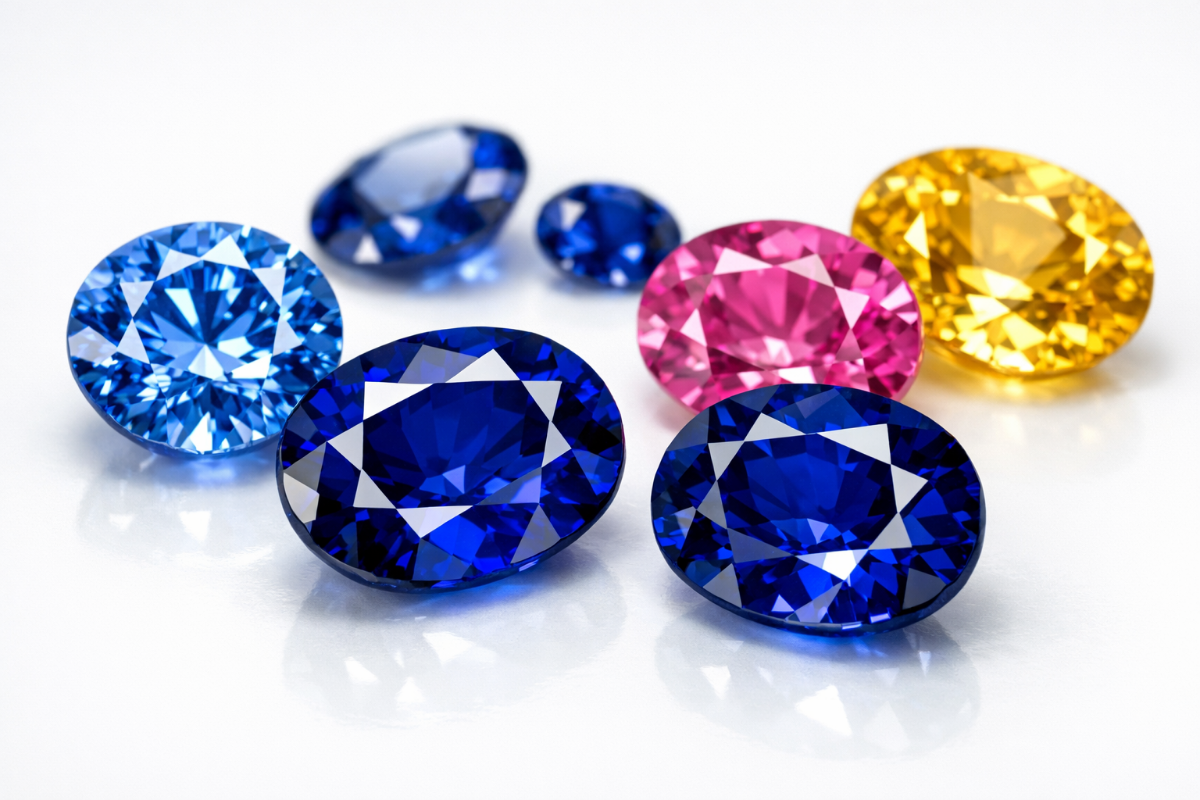
A diverse collection of loose sapphires showcasing various colors and cuts.
Evaluating the Four Cs of Sapphires
Just like diamonds, sapphires are evaluated based on the Four Cs: Color, Clarity, Cut, and Carat weight. However, the emphasis placed on each factor differs significantly for colored gemstones.
1. Color: The Most Critical Factor
For sapphires, color is the single most important determinant of value [2]. While sapphires are most famous for their deep blue hues, they actually come in every color of the rainbow, except red (which is classified as ruby). When inspecting a sapphire's color, consider three main components:
Hue: This refers to the basic color of the stone. For blue sapphires, the most desirable hue is a pure, velvety blue to violetish-blue [2].
Tone: Tone describes how light or dark the color is. The ideal tone for a blue sapphire is medium to medium-dark. Stones that are too light may appear washed out, while those that are too dark can look almost black, losing their brilliance [2].
Saturation: This measures the intensity or purity of the color. Sapphires with strong to vivid saturation are the most highly prized, as they display a rich, vibrant appearance without any grayish or brownish undertones [2].
When inspecting color, it is essential to view the stone under various lighting conditions, including natural daylight and incandescent light, to see how the color performs.
2. Clarity: Understanding Inclusions
Unlike diamonds, where flawless stones are the ultimate goal, sapphires are expected to have some inclusions. In fact, completely flawless natural sapphires are exceedingly rare and command astronomical prices. The key is to look for "eye-clean" stones, meaning the inclusions are not visible to the naked eye [3].
Common inclusions in sapphires include fine rutile needles (often called "silk"), mineral crystals, and partially healed breaks that resemble fingerprints [2]. While excessive inclusions can diminish a stone's brilliance and durability, a moderate amount of silk can actually enhance a sapphire's appearance by scattering light and giving the stone a velvety texture, a characteristic highly prized in Kashmir sapphires [3].
3. Cut: Maximizing Brilliance
The cut of a sapphire does not refer to its shape (e.g., oval, round, cushion) but rather to how the facets are arranged to interact with light. A well-cut sapphire will maximize the stone's color and brilliance while minimizing any color zoning (areas of different colors within the stone) or pleochroism (showing different colors from different angles) [3].
When inspecting the cut, look for symmetry and proportion. The stone should not be cut too deep (which makes it look dark and smaller than its carat weight suggests) or too shallow (which causes light to leak out the bottom, creating a dull, "windowed" effect in the center) [3].
4. Carat Weight: Size and Rarity
Carat weight is the measure of a gemstone's size. While large blue sapphires are more readily available than large rubies, fine-quality blue sapphires over 5.00 carats are still quite rare [2]. It is important to note that because sapphires have a higher specific gravity than diamonds, a 1-carat sapphire will appear slightly smaller than a 1-carat diamond.
Treatments and Enhancements
The vast majority of sapphires on the market today have undergone some form of treatment to improve their color or clarity. The most common and widely accepted treatment is heat treatment [4]. Heating a sapphire can intensify its color and dissolve rutile silk, improving clarity.
However, other treatments, such as beryllium diffusion or fracture filling with lead glass, are more invasive and significantly lower the stone's value [4]. It is imperative that any treatments are fully disclosed by the seller. When inspecting a stone, a gemologist can often detect signs of treatment, but for the average buyer, relying on a reputable certification is the safest approach.
The Role of Gemological Certification
When purchasing a high-value sapphire, a gemological report from a reputable, independent laboratory is essential. Organizations such as the Gemological Institute of America (GIA) or the American Gemological Laboratories (AGL) provide detailed reports that confirm the stone's identity (natural vs. synthetic), detail any detectable treatments, and sometimes indicate the stone's geographic origin [2].
A certification provides peace of mind and serves as a crucial document for insurance and resale purposes. Never hesitate to ask a seller for a lab report, especially for significant purchases.
Conclusion
Inspecting loose sapphire stones before buying is a critical step in ensuring you acquire a gemstone that meets your expectations in terms of beauty, quality, and value. By understanding the nuances of color, clarity, cut, and the importance of disclosing treatments, you can make an informed decision. Whether you are searching for wholesale gemstones, loose sapphires, or specifically loose sapphire gemstones, taking the time to carefully evaluate loose sapphires for sale will lead you to a truly magnificent treasure. Remember, the phrase "loose sapphire How to Inspect Loose Sapphire Stones Before Buying" isn't just a search term; it's the foundation of a smart gemstone investment.
References
[1] International Gem Society. "Sapphire Buying Guide." IGS. https://www.gemsociety.org/article/sapphire-buying-guide/
[2] Gemological Institute of America. "Sapphire Quality Factors." GIA. https://www.gia.edu/sapphire-quality-factor
[3] All Sapphires. "A Guide to Sapphire Clarity Grading and Coloured Gems." https://allsapphires.com/education/grading-clarity/
[4] Ruby-Sapphire.com. "Gem Treatment Disclosure • Trust." https://ruby-sapphire.com/index.php/about/10-articles/744-gem-treatment-disclosure-trust