Article Content
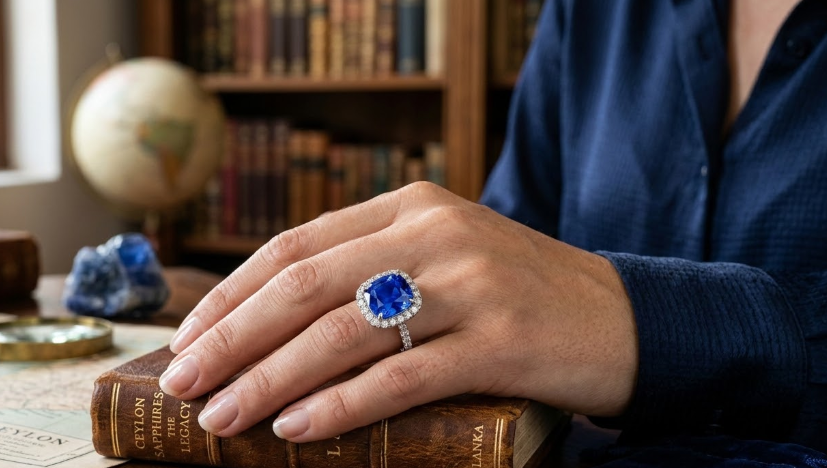
Arguably the most famous sapphire ring on the planet is the stunning oval of deep blue surrounded by a halo of brilliant diamonds, first worn by Princess Diana and now by Kate Middleton. While it captivated millions, the true story isn't just about its royal owners; it's about the legendary stone at its center.
That iconic gem is a Ceylon sapphire, sourced from the island nation of Sri Lanka, formerly called Ceylon. For gem connoisseurs, that name isn't merely a locati0n—it’s a mark of elite quality. This origin is a key part of what makes famous Ceylon sapphire jewelry so sought-after by collectors and royalty alike, defined by a remarkable brilliance and a vibrant color unlike any other.
What Makes a Sapphire a "Ceylon" Sapphire?
A Ceylon sapphire is a gem mined on the island of Sri Lanka, a place so rich in jewels it was historically called “Gem Island.” Over centuries, Sri Lankan gemstones became world-famous for their remarkable brilliance and clarity, turning the geographic tag “Ceylon” into an undeniable mark of high quality.
Much like “Swiss” for a watch, the name itself suggests a legacy of excellence and superior craftsmanship. The name “Ceylon” assures that the stone possesses a signature vibrancy and life—a promise of a certain kind of beauty.
The "Cornflower Blue": Why This Color Captures the Light
When gem experts describe that signature Ceylon vibrancy, they often use a specific term: cornflower blue. This describes a vivid, medium blue that seems to glow from within, a quality central to the cornflower blue sapphire value. This hue is bright and energetic, rather than dark or inky.
This luminosity is the key difference in the royal blue sapphire vs cornflower blue comparison. While a deeper "Royal Blue" is magnificent, it can appear almost black in low light. A cornflower blue sapphire, however, holds its color brilliantly, sparkling just as intensely in a candlelit room as it does on a sunny day. This consistent brilliance is why designers and collectors, including purveyors like Oria gems, seek out these Sri Lankan treasures.
Beyond the Blue: The Surprise Secret of the Padparadscha
While blue is the sapphire’s most famous uniform, the same mineral can also produce a rainbow of other hues, from sunny yellows to delicate pinks. Among this dazzling variety of natural sapphires, one color is so rare it has become a legend: the Padparadscha. It shines with a delicate, fiery mix of pink and orange, capturing the color of a tropical sunset. This unique blend makes the Padparadscha sapphire origin a topic of great fascination and value.
Its name is just as poetic, derived from the Sinhalese term for “lotus blossom,” whose petals mirror the gem’s warm, glowing tones.

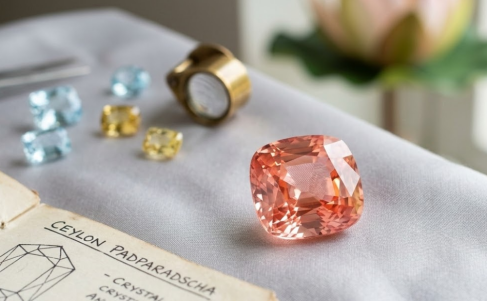
Padparadscha
Unearthing a 2,000-Year-Old Treasure: The History of Sri Lanka's Gem Island
Sri Lanka’s history with gems stretches back over two millennia. Ancient mariners and traders knew the island as 'Ratna-Dweepa,' a Sanskrit term meaning 'Gem Island.' This was a literal description of a land where precious stones were found in its riverbeds, forming the core of the history of Sri Lankan sapphires.
When the famed explorer Marco Polo visited in the 13th century, he was astonished, noting that the island held the world’s finest sapphires and rubies. The epicenter of this ancient trade has always been the region of Ratnapura, a name that itself means 'City of Gems.' This enduring legacy of mining and expertise infuses every true Ceylon sapphire with a story of authenticity.
How to Identify a Real Ceylon Sapphire
The first sign of a genuine Ceylon sapphire is its signature liveliness. Look for a bright, vibrant glow that seems to come from deep within the stone, not just a surface sparkle. Unlike sapphires that can appear dark, a fine Ceylon maintains its brilliant color in almost any lighting. This is a key clue for anyone wondering how to identify a real Ceylon sapphire.
While perfect clarity might seem ideal, many natural sapphires contain tiny internal features. These are not flaws but nature’s fingerprints—delicate "birthmarks" that prove the gem was formed in the earth, not a lab. When evaluating a stone, remember to look for vibrant, even color and always ask for its origin, which often leads to the topic of unheated vs heated Ceylon sapphires.
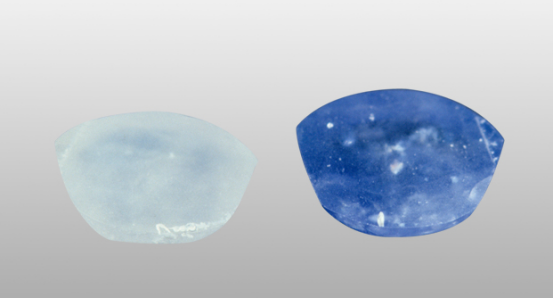
Pale sapphire treated to a desirable color(source: https://www.gia.edu/gem-treatment)
Why a "Heated" Sapphire Is Still a Natural Treasure
The term "heated" can sound alarming, but it is a standard and permanent enhancement that finishes a masterpiece nature started. The process mimics the intense heat and pressure from deep within the Earth, unlocking a gem's full, vibrant color potential without adding anything artificial.
Many of Sri Lanka’s sapphires begin as semi-translucent, milky stones known as "Geuda" (pronounced geh-hoo-dah). The controlled Geuda sapphire heat treatment process transforms these pale stones into brilliantly clear and blue gems, revealing their hidden splendor. Because of this, the distinction between unheated vs heated Ceylon sapphires is crucial for value. A gem that emerges from the ground already perfect is exceptionally rare and commands a significant premium, a key factor affecting the final blue sapphire price per carat Sri Lanka.
Sapphire ring
The Enduring Legacy: Why Ceylon Still Defines "Sapphire"
The name "Ceylon" is more than a point of origin; it is a guarantee of quality forged over 2,000 years. It signifies a gem with a vibrant, light-filled glow, from the iconic cornflower blue to the impossibly rare Padparadscha sunset. This combination of natural rarity and an unbroken history of human expertise is why Sri Lankan sapphires are considered an investment in enduring beauty.
The next time you see a sapphire—in a royal portrait, a museum, or a jeweler's window—you'll see more than a gem. You will recognize the legacy of Ceylon, appreciating the piece of a sunlit island captured forever within its depths.