Article Content
For centuries, the vibrant red gemstones of spinel were often mistaken for their more famous cousin, the ruby. This historical misidentification led to spinel being dubbed the "great pretender." However, in recent times, the spinel gem has emerged from the shadows, gaining well-deserved recognition for its unique beauty, durability, and rarity. At Oria Gems, we celebrate the distinct allure of every stone, and today, we delve into why this spinel semi precious stone is now shining brightly in its own right, no longer merely a stand-in for ruby.
A History of Mistaken Identity
The story of spinel is deeply intertwined with that of ruby, particularly in ancient royal treasuries. Many of the world's most famous "rubies" were, in fact, spinels. A prime example is the magnificent Black Prince's Ruby, a 170-carat, uncut red spinel that adorns the Imperial State Crown of the United Kingdom. For hundreds of years, it was believed to be a ruby, a testament to spinel's convincing resemblance. It wasn't until the late 18th century that advancements in mineralogy allowed scientists to accurately distinguish between the two gems based on their distinct chemical compositions and crystal structures [1].
Gemological Distinctions: Spinel vs. Ruby
While visually similar, spinel and ruby are fundamentally different minerals. Rubies belong to the corundum family, composed of aluminum oxide (Al₂O₃) with chromium impurities giving them their red hue. Spinel, on the other hand, is a magnesium aluminum oxide (MgAl₂O₄). This difference in composition leads to variations in their physical properties:
Feature | Spinel | Ruby |
Mineral Group | Spinel Group | Corundum Group |
Chemical Formula | MgAl₂O₄ | Al₂O₃ |
Hardness (Mohs) | 8 | 9 |
Crystal System | Cubic | Hexagonal |
Refractive Index | 1.712-1.736 | 1.762-1.770 |
Both gemstones boast impressive hardness, making them suitable for jewelry. Ruby, at 9 on the Mohs scale, is second only to diamond. Spinel, with a hardness of 8, is still exceptionally durable and resistant to scratches, making it an excellent choice for everyday wear [2].
Color, Clarity, and Brilliance
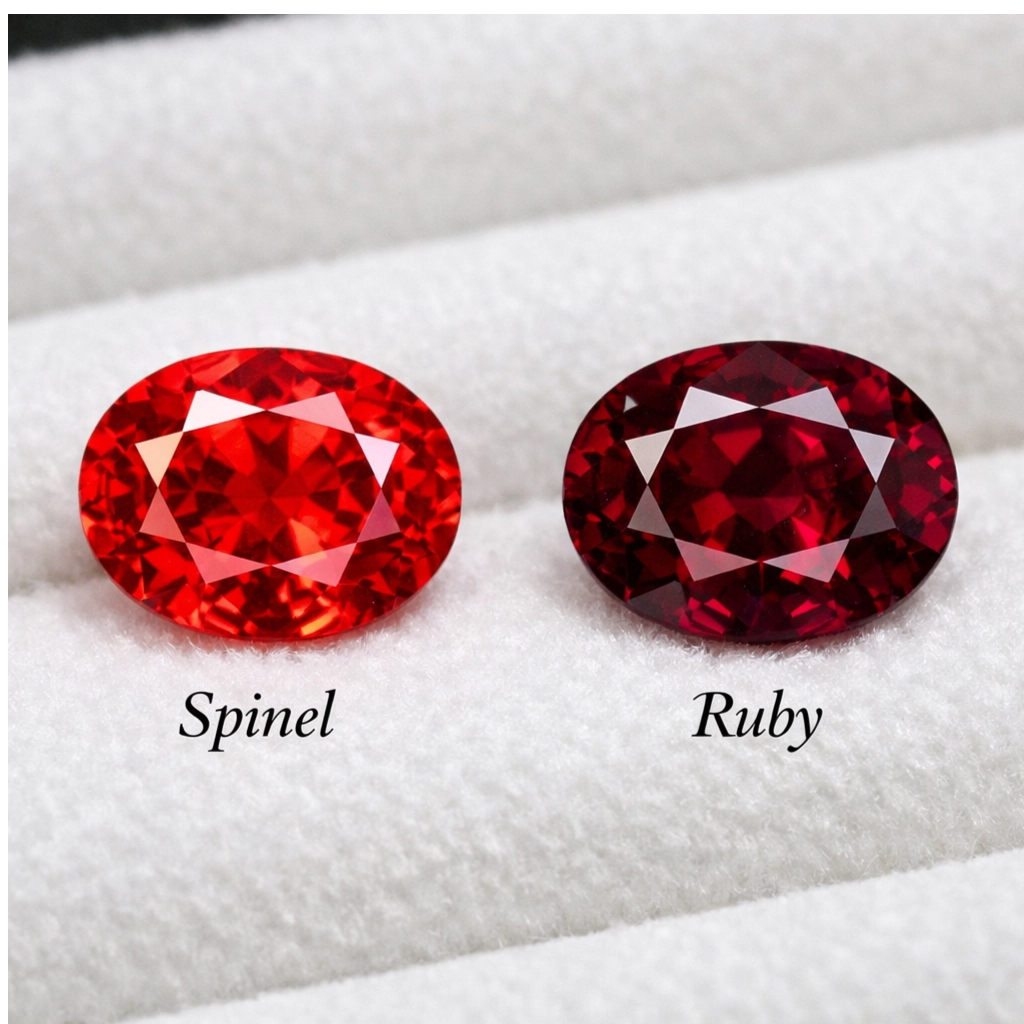
Both spinel and ruby are celebrated for their captivating red colors, ranging from orangey-red to purplish-red. However, there are subtle differences. Rubies are often associated with a rich, intense "pigeon's blood" red, sometimes with a slight purplish undertone. Spinels can exhibit a pure, vivid red that is often described as more fiery and brilliant due to its single refractive nature. Unlike rubies, which often undergo heat treatment to enhance their color and clarity, many spinels are naturally beautiful and require no enhancement, making them highly prized by connoisseurs [3].
spinel_gemstone
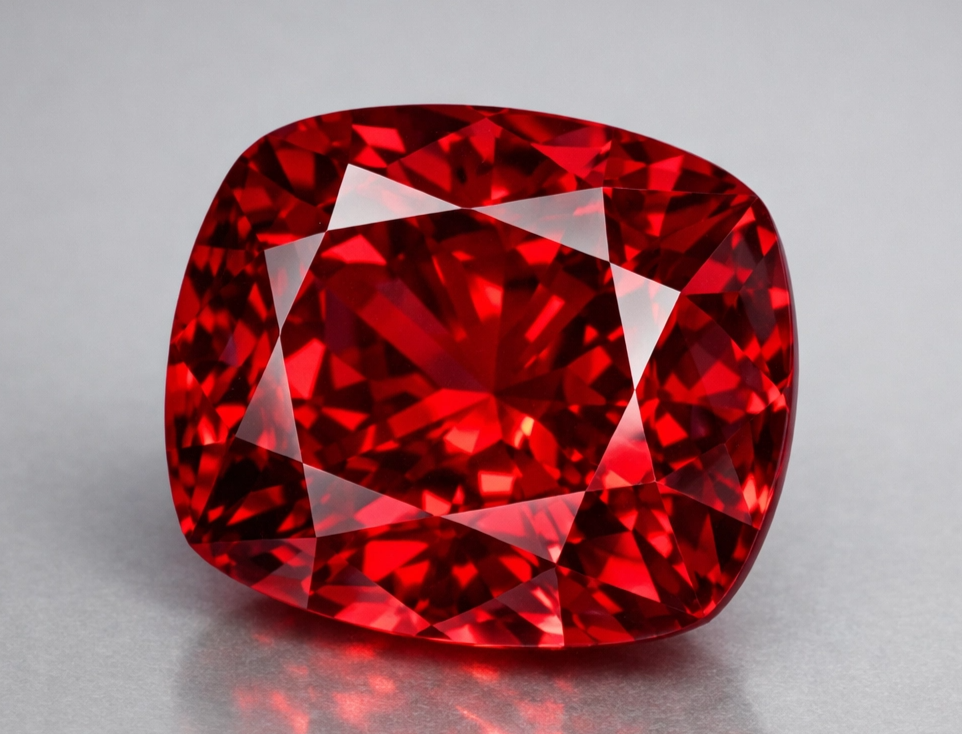
In terms of clarity, spinels tend to be cleaner than rubies. Rubies frequently contain inclusions, such as rutile needles (silk), which can sometimes create a desirable asterism effect but often reduce transparency. Spinels, particularly those of fine quality, are often eye-clean, meaning no inclusions are visible to the naked eye [4]. This superior clarity contributes to their exceptional sparkle.
Value and Rarity: A Shifting Landscape
Historically, rubies commanded significantly higher prices due to their rarity and historical prestige. However, as the distinct qualities of spinel have become more widely appreciated, its value has steadily risen. Fine quality, unenhanced red spinels, especially those from Myanmar (Burma), can now rival and even surpass the price per carat of comparable rubies [5]. The market is increasingly recognizing spinel not as a substitute, but as a valuable gemstone in its own right, offering a unique combination of beauty, durability, and often, better clarity at a competitive price point.
The Modern Appeal of Spinel
Today, spinel is no longer content to be a "pretender." It is celebrated by gemologists, jewelers, and collectors alike for its diverse color palette (including pinks, purples, blues, and even black, in addition to red), its natural brilliance, and its untreated beauty. Its growing popularity is a testament to its inherent charm and the increasing desire among consumers for unique and authentic gemstones. For those seeking a durable, brilliant, and naturally stunning red gemstone, spinel offers an exceptional alternative to ruby, with its own rich history and undeniable appeal.
At Oria Gems, we are proud to offer a curated selection of exquisite spinel gemstones, each chosen for its exceptional quality and captivating beauty. Discover the allure of spinel and experience a gem that truly stands on its own.
References
[1] GIA - Spinel History: https://www.gia.edu/spinel-history
[2] International Gem Society - Spinel Value, Price, and Jewelry Information: https://www.gemsociety.org/gem-by-gem/spinel/
[3] Gemological Institute of America (GIA) - Ruby Quality Factors: https://www.gia.edu/ruby-quality-factors
[4] The Natural Ruby Company - Ruby vs Spinel Clarity: https://thenaturalrubycompany.com/education/ruby-vs-spinel-clarity/
[5] Bonhams - Spinel: The Gemstone That Was Mistaken For Ruby: https://www.bonhams.com/stories/28929/