Article Content
At the heart of the gemstone world lies a fascinating family of minerals, captivating collectors and enthusiasts alike with their unparalleled beauty and remarkable durability. This is the corundum mineral family, home to two of the most cherished and iconic gemstones: ruby and sapphire. While outwardly distinct in their vibrant hues, these precious stones share an identical fundamental mineral composition, a testament to the intricate dance of geological forces and trace elements. Delving into the gemstone science behind their formation reveals the subtle yet profound differences that define the allure of ruby vs sapphire.
The Foundation: Understanding Corundum
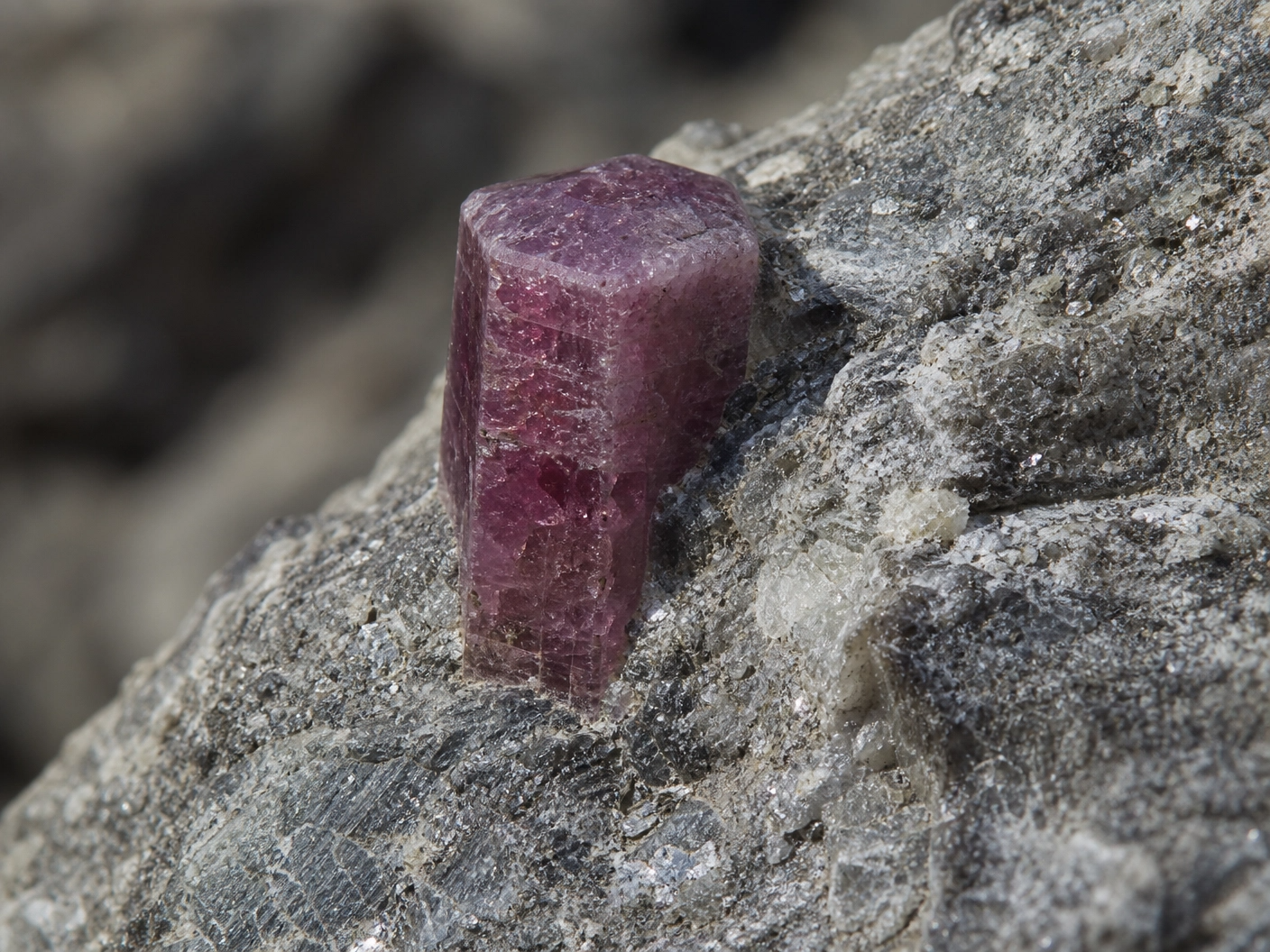
Both ruby and sapphire are varieties of the mineral corundum, which is crystalline aluminum oxide (Al₂O₃) [1]. This simple chemical formula belies a complex atomic structure that grants corundum its exceptional hardness, second only to diamond on the Mohs scale (a hardness of 9). This makes both ruby and sapphire incredibly durable and suitable for everyday wear in jewelry. The crystal structure of corundum is hexagonal, often forming barrel-shaped or pyramidal crystals in nature.
The Spectrum of Color: Trace Elements at Play
The most striking difference between ruby and sapphire is, of course, their color. This vibrant distinction arises from minute quantities of specific trace elements incorporated into the corundum crystal lattice during its formation. Without these impurities, corundum would be colorless, a variety known as white sapphire or leucosapphire.
For ruby, the captivating red hue is primarily due to the presence of chromium (Cr³⁺) [2]. The higher the concentration of chromium, the more intense and saturated the red color. The most prized rubies exhibit a vivid, slightly purplish-red known as
"pigeon's blood" red. The interaction of chromium with light causes the absorption of green and yellow wavelengths, allowing only red light to be transmitted and reflected.
Sapphire, on the other hand, exhibits a breathtaking array of colors, with blue being the most iconic. The classic blue sapphire owes its color to the presence of both iron (Fe²⁺) and titanium (Ti⁴⁺) [2]. These elements, when present together in the corundum structure, create a charge transfer phenomenon that results in the absorption of red and yellow light, leaving the beautiful blue visible. Sapphires can also be found in nearly every other color of the rainbow, including pink, yellow, green, purple, and orange (known as fancy sapphires). Pink sapphires, for instance, derive their color from trace amounts of chromium, similar to rubies, but in lower concentrations or under different crystal field conditions that result in a pink rather than red hue. The distinction between a deep pink sapphire and a light red ruby can sometimes be a point of debate within the gemological community, often relying on established color grading standards set by organizations like the GIA.
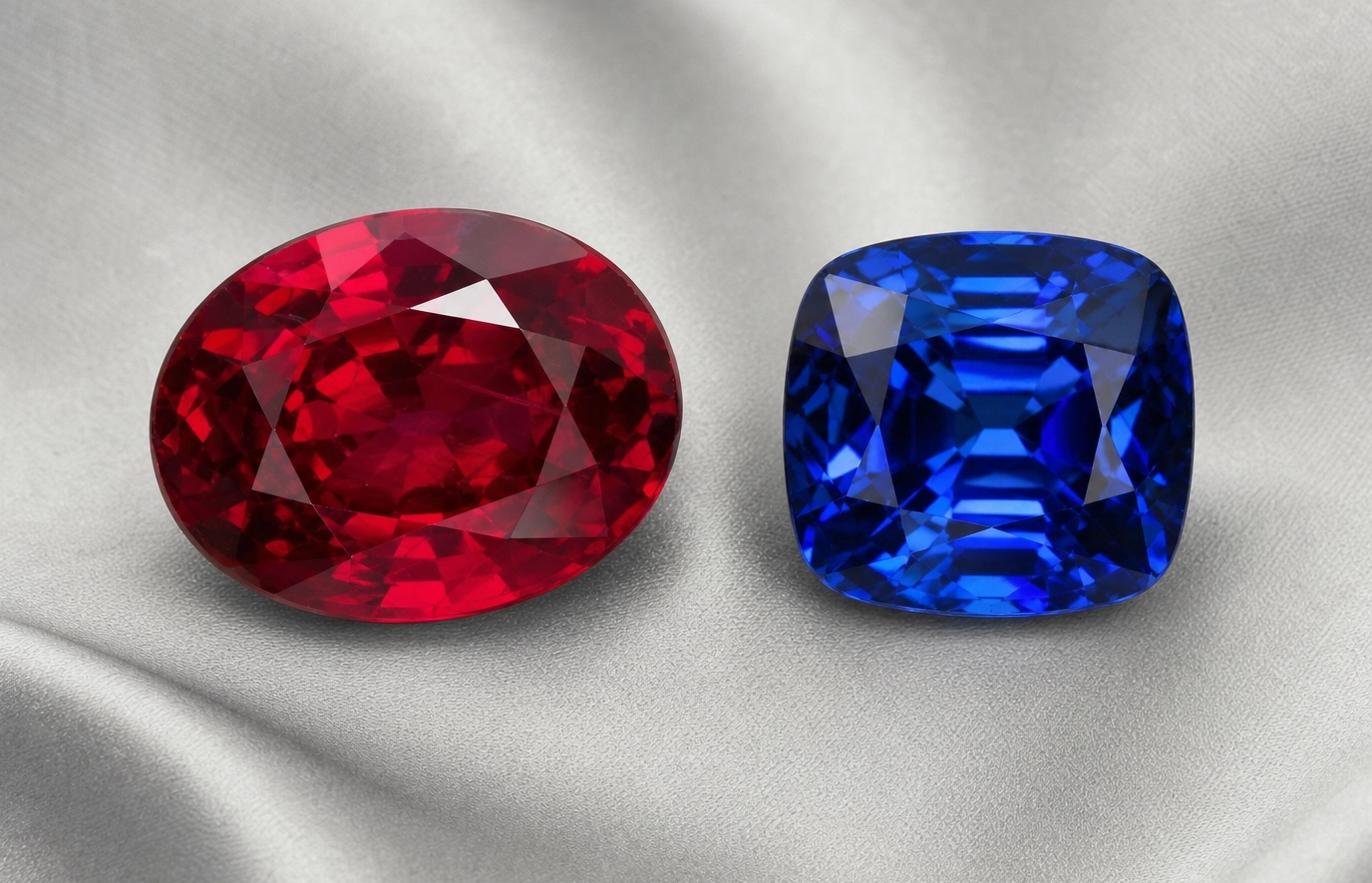
Figure 2: A vibrant red ruby alongside a deep blue sapphire, illustrating the striking color differences within the corundum family.
Geological Formation: A Tale of Pressure and Heat
The formation of corundum, whether ruby or sapphire, is a geological marvel, requiring specific conditions of high temperature and pressure, typically found deep within the Earth's crust. Corundum deposits are broadly categorized into two types: primary and secondary [3].
Primary deposits are where the corundum crystals form directly within the host rock. These can be further subdivided based on their geological environment:
• Magmatic deposits: Formed from cooling magma, often associated with alkali basalts or syenites. These typically yield sapphires.
• Metamorphic deposits: Formed when existing rocks undergo transformation due to intense heat and pressure. Rubies are frequently found in marble-type metamorphic deposits, where the presence of chromium-rich minerals is crucial. Sapphires can also form in metamorphic environments, often in association with mafic and ultramafic rocks.
Secondary deposits, also known as placer deposits, are formed when primary corundum-bearing rocks erode, and the durable corundum crystals are transported by natural forces like rivers and concentrated in alluvial sediments. Many of the world's most significant ruby and sapphire finds have come from these secondary deposits, as the erosion process naturally sorts and concentrates the denser gemstones.
The Enduring Appeal of Corundum Gemstones
The shared mineralogical foundation of ruby and sapphire, coupled with the subtle yet powerful influence of trace elements, makes them a captivating subject for gemstone science. From the fiery passion of a ruby to the serene depth of a sapphire, these gems continue to be symbols of beauty, power, and enduring value. Understanding their origins and characteristics only deepens our appreciation for these natural wonders.
At Oriagems, we celebrate the exquisite beauty and scientific marvel of these gemstones. Whether you are drawn to the intense red of a ruby or the tranquil blue of a sapphire, each stone tells a unique geological story, waiting to become a part of yours. The intricate world of corundum mineral, ruby vs sapphire, and the fascinating gemstone science behind them offers endless discovery for every admirer.
References
[1] GIA. (n.d.). Corundum. Retrieved from https://www.gia.edu/gems-gemology/gem-encyclopedia/corundum
[2] GIA. (n.d.). Ruby Description. Retrieved from https://www.gia.edu/gia-website/ruby-description
[3] Giuliani, G., & Groat, L. A. (2020). Geology of Corundum and Emerald Gem Deposits: A Review. Gems & Gemology, 55(4). Retrieved from https://www.gia.edu/gems-gemology/winter-2019-geology-of-corundum-and-emerald-gem-deposits