Article Content
Imagine gazing into a gemstone and seeing a brilliant, seemingly magical star floating just beneath its surface. As you tilt the stone, the star glides smoothly, following the light as if possessed by a celestial spirit. This is the mesmerizing allure of a star sapphire.
While brilliantly faceted diamonds and emeralds capture our hearts with their sparkle, there is an entirely different category of gems that interact with light in ways that seem to defy logic. These are known in the gemological world as phenomenal gemstones.
Whether you are a jewelry collector, a budding gemologist, or simply a lover of earth’s natural wonders, understanding the science behind these stones enriches their beauty tenfold. In this comprehensive guide, we will explore the fascinating world of optical phenomena, uncovering the secrets of both star sapphires and the mesmerizing cat's eye chrysoberyl.
The Magic Behind Phenomenal Gemstones
In gemology, "phenomenon" is a technical term. It refers to a special optical effect that occurs when light interacts with the internal structure or inclusions within a gemstone. These optical phenomena elevate a stone from a beautiful mineral to an interactive piece of art.
There are several types of phenomena in the gemstone world—including color-change, adularescence (seen in moonstone), and play-of-color (seen in opal). However, two of the most sought-after and visually striking effects are asterism (the star effect) and chatoyancy (the cat’s-eye effect).
To truly appreciate a star sapphire or a cat's-eye gem, we have to look deep inside the stone, well past its polished surface, to the microscopic elements hidden within.
Decoding Asterism: The Star of the Show
The star sapphire is arguably the most famous phenomenal gem on the market. But what exactly is happening inside the stone to create this captivating display?
What Causes the Star Effect in Gemstones?
To answer what causes the star effect in gemstones, we must examine the specific internal characteristics of the mineral. A star is created when light reflects off microscopic, tightly packed parallel inclusions.
Feature | Description |
Gem Type | Sapphire (corundum) |
Optical Phenomenon | Asterism (star effect) |
Typical Colors | Blue, black, pink, yellow, or gray |
Formation of Star Effect | Rutile inclusions arranged in three directions |
Table 1: Key features of star sapphires.
When discussing asterism in blue corundum (the mineral family to which sapphires belong), the magic ingredient is almost always rutile needle silk inclusions. Rutile is a mineral composed primarily of titanium dioxide. During the formation of the sapphire deep within the earth over millions of years, these tiny rutile crystals grow alongside the corundum.
Because corundum crystals grow in a hexagonal (six-sided) structure, the rutile needles naturally align themselves in three specific directions that intersect at 60-degree angles. When light hits these densely packed, perfectly aligned needles, it reflects in a line perpendicular to the inclusions. The intersecting lines create the breathtaking six-rayed light pattern formation that we recognize as a star.
Understanding Optical Phenonema Geometry
To help visualize how these different internal patterns interact with incoming light rays, consider the structural blueprint below:
CAT'S EYE EFFECT STAR SAPPHIRE EFFECT
(Single Row of Inclusions) (Three Rows Intersecting)
=============== \ /
=============== \ /
=============== ====X====
=============== / \
=============== / \
[Yields 1 Reflective Band] [Yields 3 Intersecting Bands]
Figure 1: Diagram showing how parallel needle orientations create either a single cat's-eye band or a multi-rayed star.
The Sleek Appeal of Cat’s-Eye
While star sapphires display an intersecting star, other phenomenal gemstones display a single, sharp band of light that perfectly mimics the slit eye of a feline. The most prestigious and valuable of these is the cat's eye chrysoberyl.
Gemstone Characteristic | Cat's-Eye Chrysoberyl Details |
Primary Mineral | Chrysoberyl (BeAl2O4) |
Optical Effect Name | Chatoyancy (Cat's-eye effect) |
Inclusion Type | Fine, parallel rutile needles or hollow tubes |
Famous Quality Trait | "Milk and Honey" effect |
Chatoyancy vs Asterism Comparison
Both chatoyancy and asterism are caused by light reflecting off microscopic parallel inclusions, but their internal geometry differs.
l Asterism: Features inclusions aligned in two or three distinct directions, producing a four-rayed or six-rayed star.
l Chatoyancy: Features inclusions aligned in only one uniform direction. When light strikes these parallel inclusions, it produces a single, bright, floating line.
Phenomenon | Cause | Result |
Asterism | Needle-like rutile inclusions | Star-shaped reflection on gem surface |
Chatoyancy | Parallel fibrous inclusions | Moving light band resembling a cat’s eye |
A chatoyancy vs asterism comparison is a beautiful lesson in mineral crystallography. Because chrysoberyl grows in an orthorhombic crystal system rather than a hexagonal one, its inclusions (often microscopic channels or rutile needles) align in only one direction. When cut correctly, a cat's eye chrysoberyl looks strikingly like a golden or honey-colored eye blinking back at you in the sunlight.
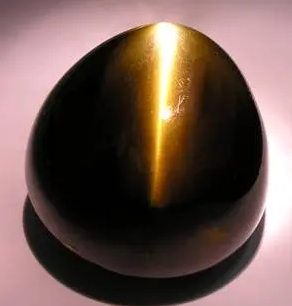
Image: The world's largest cut cat's-eye chrysoberyl: 465 carats(cited from IGS)
The Art of Shaping and Valuing Phenomenal Gems
You will rarely, if ever, see a faceted star sapphire or cat's-eye gem. To maximize these optical effects, gem cutters (lapidaries) must rely on a very specific cutting style.
Cabochon Cut Gemstone Valuation
To display a star or a cat's-eye, the gemstone must be fashioned into a cabochon—a polished, non-faceted gemstone with a flat bottom and a smooth, domed top. The dome acts like a lens, gathering light and focusing the reflection of the internal inclusions into a visible, sharp band or star.
When it comes to cabochon cut gemstone valuation, gemologists look for several key factors:
l Sharpness: The star or eye must be distinct and sharp, not blurry or broken.
l Centering: The phenomenon should be perfectly centered at the top of the dome when viewed from directly above.
l Movement: As the stone is tilted, the star or eye should glide smoothly and gracefully across the surface.
l Body Color: The underlying color of the gemstone should be rich and saturated, contrasting beautifully with the bright silver or white phenomenon.
Evaluating Clarity in Non-Transparent Gems
Standard clarity grading—where flawless transparency is prized—does not apply here. Evaluating clarity in non-transparent gems requires a delicate balance. If a sapphire has too few rutile inclusions, the star will be weak or non-existent. However, if it has too many inclusions, the stone becomes completely opaque, muddy, and dull, ruining the beautiful base color.
The most valuable phenomenal stones possess the perfect "Goldilocks" level of silk—just enough to create a razor-sharp star or eye, but still allowing the rich, vibrant color of the gem to shine through with a degree of appealing translucency.
Navigating the Market: Synthetic, Treated, and Natural Stones
Because of the high value and desirability of phenomenal gems, the market is filled with synthetics and treated stones. Knowing what to look for can save you from a costly mistake.
Synthetic Versus Natural Asterated Gems
In the late 1940s, the Linde Air Products Company created the first successful synthetic star sapphires, known colloquially as "Linde Stars." Today, laboratories can grow corundum that exhibits asterism.
When comparing synthetic versus natural asterated gems, perfection is often a red flag.
l Synthetic Stars: Usually boast an unnaturally perfect, intensely sharp star that looks painted on the surface. The body color is often excessively uniform, and the star rarely moves as fluidly as it does in nature.
l Natural Stars: Rarely perfect. You might spot slightly uneven rays, minor missing sections in the star, or natural color zoning (uneven color distribution) in the background. The star seems to float slightly below the surface rather than sitting directly on top.
Identifying Diffused Surface Treatments
Another common practice is titanium diffusion. In this process, a lower-quality natural sapphire is coated in titanium and heated to extreme temperatures. The titanium penetrates the very top layer of the stone, synthetically creating a star effect.
Identifying diffused surface treatments can be tricky for a layperson. However, a trained gemologist can spot this by examining the stone's profile or immersing it in a refractive index liquid. Because the treatment only penetrates the very surface, the star may appear artificially stark against a patchy body color. If a stone seems too vibrant and perfect for its suspiciously low price tag, it is likely diffused or synthetic. Always request a gemological certificate from a reputable lab (like the GIA or AGS) before making a significant investment.
Wear, Care, and Durability
Phenomenal gemstones are not just beautiful; they are incredibly well-suited for everyday wear, making them popular choices for men’s rings, engagement rings, and statement pendants.
Mohs Scale Hardness for Jewelry
When selecting a gemstone for a piece of jewelry that will see frequent use, durability is paramount. We measure this using the Mohs scale hardness for jewelry.
l Corundum (Star Sapphires and Rubies): Ranks a 9 on the Mohs scale, making it the second hardest natural mineral on earth after diamond. It is exceptionally resistant to scratching and chipping.
l Chrysoberyl (Cat’s-Eye): Ranks an 8.5 on the Mohs scale. It is incredibly tough and highly durable, making it an excellent choice for daily wear.
Corundum Mineral Color Variations
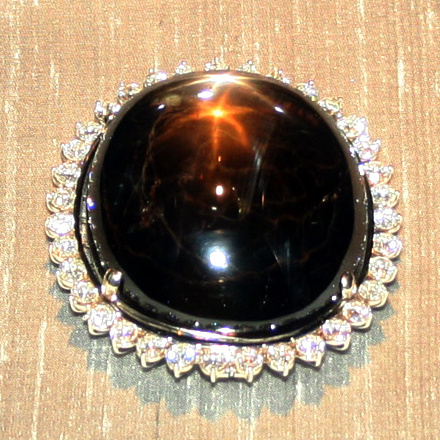
While blue is the most iconic, corundum mineral color variations are vast. A star sapphire can be pink, purple, white, yellow, or even black. When corundum is red, it is classified as a star ruby. Black star sapphires are particularly unique; their stars are typically golden rather than white, caused by hematite inclusions rather than rutile.
How to Clean Rare Precious Stones
Despite their toughness, maintaining the polished surface of a cabochon is crucial to preserving the optical phenomenon. If the dome gets scuffed, the star or eye will become blurry.
Knowing how to clean rare precious stones safely is essential:
l Avoid Ultrasonic Cleaners: While corundum is hard, the concentrated inclusions that create the star can sometimes make the stone vulnerable to the intense vibrations of an ultrasonic cleaner.
l Use Gentle Methods: The best way to clean your star sapphire or cat's eye is with warm water, mild dish soap, and a soft-bristled toothbrush. Gently scrub the stone to remove oils and dirt, then rinse and dry with a lint-free microfiber cloth.
l Keep Away from Harsh Chemicals: Avoid exposing your gems to bleach, harsh household cleaners, or extreme temperature changes.
Legendary Jewels and Ethical Considerations
The history of asterated gems is as rich as the stones themselves, deeply intertwined with global lore and royal collections.
Famous Historical Asterated Blue Jewels
For centuries, star sapphires were believed to serve as talismans, protecting travelers and warding off evil. This mystique has made them the centerpieces of major museum collections.
Let's look at a few famous historical asterated blue jewels:
l The Star of India: Housed in the American Museum of Natural History, this is one of the largest star sapphires in the world, weighing an astonishing 563.35 carats. Discovered in Sri Lanka, it is unique because it features stars on both the top and bottom of the cabochon.
l The Star of Asia: Weighing 330 carats, this deep blue, intensely saturated star sapphire resides in the Smithsonian National Museum of Natural History. It is renowned for its incredible clarity and sharp, perfectly centered six-rayed star.
l The Black Star of Queensland: Weighing 733 carats, this is the largest gem-quality black star sapphire in the world, famous for its magnificent golden star.
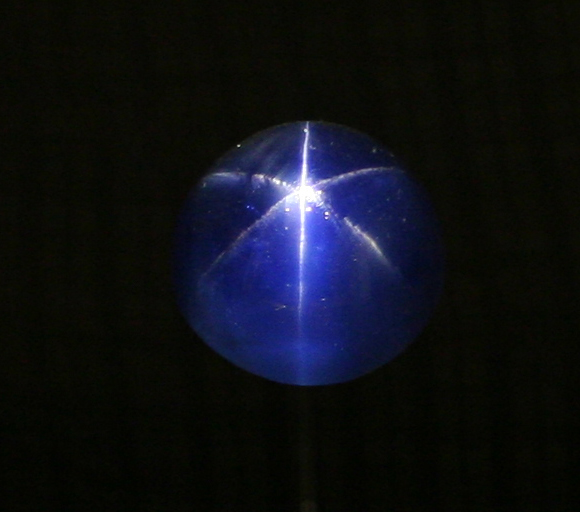
Image: The Star of Asia(cited from wikipedia.org)
Gemstone Provenance and Ethical Sourcing
As our appreciation for these rare stones grows, so does our responsibility to the environments and communities from which they are mined. Today's conscious consumers are heavily focused on gemstone provenance and ethical sourcing.
The finest star sapphires typically hail from Sri Lanka, Myanmar (Burma), and Madagascar, while the premier cat's eye chrysoberyls are often found in Sri Lanka and Brazil. When purchasing a phenomenal gemstone, it is highly recommended to ask your jeweler about the stone's origin. Reputable dealers prioritize stones mined using environmentally responsible methods and ensure that the local labor force is treated fairly and paid a living wage. Tracing a stone’s journey from mine to market ensures that the beauty of the gem is matched by the ethics behind it.
How to Best View Your Phenomenal Gemstones
A common mistake made by new owners of phenomenal gems is viewing them under incorrect lighting, leading to disappointment when the star or eye appears weak or invisible.
Proper Lighting for Viewing Asterism
The optical magic of these stones requires specific light conditions to perform. To witness the sharpest effect, you must use proper lighting for viewing asterism.
l Avoid Diffused Lighting: Fluorescent office lights, heavily clouded days, or multi-bulb chandeliers will wash out the star, making it look like a blurry smudge.
l Use a Single Point Source of Light: The absolute best light for a star sapphire or cat’s eye is direct, bright sunlight. If indoors, use a single, strong light source, such as an LED penlight, a single halogen spotlight, or even the flashlight on your smartphone.
l The Viewing Angle: Hold the light source a few inches above the stone and look directly down at the dome. As you gently tilt the stone back and forth, you will see the star or eye spring to life and glide gracefully across the cabochon.
The Timeless Captivation of Phenomenal Gems
The world of fine jewelry is vast, but there is a distinctly unique thrill that comes with owning a phenomenal gemstone. Whether it is the sleek, watchful gaze of a cat's eye chrysoberyl or the celestial, crossing beams of a star sapphire, these stones represent the beautiful intersection of earth’s raw chemistry and light's fascinating physics.
By understanding the delicate internal structures that create these effects, learning how to evaluate their cut and clarity, and knowing how to navigate synthetics and treatments, you are well-equipped to appreciate—and perhaps even acquire—one of these natural masterpieces. Phenomenal gems are not just passive stones set in metal; they are interactive, living treasures that respond to your movements and the world around them, reminding us of the enduring, magical beauty hidden beneath the surface of the earth.
The Art of the Cabochon Cut
The internal science of a gemstone is only half the battle. To unlock its full potential, a gem cutter must step in and maximize efficiency with a specialized shaping technique. You will almost never see a star sapphire or a cat's-eye chrysoberyl faceted with flat, diamond-like window steps. If you cut them that way, the light scatters unevenly, and the optical effect disappears entirely.
Instead, these minerals are fashioned into a cabochon—a smooth, highly polished cut with a flat bottom and a curved, rounded dome top (Moses & McClure, 2012).
The dome acts exactly like a magnifying glass lens. It gathers loose overhead light rays, focuses them inward, and projects the reflection of the internal needles cleanly onto the upper surface of the stone. If the dome is sliced too flat, the star or eye will appear wide, blurry, and out of focus. If the dome is too tall, the floating effect becomes lopsided and difficult to see from above.
References
Nassau, K. (1981). Heat treating ruby and sapphire: Technical aspects. Gems & Gemology, 17(3), 121-131. https://doi.org/10.5741/gems.17.3.121 Cited by: 81
Jin, S. (2025). Structures behind the spectacle: A review of optical effects in phenomenal gemstones and their underlying nanotextures. Gems & Gemology, 61(2). Cited by: 1
Moses, T. M., & McClure, S. F. (2012). Lab notes. Gems & Gemology, 48(4), 300-305. https://doi.org/10.5741/gems.48.4.300