Article Content
When you hear the word "gemstone," your mind might immediately jump to diamonds, rubies, or sapphires. However, if you are looking for a stone that captures every shade of the rainbow, nothing rivals tourmaline. Interestingly, the very name of this gemstone traces its roots back to the Sinhalese word turmali, a term used in ancient Ceylon (modern-day Sri Lanka) to describe mixed colored stones found in the island's gem gravels.
Today, Sri Lankan tourmaline remains highly prized by collectors and jewelry enthusiasts alike. But with such a massive spectrum of shades and characteristics available, understanding tourmaline quality is essential to making a smart purchase. Whether you are hunting for a vivid centerpiece for a bespoke ring or a valuable addition to a gem portfolio, here is everything you need to know about evaluating these captivating stones.
The Magic of the Tourmaline Spectrum
Tourmaline is celebrated for having one of the widest color ranges in the mineral kingdom. While Sri Lanka is famous for its stunning golden-yellows, bright grassy greens, and earthy browns, the global market offers a seemingly endless palette of tourmaline colors.
l Chrome Tourmaline: Tinged with trace amounts of chromium and vanadium, these stones display an intense, vivid green that rivals fine emerald. They are highly sought after due to their exceptional optical performance and relative scarcity.
l Yellow and Canary Tourmaline: Sri Lanka produces some of the finest bright yellow tourmalines in the world. Colored by manganese and occasionally titanium, these stones capture the brilliance of tropical sunlight and show very little of the muddy brown undertones common in other origins.
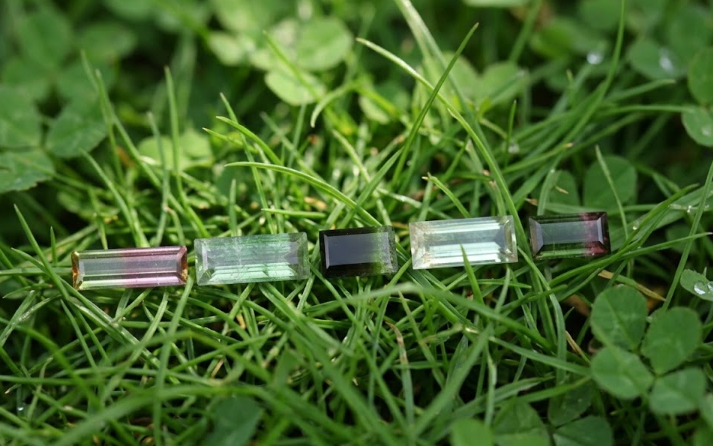
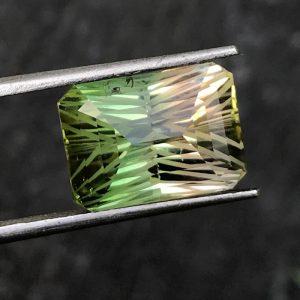
l Bi-Color and Multi-Color Crystals: Due to fluctuating environmental conditions during crystal growth, single tourmaline rods from Sri Lanka frequently show distinct zoning, shifting from rich honey-yellows to soft olive greens or pinks within a single custom-cut gemstone.
Because this gemstone forms in a variety of mineral-rich environments, its chemical composition can change even while a single crystal is growing. This leads to fascinating optical effects, such as bi-color and watermelon tourmalines. Finding a rare tourmaline that displays two distinct, vibrant colors split perfectly down the middle is a thrilling discovery for any gemologist.
Decoding Quality: Color is King
In the world of colored gems, hue, tone, and saturation dictate value. When assessing a stone, experts look closely for vivid saturation and color zoning. While intentional color zoning (like in a watermelon tourmaline) increases value, accidental, blotchy zoning in a single-color stone can detract from its beauty.
Novice buyers often ask: what is the most expensive tourmaline color? The undisputed champion is the Paraiba tourmaline. First discovered in Brazil in the 1980s, this neon blue-to-green gem owes its striking color to trace amounts of copper. Understanding paraiba tourmaline value factors comes down to the intensity of that neon "glow"—the more electric the color, the higher the price, often reaching tens of thousands of dollars per carat.
However, other varieties hold immense value too. If you are exploring deep blues and reds, you must understand indicolite and rubellite grading standards. A high-quality indicolite (blue tourmaline) should display a pure blue hue without appearing too dark or inky. Similarly, a top-tier rubellite must retain its deep purplish-red or crimson color across various lighting conditions, without shifting to a muddy brown.
Evaluating Sri Lankan Tourmaline Quality
The traditional "Four Cs" apply here, but with nuanced adaptations tailored to this specific mineral group:
1. Clarity and Transparency
Tourmalines are categorized by the Gemological Institute of America (GIA) into three clarity types. Green tourmalines are generally Type I (often eye-clean), while pink, red, and multi-colored variants are Type II or Type III (frequently containing minor inclusions). Notably, Sri Lankan stones often defy these standard limits; the local alluvial gravels consistently produce yellow and green varieties with remarkable, crystal-clear interiors that exhibit magnificent brilliance when expertly faceted.
2. Cut and Optical Performance
Tourmaline is strongly pleochroic, meaning it exhibits different colors when viewed from different angles. A master lapidary cutting a stone must orient the crystal carefully to bring out the bright, vibrant face-up color while suppressing the darker, muddy "c-axis" direction. Look for precision faceting that eliminates "windowing" (pale, washed-out centers) and optimizes light return.
3. Carat Weight and Rarity
While small stones under two carats are relatively abundant, fine-quality Sri Lankan specimens over five carats are exceptionally scarce. Because alluvial deposits physically challenge the minerals over time, finding large, unmarred crystals is an uncommon event, driving their per-carat value up exponentially.
Durability and Wearability in Jewelry
A gemstone's beauty is only practical if it can survive being worn. When referencing the Mohs hardness scale for jewelry wearability, tourmaline ranks at a solid 7 to 7.5. This makes it durable enough for everyday wear, provided it is treated with care.
When comparing tourmaline vs emerald durability, tourmaline often comes out ahead for daily-wear jewelry like rings. Emeralds (which rank 7.5 to 8 on the Mohs scale) are notoriously brittle and heavily included, making them highly susceptible to chipping and cracking. Tourmaline, lacking that same brittleness, is generally a safer structural choice for active wearers.
For lovers of rich green gems, a common debate is chrome tourmaline vs tsavorite garnet. Both offer intense, emerald-like greens due to traces of vanadium and chromium. While tsavorite is slightly more brilliant and rare, a high-quality chrome tourmaline offers spectacular color at a more accessible price point, without sacrificing durability.
Ethical and Sustainable Sourcing
An often-overlooked dimension of evaluating a gemstone is its human and environmental impact. Sri Lanka is widely praised as an international model for sustainable artisanal mining. Large-scale mechanized mining is heavily restricted by the government to preserve the ecosystem and protect traditional livelihoods. Most operations are small, community-driven pit mines that are systematically backfilled and replanted once exhausted. By purchasing a gem from this region, collectors actively support a historically ethical supply chain that empowers local communities.

A Quick Investment Grade Gemstone Buying Guide
If you are ready to shop, consider this your mini investment grade gemstone buying guide. Here is a quick checklist on how to identify high quality tourmaline:
l Prioritize Color First: Look for medium to medium-dark tones with vivid, rich saturation. Avoid stones that look muddy, gray, or so dark they appear black in dim light.
l Check the Clarity: Ensure the stone is generally eye-clean (unless it is a rubellite, where minor inclusions are tolerated). Avoid gems with surface-reaching cracks that threaten durability.
l Evaluate the Cut: Spin the gem under a light source. The color should be lively, and the facets should reflect light evenly without massive dark zones.
l Demand Certification: Always ask for independent lab reports for high-value stones to confirm origin, treatment, and authenticity.
Conclusion: The Timeless Appeal of an Island Treasure
Investing in fine gemstones requires a harmonious balance of scientific knowledge and aesthetic appreciation. Whether you are captivated by the lime-green flashes of a rare chrome crystal or the sunny brilliance of a canary-colored oval, the enduring magic of these treasures remains undeniable. By balancing an understanding of tourmaline colors with a strict eye for tourmaline quality, collectors can confidently acquire a piece of geological history. Ultimately, obtaining a certified Sri Lankan tourmaline means owning a truly magnificent, ethically sourced, and exceptionally rare tourmaline that will continue to hold its vibrant fire for generations to come.
Authoritative References
l Gemological Institute of America (GIA): Tourmaline Quality Factors and Classification Guides
l International Colored Gemstone Association (ICA): Sri Lankan Gem Mining and Origin Reports
l National Gem and Jewellery Authority of Sri Lanka (NGJA): Official Frameworks for Sustainable Mining Regulations