Contenido del artículo
When most people hear the word "sapphire," a vivid, deep oceanic blue instantly comes to mind. But did you know this precious gemstone blooms in almost every color of the rainbow? From delicate blush pinks to vibrant greens and sunset oranges, the world of sapphires is incredibly diverse.
Understanding the complete sapphire color chart is your first step into a vibrant world of fine jewelry, whether you are a gem enthusiast, a collector, or shopping for the perfect engagement ring. Let's explore the breathtaking spectrum of these gemstones and decode exactly what makes each hue so unique and valuable.
The Science Behind the Spectrum
To truly appreciate these gems, we must look at the trace elements affecting corundum hue. Pure corundum—the mineral family that includes both sapphires and rubies—is completely colorless in its natural state. It is only the addition of microscopic elemental impurities, such as iron, titanium, chromium, and vanadium, that paints the stone with brilliant color.
Gemologists and appraisers rely on the GIA colored stone grading system to evaluate these gems uniformly. This system breaks gemstone color down into three main components:
l Hue: The basic, primary color you see (e.g., blue, pink, green).
l Tone: How light or dark the color is, ranging from colorless to black.
l Saturation: The purity and intensity of the color.
Knowing how to judge sapphire saturation and tone is essential for any buyer. Generally, a stone with vivid, "strong" saturation and a medium to medium-dark tone will command the highest price and offer the most spectacular visual performance.
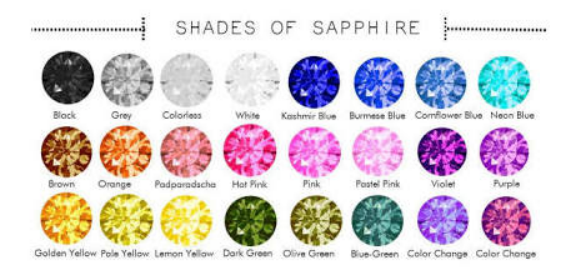
The Vast Color Spectrum of Natural Sapphires. Source: Natural Gems Belgium
The Sapphire Color Chart: A Classic Reimagined
While we are exploring the rainbow, we must acknowledge the undisputed king of the category. The sapphire color chart is remarkably broad, ranging from pale, watery ice blues to deep, inky navies.
The Vast Color Spectrum of Natural Sapphires. Source: Natural Gems Belgium
A frequent and passionate debate among collectors centers around the cornflower blue vs royal blue sapphire.
l Cornflower Blue: Often associated with the highly coveted Ceylon sapphire (mined in Sri Lanka), this shade is a medium-light, intensely vibrant blue with a soft, velvety appearance. It is highly prized for its lively brilliance.
l Royal Blue: Traditionally linked to historic Burmese or Kashmir origins, royal blue is a darker, more profoundly saturated shade. It boasts a majestic depth that feels undeniably luxurious.
Fancy Sapphires: Pinks, Oranges, and the Elusive Padparadscha
Moving away from the traditional blues, we enter the captivating realm of "fancy" sapphires. In recent years, pink and orange fancy color sapphires have surged in popularity, offering a romantic, warm, and highly personalized alternative to traditional center stones.
The absolute crown jewel of fancy sapphires is the Padparadscha. Named after the Sinhalese word for "aquatic lotus blossom," this mesmerizing pinkish-orange gem is exceptionally rare. Key Padparadscha sapphire value factors include a delicate, seamless balance of pink and orange (ideally a 50/50 or 60/40 split), high clarity, and a lack of aggressive treatments.
In fact, when looking at the most expensive sapphire colors ranked, top-tier, unheated Padparadschas frequently sit right next to—or even above—the finest royal blue sapphires in terms of per-carat price.
Exploring Greens, Yellows, and Unique Variations
Nature lovers and modern brides are increasingly drawn to the green sapphire color chart, which spans from pale mint and bright teal to rich olive and deep forest green. These earthy hues are primarily caused by varying levels of iron within the crystal structure and offer a gorgeous, understated elegance.
For those who simply cannot decide on just one color, nature offers a brilliant solution: rare bicolor and parti sapphire varieties. These unique stones display two or more distinct colors in a single gem. A parti sapphire might feature a vibrant green blending seamlessly into a bright yellow or a brilliant blue transitioning into teal, making every single stone a one-of-a-kind masterpiece.
Dynamic Visuals: Lighting, Overtones, and Pleochroism
A sapphire's color is rarely static; it interacts playfully with its environment. Have you ever wondered why do sapphires change color in different lighting? Some extremely rare sapphires exhibit a distinct color-change phenomenon—shifting from blue in natural daylight to a purplish-red under warm incandescent light—due to the presence of vanadium.
Even standard, non-color-change stones are heavily influenced by the impact of pleochroism on sapphire appearance. Pleochroism is an optical phenomenon where the gem shows different colors depending on the angle from which it is viewed. A skilled lapidary (gem cutter) must orient the rough crystal perfectly to ensure the best color is visible when looking face-down into the faceted stone.
Additionally, discerning buyers should always pay attention to primary and secondary gemstone overtones. For example, a blue sapphire might have a slight violet overtone (which is highly desirable and adds warmth) or a green overtone (which can sometimes make the stone look slightly murky and decrease its value).
by Judith Zimmermann (https://unsplash.com/@judithzimmermann)
Navigating Treatments and Earth-Mining Realities
As you browse for your perfect gemstone, always remember that a staggering 90% to 95% of all sapphires appearing on the global commercial market have undergone standard heat treatments. This is an industry-accepted practice where rough stones are baked at high temperatures to dissolve microscopic inclusions and permanently improve color clarity.
However, an unheated sapphire that naturally possesses exceptional color right out of the earth is an absolute anomaly. Because of their sheer geological scarcity, fully certified, completely unheated stones command a massive price premium from investors and connoisseurs alike. Always insist on a reputable, independent laboratory certificate—such as from the Gemological Institute of America (GIA) or the Swiss Gemmological Institute (SSEF)—to verify the natural origin and treatment status of any high-value sapphire.
Whether you are drawn to the fiery depth of a sunset orange, the calm whisper of a pastel lavender, or the classic majesty of a deep royal blue, stepping beyond the traditional spectrum unlocks a world of self-expression. By understanding this comprehensive sapphire color chart and utilizing a practical sapphire buying guide, you can confidently select an extraordinary, ethically sourced gemstone that resonates with your personal story for a lifetime.
Actionable Tips for Choosing Your Sapphire
If you are currently shopping for a forever piece of jewelry, you are likely wondering about the best sapphire shades for engagement rings. Here are a few practical tips to guide your choice:
l Complement Your Skin Tone: Peachy-pinks, yellows, and teals beautifully flatter warm skin undertones. Icy blues, deep navies, and vivid magentas pop brilliantly against cool undertones.
l Prioritize Brilliance Over Darkness: A highly saturated, slightly lighter stone will often sparkle more brilliantly than a dark, inky stone that swallows light in dim settings.
l Demand Certification: Always ask for an independent laboratory report (from reputable entities like the GIA or AGL) to verify the gem’s color, origin, and treatment status before making a significant investment.
Authoritative References for Further Reading
l Gemological Institute of America (GIA): Spinel and Sapphire Gemstone Quality Factors
l Lotus Gemology: Hyper-detailed color boundaries and historical naming conventions of blue and fancy corundum
l American Gem Trade Association (AGTA): Guide to gemstone enhancements, origin verification, and ethical sourcing standards